Hey there, power pal! Ever wondered about the difference between DC and AC power? You know, like what’s actually coming out of that wall socket versus what’s powering your phone? Let’s chat about it – no lab coats required!
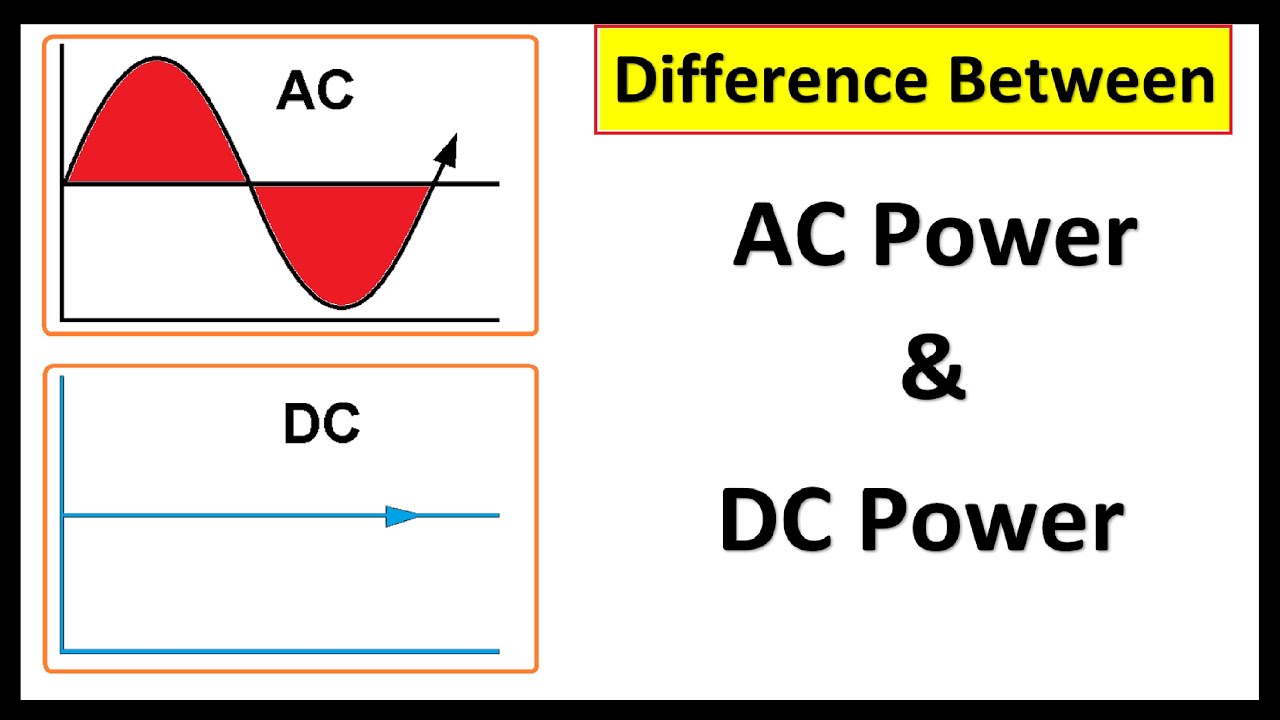
So, first up: DC, or Direct Current. Think of it as electricity flowing in one direction. Like a one-way street for electrons. Boring? Maybe. But super reliable for certain things!
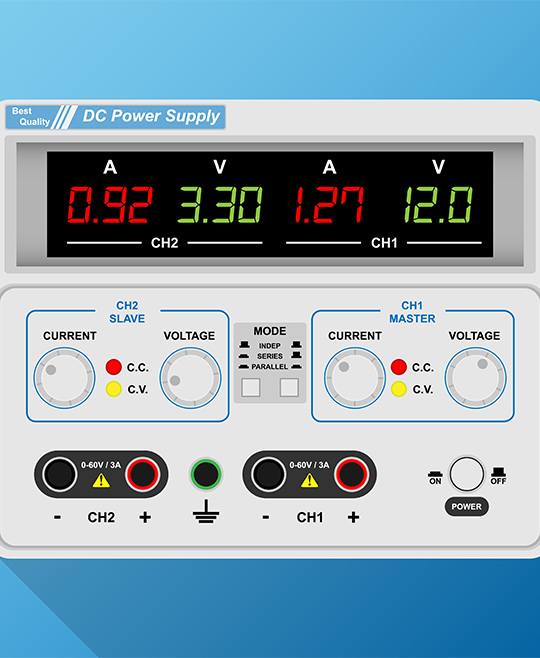
Imagine a battery. *Yep, that's DC.* It's all about that steady, unidirectional flow. Perfect for things like your phone, your laptop, anything portable, really. Batteries are basically little DC powerhouses, right?
DC: The Steady Eddy
Why do we use DC? Well, it's great for storing energy. Think solar panels charging batteries - that's DC heaven! Also, many electronic circuits *need* DC to function properly. Can you imagine your phone trying to run on AC? Disaster! (Probably. Okay, *definitely*.)
But, DC has its drawbacks. Transmitting it over long distances? Not so efficient. The power just kinda...fades. Like trying to yell a secret across a football field – gets lost in translation, you know?
Now, let’s switch gears (pun intended!) to AC, or Alternating Current. This is where things get a little more…wiggly.
Think of AC as electricity that changes direction…a *lot*. We're talking back and forth, back and forth, like a tiny electric dance party! It's like that friend who can’t make up their mind. Annoying? Sometimes. Useful? Absolutely!
AC: The Party Animal
AC is what comes out of your wall socket. *That's right!* It's the reason you can plug in your toaster, your TV, your ridiculously powerful gaming rig. And the reason you sometimes get a little jolt (don't do that!).
So, why AC for our homes? Here's the magic: it’s super efficient for transmitting over long distances. We can step it up to high voltages for transmission (think those massive power lines you see) and then step it down to safer voltages for your house. It's all about those transformers, baby! They're the unsung heroes of the power grid.
Imagine trying to power a whole city with DC. *Yikes!* The energy loss would be insane. AC makes it all possible. Pretty cool, huh?
But AC isn't perfect. It's not so good for storing energy in batteries. And those rapidly changing currents can sometimes cause interference in sensitive electronics. No free lunch, right?
Okay, quick recap:
- DC: Straight and narrow, reliable for electronics and storage. Think batteries and solar panels.
- AC: Back and forth, efficient for long-distance transmission. Think power grid and your wall socket.
So, which one is better? Trick question! They both have their strengths and weaknesses. It's like asking which is better: a hammer or a screwdriver? Depends on the job, right?
And sometimes, we even convert AC to DC, or DC to AC. *Mind blown!* Your phone charger, for example, takes AC from the wall and converts it to DC for your phone's battery. It's a whole electrical ecosystem!
So next time you flip a light switch or plug in your phone, you can think about the little electrons dancing – either in a straight line (DC) or doing the electric boogaloo (AC). You're now officially more power-savvy than 90% of the population. (Okay, maybe 75%. But still!)
Now, who wants more coffee? Let's talk about impedance...