Hey everyone, ever fill up your car and wonder… where does all that gasoline actually come from? We’re talking about crude oil, that black, gloopy stuff that's basically the lifeblood of modern society. But how did it get here, and what’s the story behind it? Let's dive in!
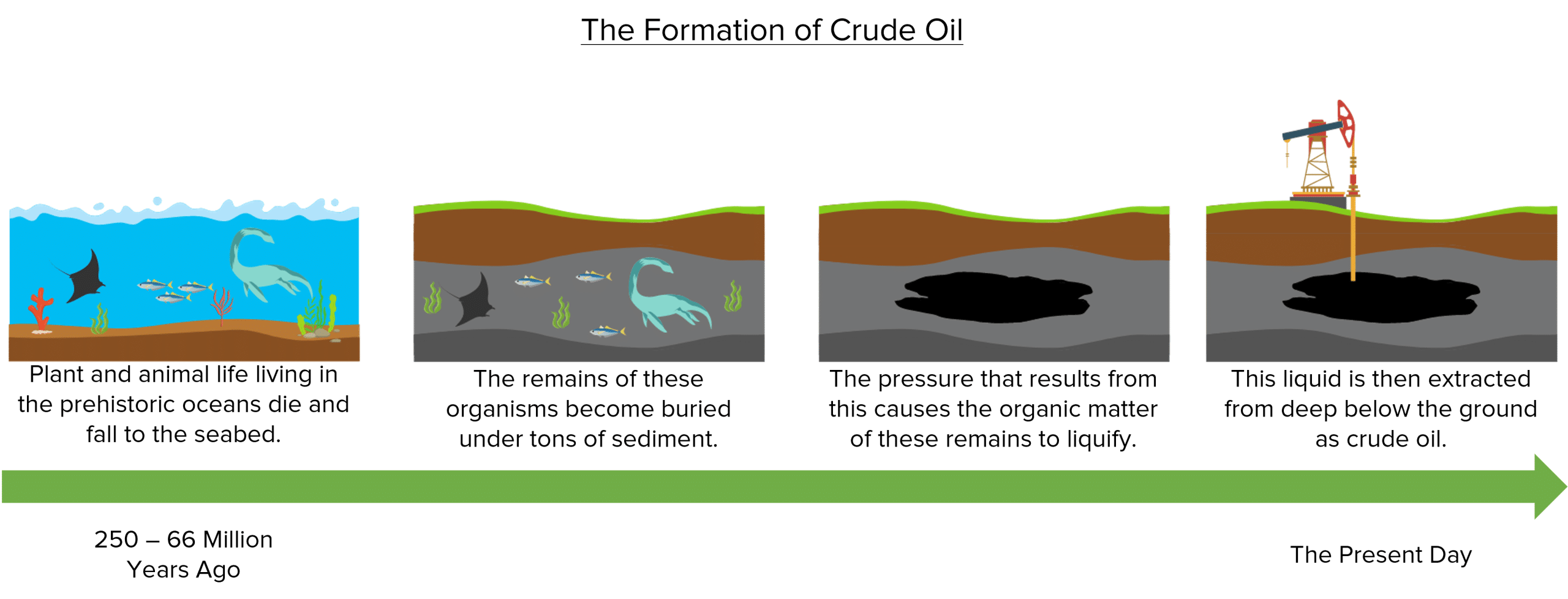
Think of crude oil as ancient sunlight, transformed. Seriously! It all starts with teeny, tiny organisms – we're talking plankton and algae, the stuff that floats around in oceans and lakes. Millions of years ago, these guys lived, died, and sank to the bottom. Now, imagine that happening constantly, for, well, millions of years.
Over time, layers upon layers of sediment (think sand, mud, and silt) piled on top of them. This created immense pressure and heat. So, what do you think happens when you squeeze organic matter like that under a mountain of rock for eons? You guessed it! The organic material slowly cooked into what we now call fossil fuels, including our star of the show: crude oil.
It's like making a cake, but instead of an oven, you've got the Earth's core, and instead of flour and eggs, you've got ancient microorganisms. Pretty cool, right?
So, Where's the Oil Hiding?
Crude oil doesn't just hang out in giant underground pools. It's more like it's trapped in the pores of rock formations, like a sponge soaked with liquid. Imagine a kitchen sponge – it looks solid, but it’s full of tiny holes that can hold water. That's kind of how oil exists underground, soaking into porous rocks like sandstone and limestone.
And speaking of underground, we are talking deep underground. Oil deposits can be found anywhere from a few hundred feet to several miles below the surface. Think about that next time you're driving; there might be a whole lot of history bubbling away beneath your tires!
Finding the Black Gold
Finding these oil deposits is a serious science. Geologists use all sorts of fancy tools and techniques to map the Earth’s subsurface and identify areas where oil might be lurking. We're talking seismic surveys (basically bouncing sound waves off underground rock layers), gravity meters (measuring slight variations in the Earth’s gravitational field), and sophisticated computer modeling.
It’s like a giant, incredibly complex game of hide-and-seek, but the stakes are incredibly high. Find oil, and you've got energy. Miss it, and well… you might have wasted a whole lot of time and money!
From Underground to Your Gas Tank
Once oil is found, it has to be extracted. This is where oil rigs come in. These massive structures are like underwater (or land-based) factories, drilling deep into the Earth to reach the oil deposits. Some oil flows freely under pressure, but often, other techniques are needed to coax it out, like injecting water or gas to push the oil towards the well.
After it's extracted, the crude oil is sent to refineries, where it's processed into all sorts of useful products, from gasoline and jet fuel to plastics and even cosmetics. It’s amazing to think about how that simple organism that lived millions of years ago can become a complex plastic toy or your car's fuel!
Why is this all so interesting?
Well, for starters, it's a window into Earth's deep history. Crude oil is a tangible reminder of the planet's immense age and the processes that have shaped it. It's also a testament to the power of nature to transform and recycle organic matter over vast stretches of time.
Plus, the whole process of finding, extracting, and refining crude oil is a fascinating blend of science, technology, and engineering. From seismic surveys to offshore drilling platforms to complex refining processes, it's a truly remarkable feat of human ingenuity.
And, let's be honest, there's a certain thrill to understanding the origins of something so fundamental to our modern world. Crude oil powers our cars, heats our homes, and fuels our economy. Knowing where it comes from and how it's extracted gives you a whole new appreciation for this valuable resource.
So, the next time you fill up your car, take a moment to think about those tiny ancient organisms and the incredible journey that crude oil takes to get from the depths of the Earth to your gas tank. It's a pretty cool story, isn't it?
What are your thoughts? Let me know in the comments!