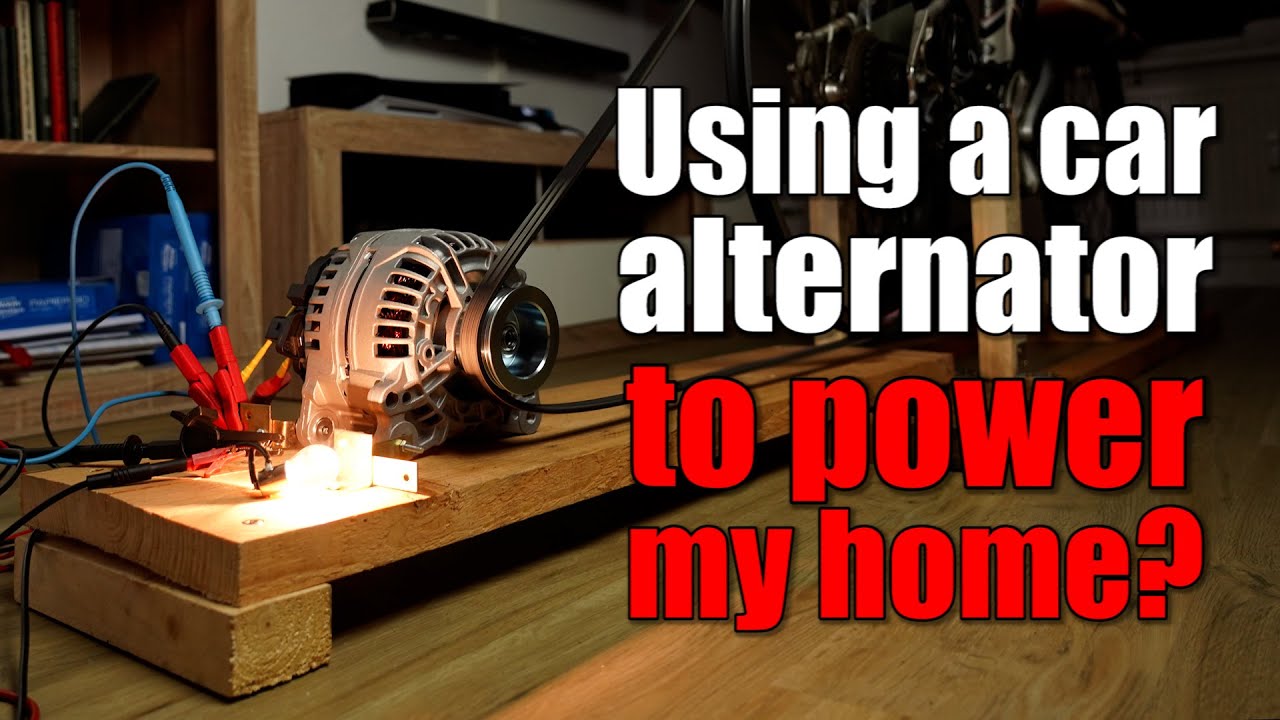
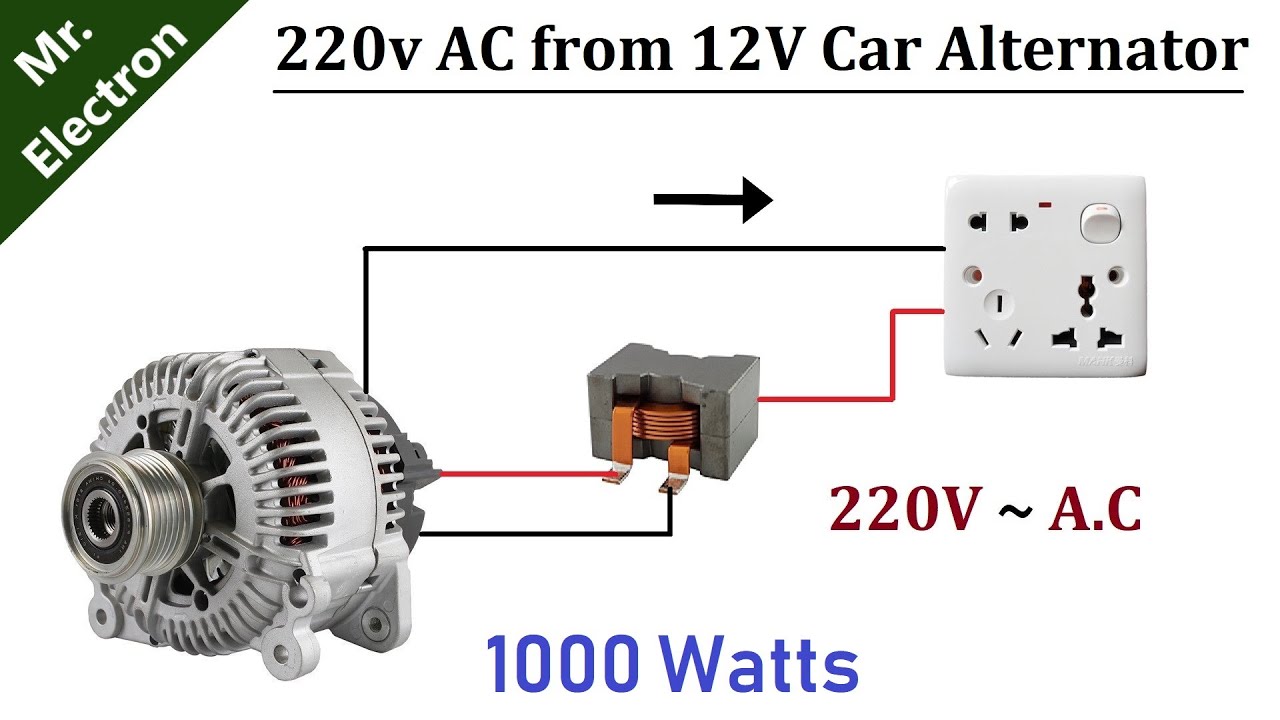
There's something deeply satisfying about harnessing energy, especially when it feels like you're MacGyvering your way to a solution. For many, the idea of independent power generation is appealing, whether it's prepping for emergencies, embracing off-grid living, or simply tinkering with engines. And that naturally leads to the question: Can you use a car alternator to power your house? The short answer is... technically, yes, but with a whole lot of caveats. Let's dive in.
The allure is understandable. Alternators are readily available – most of us already have one under the hood of our car! They're designed to convert mechanical energy from the engine's rotation into electrical energy, keeping your battery charged and running all those essential in-car electronics like your radio and headlights. Thinking about scaling that up to power a fridge or a TV during a blackout is undeniably tempting.
The purpose an alternator serves is crucial in everyday life. It ensures our cars start reliably and that all electrical components function correctly. Without it, our vehicles would quickly become unusable. Think of it as the unsung hero of modern transportation, quietly working away to keep everything running smoothly. Common examples of alternator use are, of course, in cars, trucks, and even boats. They are also used in some portable generators, though these usually have alternators specifically designed for that purpose.
However, directly powering a house with a car alternator presents some significant challenges. First, alternators produce DC (Direct Current) electricity, while most household appliances run on AC (Alternating Current). You'd need an inverter to convert the DC to AC. Second, alternators aren't designed for continuous, high-load operation. Running one for extended periods at near maximum capacity could significantly shorten its lifespan. Think of it like forcing a sprinter to run a marathon; it's not built for that kind of endurance.
Third, and perhaps most importantly, powering a house requires a lot more electricity than an alternator typically provides. A typical car alternator might produce around 50 to 150 amps at 12 volts. Even with an inverter, this translates to a relatively small amount of usable power. You might be able to power a few essential lights and charge your phone, but running major appliances like refrigerators or air conditioners would be a major stretch, and potentially dangerous.
So, how can you enjoy the *idea* of alternator-powered electricity more effectively? Think smaller! Using an alternator to power a small workshop, a remote cabin, or a campsite is a far more realistic and practical application. You could, for example, build a small portable power station using an alternator, a battery, an inverter, and a charging system. This could be used to power tools, lights, and other small appliances in situations where grid power isn't available.
If you're considering a larger-scale backup power solution for your home, investing in a dedicated generator designed for that purpose is a much safer and more efficient option. These generators are specifically built for continuous operation, provide the correct type and amount of power, and often include safety features like automatic shut-off in case of overload or malfunction. While the dream of using your car alternator to power your house might be a fun thought experiment, it's important to approach it with realistic expectations and prioritize safety above all else.