Ever wonder what makes a shiny, old coin look so… well, bronze? Or perhaps you've admired a beautiful bronze sculpture in a museum and thought, "What exactly is that made of?" The answer, surprisingly, is a mix! We're diving into the fascinating world of alloys, specifically focusing on the makeup of everyone's favorite metallic reddish-brown material: bronze.
Why is this fun? Because understanding bronze unlocks a secret history of technology and art. It's like having a decoder ring for understanding ancient civilizations. And why is it useful? Because knowing what makes up bronze helps us appreciate its unique properties and how it has been used for millennia.
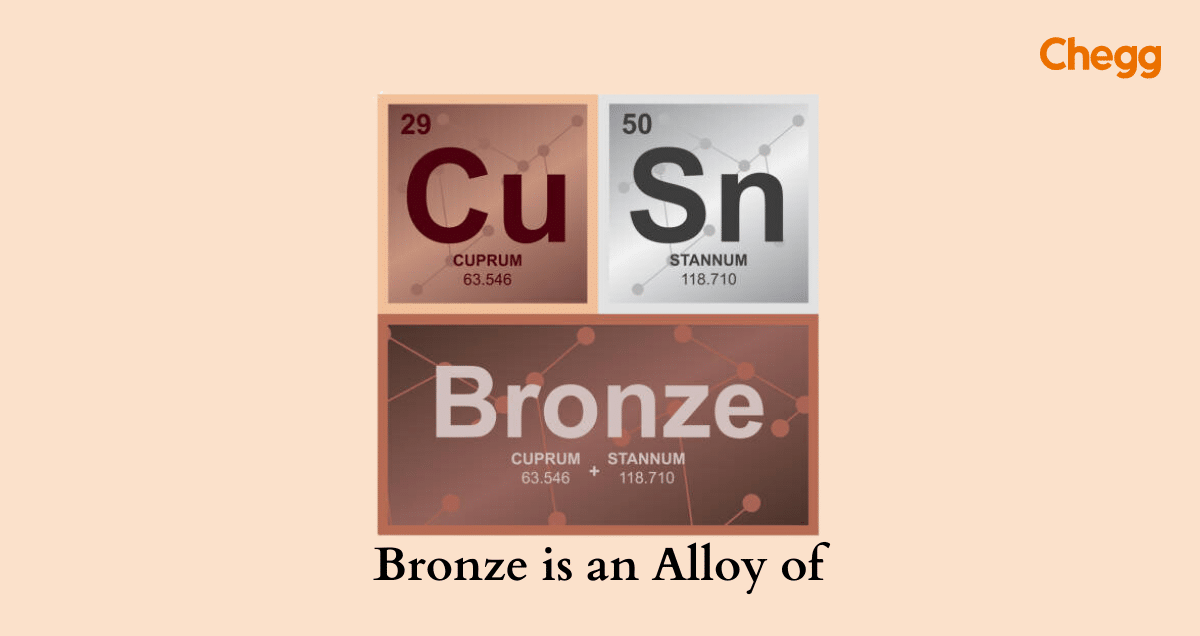
So, the big question: Bronze is an alloy of what metals? The answer is a clever combination of copper and, most commonly, tin. That's right, it's not a naturally occurring element dug straight from the ground; it's a carefully crafted mix. Think of it like baking a cake – you combine different ingredients to create something new and delicious (or, in this case, strong and durable!).
But why mix copper and tin in the first place? Well, copper on its own, while useful, is relatively soft and bendable. By adding tin, you create a metal that is significantly stronger and harder. This enhanced durability was a game-changer for ancient civilizations. Imagine trying to build tools and weapons out of pure copper – they wouldn't last long! Bronze, on the other hand, could hold an edge, withstand more impact, and generally perform much better.
The addition of tin also lowers the melting point of the metal compared to pure copper. This made bronze easier to cast and work with, allowing artisans to create intricate and detailed objects. Think of all those stunning bronze sculptures, bells, and tools from the past – none of them would have been possible without this crucial alloying process.
While copper and tin are the primary ingredients, sometimes other elements are added to bronze to further modify its properties. For example, adding aluminum can create aluminum bronze, which is even stronger and more corrosion-resistant. Silicon bronze, containing silicon, also boasts high strength and resistance to corrosion. These variations allow for even more tailored uses, from marine applications to specialized tools.
The invention of bronze was so important that historians even named an entire period after it: The Bronze Age! This era, lasting from around 3300 BC to 1200 BC, saw the widespread adoption of bronze tools and weapons, leading to significant advancements in agriculture, warfare, and technology. So, next time you see a bronze object, remember that it represents a pivotal moment in human history.
In conclusion, bronze isn't just a pretty color; it's a testament to human ingenuity and the power of combining different materials to create something greater than the sum of its parts. So, now you know – bronze is primarily an alloy of copper and tin, a winning combination that shaped the course of civilization!