So, you've caught the 3D printing bug! Welcome to the club! It's like having a magical replicator in your house… except instead of making Earl Grey tea, it makes plastic dragons, phone stands, and that one oddly specific gear you needed for your vintage toaster oven. But before you can churn out an army of tiny plastic gnomes, you need the right software. Think of it as your digital chisel and hammer – essential for shaping your 3D dreams into glorious reality.
Free and Fantastic: Your Gateway to 3D Design
First, let's talk about free stuff, because who doesn't love free stuff? Especially when it's powerful enough to make your 3D printer sing! We’re not talking about some clunky, barely-functional program that looks like it was designed in the 80s. Nope. These options pack a punch.
Tinkercad: The LEGO of the Digital World
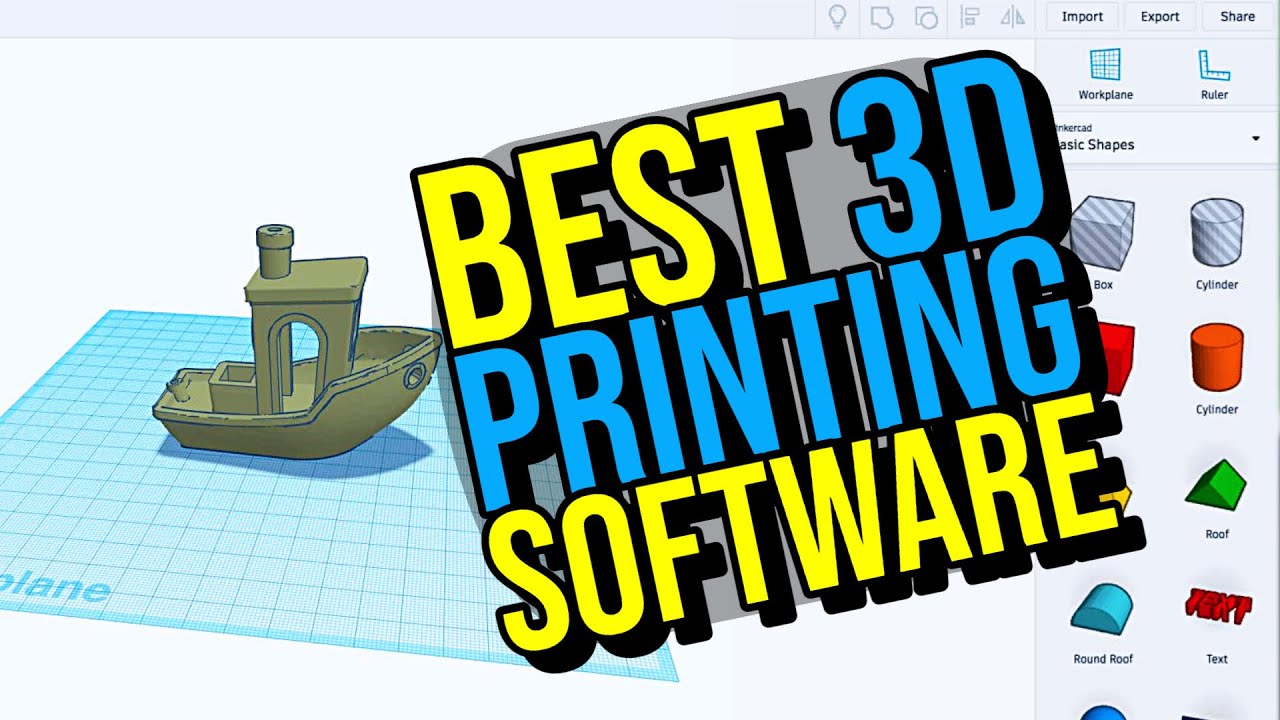
Imagine LEGOs, but on your computer screen. That's Tinkercad in a nutshell. It's incredibly user-friendly, perfect for beginners, and shockingly powerful for its simplicity. You can drag and drop shapes, combine them, subtract them, and BAM! Instant 3D model. Think of it as sculpting with digital building blocks. You could design a personalized keychain, a simple toy, or even a prototype for a more complex project. It's all web-based, so no downloads required, and it's completely free. Seriously, if you're just starting, this is the place to be.
FreeCAD: The Powerhouse for the Dedicated
Don't let the name fool you – FreeCAD isn't just free, it's also incredibly robust. It's like the Swiss Army knife of 3D modeling software. It's a parametric modeler, which means you can define your objects using parameters (like length, width, and height), and then easily change those parameters later without having to redraw everything. Sound complicated? It can be, but the power it unlocks is amazing. If you're planning on designing things with precise measurements or complex geometries, FreeCAD is a fantastic option. It's got a steeper learning curve than Tinkercad, but the reward is worth it. Think of it as graduating from LEGOs to an actual architect's toolkit.
Leveling Up: Paid Software That's Worth the Splurge (Maybe)
Okay, so you've mastered the basics. You're cranking out personalized phone cases like a 3D printing ninja. You're ready for something…more. That’s where paid software comes in. These programs often offer advanced features, streamlined workflows, and a level of control that will make your inner artist squeal with delight.
Fusion 360: The Industry Standard (with a Catch)
Fusion 360 is a powerhouse. It's used by professionals, hobbyists, and everyone in between. It’s great for mechanical design, but don't let that scare you. It's incredibly versatile. You can do everything from designing intricate RC car parts to creating detailed architectural models. It's parametric, has integrated simulation tools (so you can test your designs before printing), and integrates with CAM software for manufacturing. Here's the catch: while it's *technically* free for personal use and small businesses, there are limitations. So, read the fine print before you get too invested. But even with the limitations, it's a fantastic tool.
Simplify3D: The Slicer That Makes Your Printer Sing
Okay, Simplify3D isn't technically a 3D modeling program, but it's so essential to the 3D printing process that it deserves a mention. It's a slicer, which means it takes your 3D model and turns it into a set of instructions that your 3D printer can understand. It's like translating your masterpiece into the printer's language. And Simplify3D does it better than almost anyone else. It has advanced features for optimizing print settings, supporting complex geometries, and even repairing broken models. If you're serious about getting the best possible prints from your machine, Simplify3D is a must-have.
Choosing the right software is like finding the perfect wand for a wizard – it depends on your skills, your goals, and your budget. Start with something simple like Tinkercad and work your way up. The most important thing is to have fun and experiment! And don't be afraid to make mistakes. After all, every failed print is just a learning opportunity (and a good source of plastic for recycling!). Now go forth and create! The world needs more plastic dragons (and maybe a better toaster oven gear).
Remember: Practice makes perfect (or at least gets you closer to perfect…ish).