
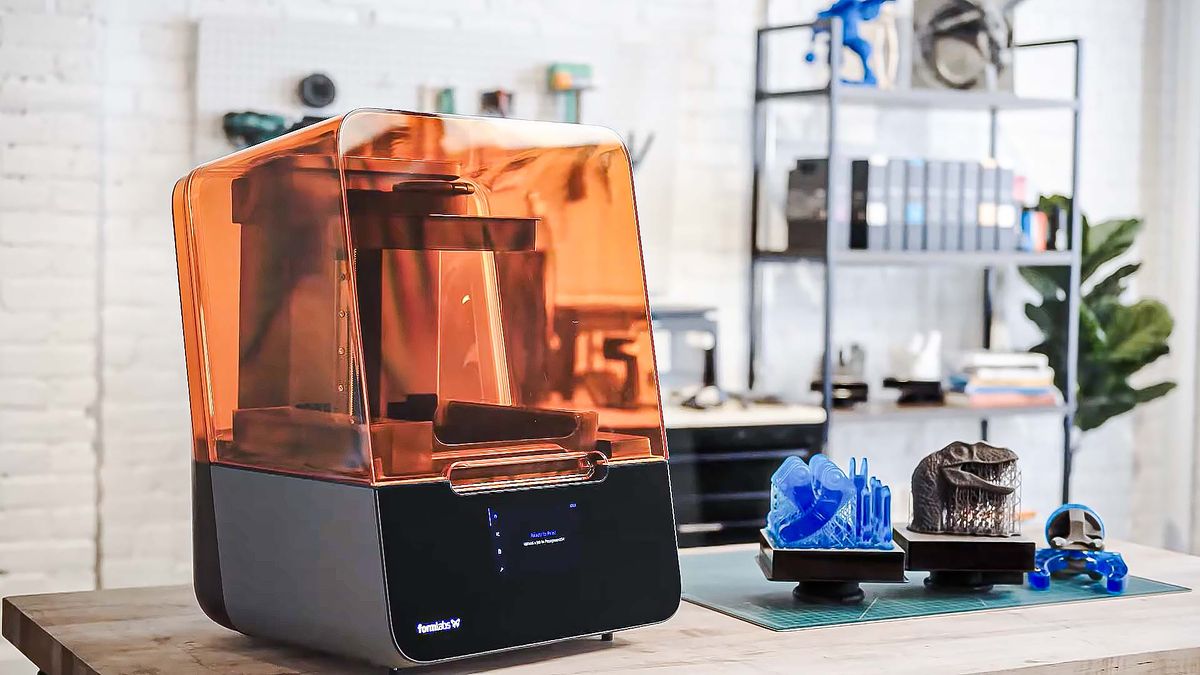
So, you want a 3D printer that spits out silky-smooth creations, huh? Join the club! We've all been there, staring at those layer lines like they're tiny mountain ranges on our plastic masterpieces. But let's be honest, finding that perfect printer is like searching for the legendary unicorn of the crafting world.
Everyone throws around terms like "resin" and "FDM" and "calibration matrix," but frankly, my brain just hears, "blah, blah, expensive, blah, confusing." Don't worry, I'm here to cut through the jargon and give you the (slightly controversial) truth.
My Unpopular Opinion on Smooth Finishes
Okay, here it comes. Brace yourselves. My unpopular opinion is... the best 3D printer for a smooth finish might not actually be a 3D printer at all! Gasp! I know, I know. Heresy! But hear me out.
We spend ages tweaking settings, leveling beds, and sacrificing goats to the 3D printing gods, only to end up with something that still needs a ton of post-processing. Sanding, filling, priming... it's a whole other hobby on top of the initial hobby. It's like baking a cake and then having to spend three days sculpting it into something presentable. Where's the fun in that?
So, instead of chasing the impossible dream of a flawlessly smooth print straight off the bed, maybe, just maybe, we should focus on the process of smoothing.
The (Gasp!) Hand-Crafted Approach
Before you throw virtual tomatoes at me, consider this: sometimes, the imperfections are part of the charm. That slightly wonky line? It shows it was made by a human (probably fueled by caffeine and frustration). But if you *really* want smooth...
Think of it like this: a potter doesn't expect a perfectly smooth vase straight from the wheel. They refine it, smooth it, and glaze it. Why should 3D printing be any different?
But Fine, If You Insist on a Printer...
Okay, okay, I get it. You still want recommendations. If you're absolutely set on getting the smoothest possible finish *directly* from a printer, here are my top three (with a giant asterisk attached saying "results may vary wildly"):
1. The Resin Revolution (or, When Things Get Smelly)
Let's be real, for truly impressive smoothness, resin printers are usually the way to go. I'm talking about printers like the Elegoo Mars series or the Anycubic Photon. They use liquid resin cured by UV light. The results? Think near-injection-molded quality. However, they are also known for their smelly fumes, need for proper ventilation, and generally messy clean-up process. Consider yourself warned!
Think of it as a trade-off: smoothness for sanity (and maybe a dedicated ventilated workspace).
2. FDM Fineness (A Slow and Steady Wins the Race?)
If you're sticking with FDM (Fused Deposition Modeling, the kind that uses filament), focus on printers known for their precision and stability. Look for something like the Prusa Mini+. It might not be the fastest, but it's known for consistent performance and relatively fine layers. It is reliable but requires much effort in fine-tuning settings.
Lower layer heights and slower print speeds are your friends here. Prepare for a long print, but hopefully, a smoother result.
3. The Post-Processing Pro (Embrace the Sandpaper!)
Honestly, and this is my *real* recommendation within the printer recommendations, focus less on the printer and more on your post-processing skills. A budget-friendly FDM printer like an Ender 3, combined with some elbow grease and the right tools, can produce surprisingly smooth results.
Invest in some good sandpaper, filler primer, and maybe even a tumbler. You'll be surprised what you can achieve.
"The journey to a smooth finish is paved with sandpaper and tears (of joy, hopefully)." - Me (probably)
The Bottom Line?
Don't get hung up on the perfect printer. Experiment, learn post-processing techniques, and most importantly, have fun! 3D printing is a journey, not a destination. And sometimes, the slightly bumpy road is the most interesting one.
Now, if you'll excuse me, I'm off to wrestle with my own layer lines. Wish me luck!


