Okay, so picture this: I'm at this café, right? Buzzing with the sound of overpriced lattes and existential dread. And I overhear this heated debate – are welds *actually* stronger than the metal they're joining? Now, me, I like a good nerdy argument. Especially when it involves fire and potentially exploding things (safely, of course!). So, I sidle up, order another questionable pastry, and jump in. Let’s get weld-y!
The short answer, the one you probably wanted before I started rambling about pastries, is: it depends. But where's the fun in *that* answer? Let's dive into the hilarious, slightly terrifying world of metallurgy!
The Weld: A Molten Love Story (with Electricity)
Imagine you're trying to glue two LEGO bricks together. Normal glue? Meh. A super glue that melts the plastic slightly and fuses them on a molecular level? Now we're talking! That's essentially what welding does. We're taking metal, heating it up until it's practically lava, and then *bam!*, joining it together.
Now, think about that "lava" part for a second. We're not just sticking stuff together; we're fundamentally changing the metal's structure. This is where things get interesting… and potentially explode-y (again, safely!).
Strength: It's All About the Context, Baby!
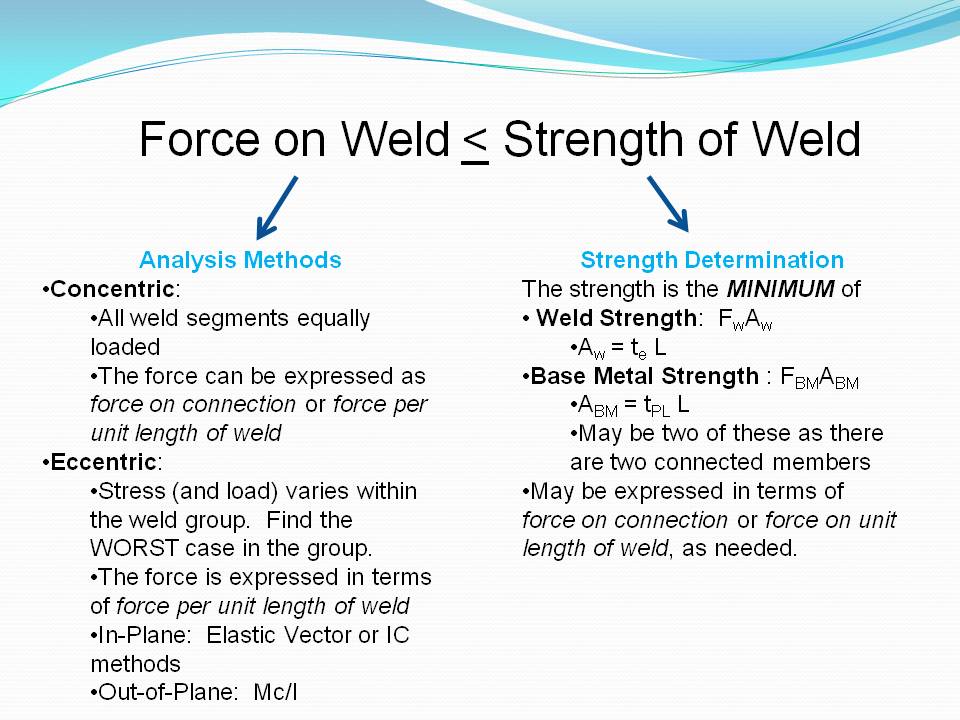
Here's the thing: a perfectly executed weld *can* be stronger than the base metal. I'm talking about welds done by skilled artisans, masters of their craft, who probably whisper sweet nothings to their welding torches. These welds, when tested in a lab, might actually withstand more force than the original metal. We're talking *epic* strength.
But here's the catch (and there's always a catch, isn't there?): in the real world, things are rarely perfect. You've got things like:
- Impurities: Little bits of stuff that shouldn't be there, like that rogue crouton that always ends up in your salad.
- Porosity: Tiny little air bubbles that weaken the weld. Think of it like Swiss cheese, but with molten metal instead of, well, cheese.
- Incomplete Fusion: When the weld doesn't fully penetrate the base metal. It’s like a half-hearted handshake – not very strong.
- Heat Affected Zone (HAZ): This is the area around the weld that gets super hot. The heat changes the metal's properties, potentially making it weaker or more brittle. It’s like that area around a burnt marshmallow that's crispy but also kinda crumbly.
These flaws, even microscopic ones, can significantly reduce the weld's strength. And that's why a weld *can* be the weakest link. Dun dun DUUUN!
So, What's the Verdict? Is the Weld a Superhero or a Weakling?
It's a trick question! The weld is like a complicated character in a movie. It has the potential to be incredibly strong, a true hero holding everything together. But it also has the potential to be its own worst enemy, a flawed individual who cracks under pressure.
Here’s a mind-blower: The *type* of welding matters too. Different welding processes use different materials, heat levels, and techniques. Shielded Metal Arc Welding (SMAW), Gas Metal Arc Welding (GMAW), Gas Tungsten Arc Welding (GTAW)… it's like a whole alphabet soup of welding goodness! And each one has its own strengths and weaknesses (pun intended!).
The Key Takeaway: Trust the Professionals (and the Inspectors!)
Ultimately, the strength of a weld depends on a whole bunch of factors: the skill of the welder, the quality of the materials, the welding process used, and the presence of any flaws. That's why proper training, careful execution, and thorough inspection are *absolutely crucial*.
Think of it this way: you wouldn't trust just anyone to build a bridge, right? You'd want engineers, welders, and inspectors who know their stuff. They're the superheroes who make sure those welds are strong enough to hold everything together (and keep you from ending up in the river!).
So, the next time you see a weld, remember that it's not just a bead of metal. It's a complex joining process with the potential for incredible strength... or spectacular failure. And maybe, just maybe, order another pastry to ponder the intricacies of metallurgy. I know I will.
Disclaimer: Please don't try welding anything yourself unless you're properly trained and equipped. I'm just a guy at a café with a questionable pastry, not a qualified welding instructor. You could seriously hurt yourself (and potentially blow something up... safely!).