Ever glanced at the periodic table and thought, "Wow, that looks… complicated"? Well, let's zoom in on one of its most explosive (literally!) groups: the alkali metals. Trust me, these elements are way more interesting than they sound.
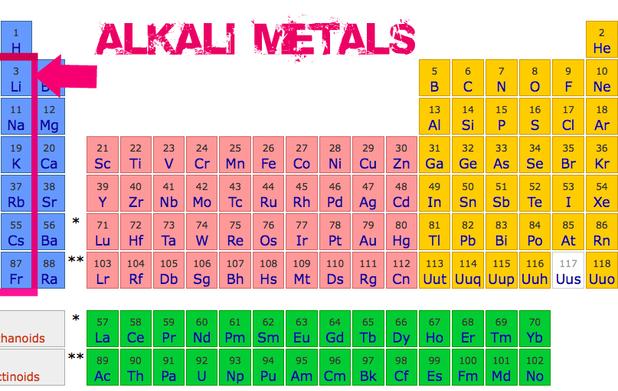
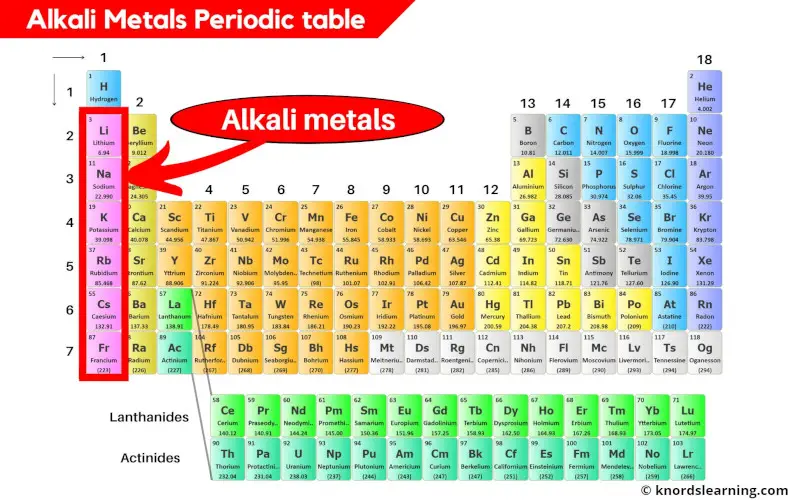
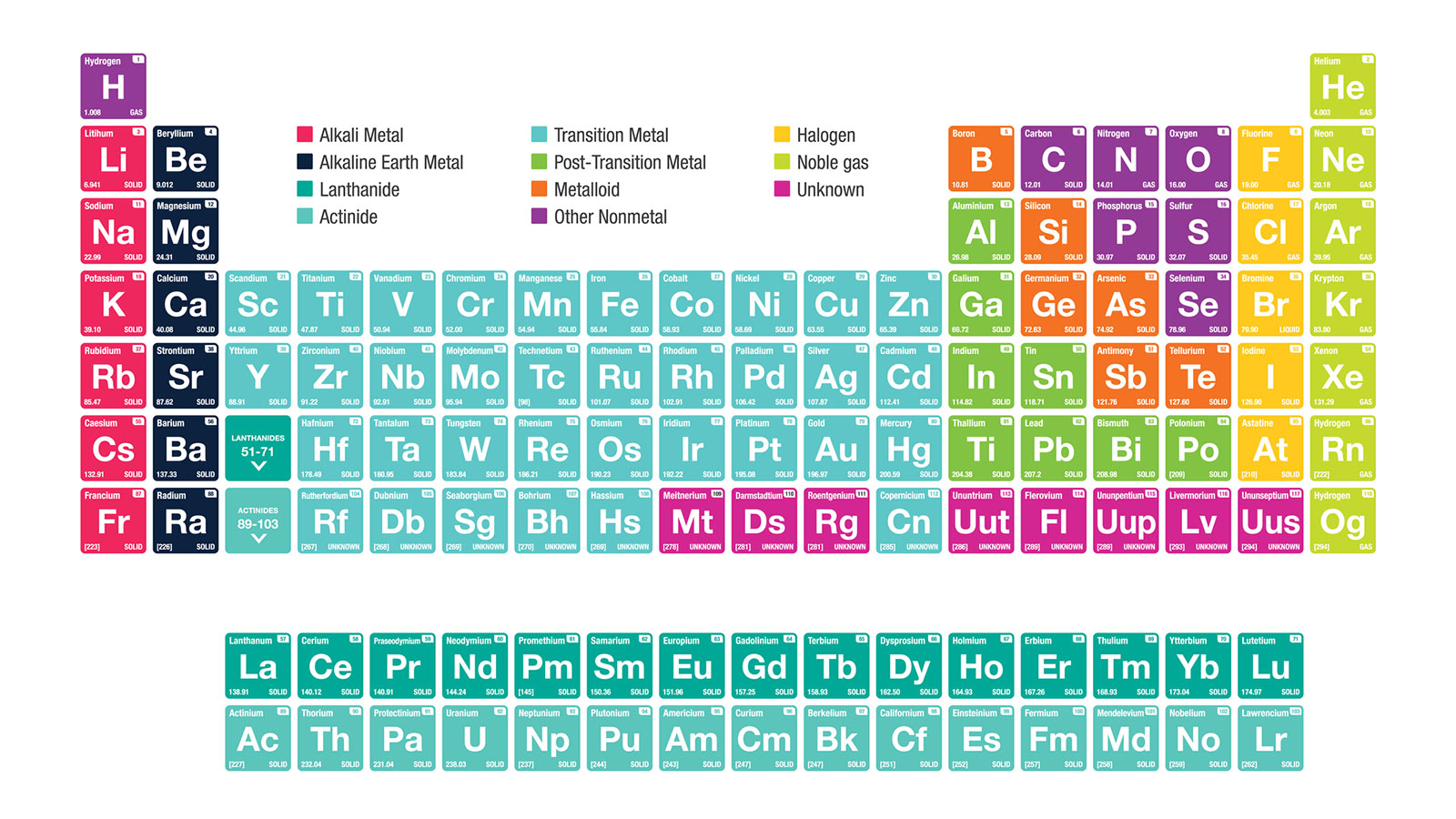
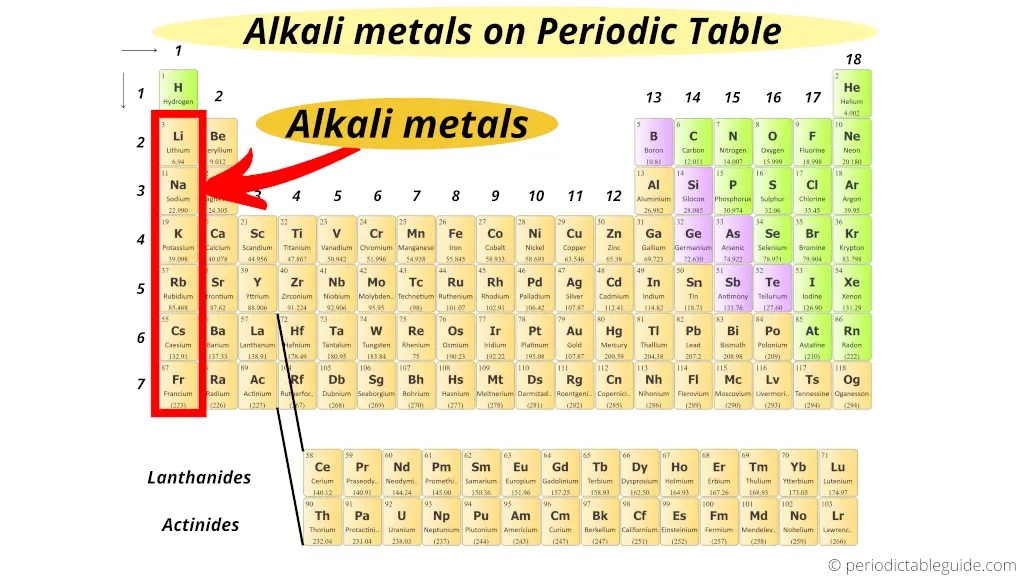
Okay, so what are alkali metals? They're the rockstars of the first group on the periodic table, hanging out on the far left. Think Lithium (Li), Sodium (Na), Potassium (K), Rubidium (Rb), Cesium (Cs), and Francium (Fr). They're like a family, all sharing similar traits. Except, maybe with a bit more… reactivity.
Why Are They So Special?
These guys are super eager to make friends, chemically speaking. They have only one lonely electron in their outermost shell. They are just desperate to give it away! This makes them incredibly reactive. It's like being the most popular kid at school with only one candy bar. Everyone wants a piece!
What happens when they give away that electron? They form positive ions, easily bonding with other elements. This explains why you don't find them chilling in nature all by themselves. They're always hanging out with other elements. For example, Sodium (Na) is in salt (NaCl)!
Their eagerness to react leads to some pretty spectacular displays. Drop a piece of alkali metal into water, and you'll witness a mini explosion. Seriously! The bigger the alkali metal, the bigger the bang. Lithium fizzes gently. Sodium gets a bit more enthusiastic. Potassium? Well, that's where things start getting seriously exciting. Rubidium and Cesium? Stand back! Francium is so radioactive and rare, that experiments are difficult and hazardous, so we'll just admire it from afar, shall we?
Everyday Superstars
You might not realize it, but alkali metals play a big role in your everyday life. Sodium (Na), as part of salt (NaCl), is essential for, well, everything! It helps regulate fluids in your body. It's also a key ingredient in countless industrial processes.
Potassium (K) is vital for healthy plant growth. It also keeps your heart beating and your muscles working properly. Eat your bananas! They're packed with potassium!
Lithium (Li) has a fascinating role in mental health. It's used to treat bipolar disorder, helping to stabilize mood swings. Talk about a powerful little element!
A Word of Caution
Remember that reactivity we talked about? It's crucial to never, ever try playing with alkali metals at home. Unless you're a trained chemist with the proper safety equipment, leave the explosions to the professionals. They're fun to watch, but definitely not something to mess with unsupervised!
Imagine a group of friends where one is always trying too hard to be liked, sometimes with explosive results. That's basically the alkali metals. They're fascinating, useful, and a little bit wild.
Beyond the Fizz: Diving Deeper
So, next time you see a periodic table, don't just gloss over those shiny metals on the left. Remember their eagerness, their reactivity, and their importance in the world around you. Think about the delicate balance of nature, and how these elements, in their controlled forms, help make life possible.
Want to learn more? Dive into the fascinating world of chemistry!
"The more I study science, the more I believe in the power of nature."Okay, I just made that quote up, but the sentiment is real! Learning about the alkali metals is like unlocking a secret code to understanding how the universe works.
Who knows? Maybe you'll even be inspired to become a chemist yourself and discover new and exciting ways to use these reactive elements for the betterment of humankind. Just remember to wear your safety goggles!
So, are the alkali metals entertaining? Absolutely! Are they special? Without a doubt. Now, go forth and explore the wonders of the periodic table!