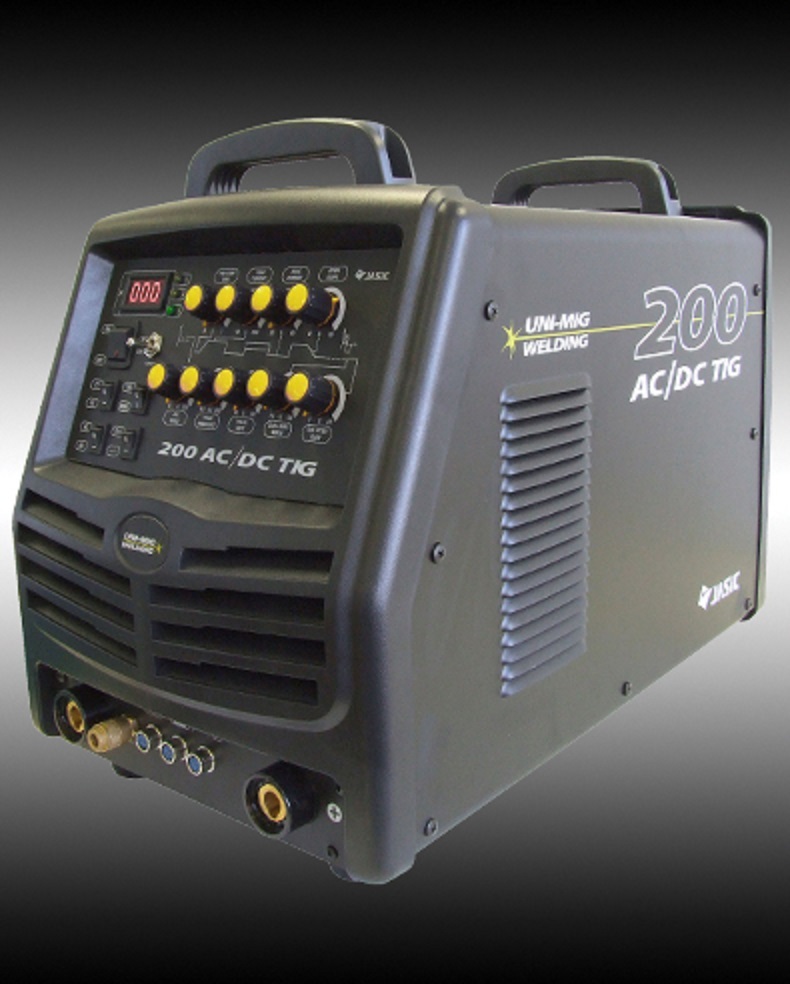
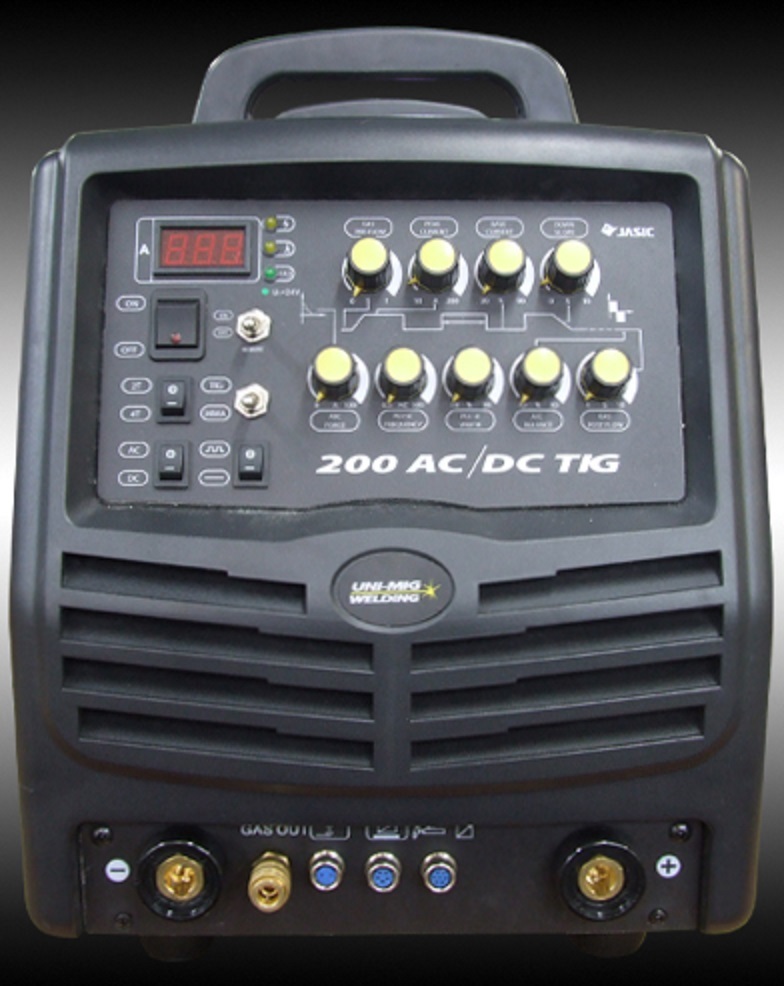
Alright, let's talk about welding aluminum like a boss! Specifically, let's dive into the electrifying world of AC versus DC when you're TIG welding that shiny metal. Don't worry, we'll keep it simple, fun, and maybe even a little bit dramatic!
The Great Aluminum Welding Debate: AC vs. DC
So, you're about to fire up your TIG welder and tackle some aluminum. Fantastic! But then the question hits you like a rogue wave: AC or DC? It's a question that has plagued welders for ages, a true battle of the currents.
DC: The Straight Shooter (Mostly)
Let's start with DC, or Direct Current. Think of it like a trusty old pickup truck – reliable and straightforward. With DC, the current flows in one direction, like a river heading downstream.
Now, for welding aluminum, DC negative polarity (DCEN) is usually what we're talking about. The electrode is negative, and the work piece is positive. This puts a lot of heat into the work piece.
DC welding provides a deeper, narrower weld. Great for thicker materials, almost similar to driving a nail in one shot.
It’s fantastic for welding steel and stainless steel. However, with aluminum, the game changes a bit. It will work on aluminum, but it's not the ideal choice for most applications.
Why? Because of aluminum oxide, that pesky layer that forms on aluminum's surface. It's tough stuff, and DC struggles to blast it away effectively.
Imagine trying to scrub a greasy pan with cold water. Yeah, good luck with that! DC, in this aluminum scenario, is like that cold water. It's not getting the job done efficiently, especially to remove oxides.
AC: The Two-Faced Hero
Now, enter AC, or Alternating Current! Think of AC as the superhero of aluminum welding. This is where the magic happens, like a transformer in a movie.
AC is like a two-way street. The current switches direction constantly, typically 50 or 60 times per second (that's the Hertz, baby!).
When you're TIG welding aluminum with AC, one half of the cycle is like DCEN. It throws the heat at the aluminum. The other half of the cycle is like DC positive polarity (DCEP), where the electrode is positive, and the work piece is negative.
And this DCEP part is where the oxide cleaning action comes in. It blasts away that aluminum oxide layer like a superhero with a laser beam to clean the surface.
Think of it like a tiny army of microscopic scrub brushes. One side heats the metal, the other side scrubs it clean. Back and forth, back and forth.
That’s why with AC, you can get good penetration and keep a clean weld. It is like using hot, soapy water to clean that greasy pan. Much better!
It's a dynamic process, creating a beautiful, clean weld that's ready for anything. Imagine building a sleek, modern aluminum sculpture. You'd want AC for that smooth, professional finish!
Why AC is the King (Most of the Time)
Okay, so we've seen the players. Now, let's crown the champion: AC! While DC has its uses, AC is generally the go-to choice for TIG welding aluminum. It offers the best of both worlds: heat and cleaning action.
The self-cleaning action, often called "oxide cleaning" or "cathodic etching," is crucial for a strong, sound weld. Without it, your weld could be contaminated with oxides, leading to porosity and cracking.
Imagine building a house on a shaky foundation. The house might look good at first, but eventually, it will crumble. Oxide left in the weld is like that shaky foundation.
AC provides a stable arc. Stable arc is like a steady hand, allowing you to create precise, beautiful welds with ease.
Think of it like painting a masterpiece. You need a steady hand and the right tools. AC provides that stability, allowing you to create welding masterpieces.
With all this in mind, choosing AC over DC when TIG welding aluminum isn't just a preference, it is a common sense!
But Wait! There's More! AC Balance and Frequency
Now, we're diving deeper into the AC world. Many modern TIG welders offer adjustable AC balance and frequency settings. These are like the secret ingredients in your welding recipe.
AC Balance: Finding the Perfect Equilibrium
AC balance controls the amount of time the current spends in each polarity. Adjusting the balance allows you to fine-tune the heat input and cleaning action.
A higher cleaning action (more time in DCEP) is great for dirty or heavily oxidized aluminum. This helps to blasts that grime.
A higher heat input (more time in DCEN) is useful for thicker materials or when you want deeper penetration. It is like adding more fuel to the fire.
Adjusting the balance allows you to tailor the weld to the specific alloy and thickness of the aluminum. It's like adjusting the seasoning in a dish to your own preferences.
AC Frequency: Tuning the Arc
AC frequency controls how often the current switches direction. Higher frequency focuses the arc, creating a narrower weld bead. Lower frequency widens the arc, providing better cleaning action over a larger area.
High frequency is like using a laser pointer. It is precise and concentrated. Low frequency is like using a floodlight. It covers a wider area.
Higher frequencies can also help to reduce the heat-affected zone (HAZ), which is the area around the weld that is affected by the heat. Minimizing the HAZ can help to preserve the mechanical properties of the aluminum.
Think of it like cooking a steak. You want to sear the outside without overcooking the inside. High frequency can help to achieve that balance.
The Exceptions to the Rule
Okay, so we've established that AC is the king of aluminum TIG welding. But, as with any rule, there are exceptions. There is always a plot twist in a good story!
In some specialized applications, such as welding very thin aluminum, DCEN might be used. This allows for very precise heat control, preventing burn-through.
But these are rare cases. For the vast majority of aluminum TIG welding projects, AC is the way to go.
Conclusion: Embrace the AC, Conquer the Aluminum
So, there you have it! The electrifying truth about AC versus DC for TIG welding aluminum.
While DC has its place, AC is generally the superior choice for most applications. Its self-cleaning action, stable arc, and adjustable settings make it the ideal tool for creating strong, beautiful aluminum welds.
So, fire up your TIG welder, switch it to AC, and get ready to conquer that aluminum! With a little practice and the right settings, you'll be welding like a pro in no time. Now go forth and weld!
Remember, welding is a skill, and it takes time and practice to master. Don't be afraid to experiment, learn from your mistakes, and have fun along the way!