
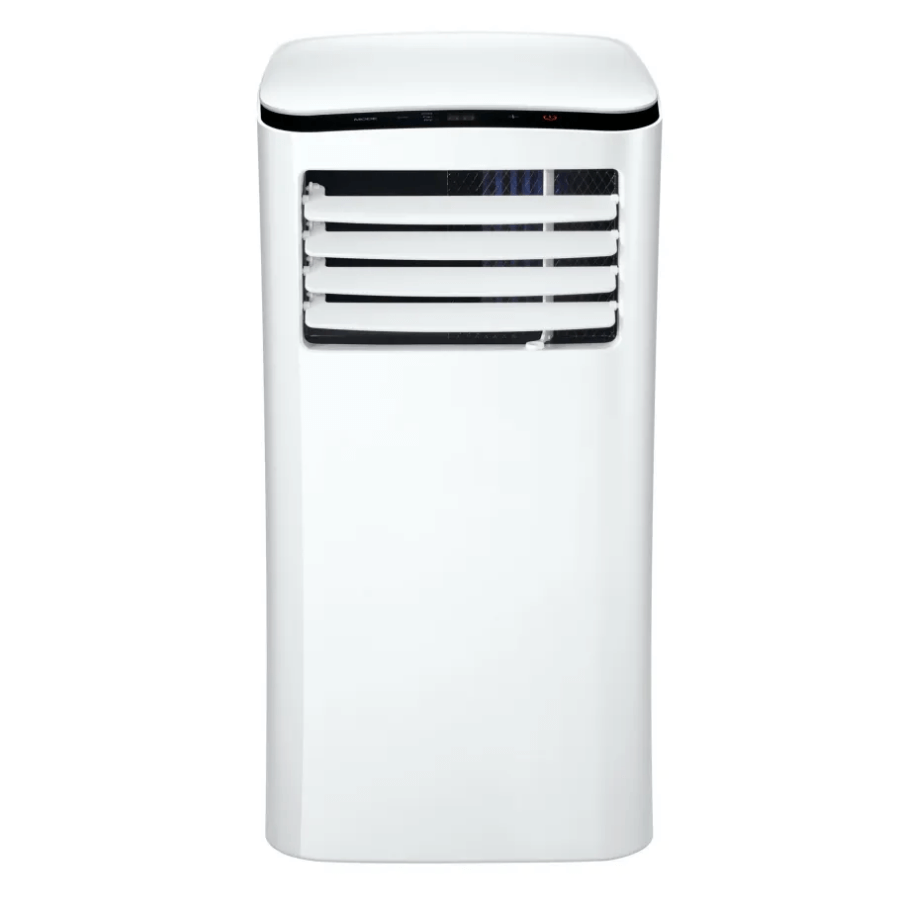
Summer. The season of sun-kissed skin, spontaneous road trips, and… relentlessly rising temperatures. But what happens when your apartment turns into an oven and your window AC unit just isn't cutting it? Enter the 9000 BTU portable air conditioner – your personal oasis of cool. But before you dive headfirst into arctic bliss, let's talk power. Specifically, how many watts is this thing actually sucking from the grid?
Think of BTU (British Thermal Units) as a measure of cooling power. 9000 BTU is generally ideal for cooling spaces around 350-400 square feet – a bedroom, a small living room, maybe even your meticulously organized home office (we all have one, right?).
The Wattage Breakdown: No Need for an Electrical Engineering Degree
Okay, let's get down to brass tacks. A 9000 BTU portable AC typically consumes somewhere in the neighborhood of 800 to 1200 watts. Why the range? Well, it depends on a few things:
- The Efficiency Rating (EER): This is like the miles per gallon of air conditioners. A higher EER means more cooling with less energy. Look for an EER of 9 or higher for better efficiency.
- Features: Does it have a built-in dehumidifier? Extra fan speeds? Fancy digital displays? All these extras add to the wattage draw.
- Start-Up Surge: When you first turn on the AC, it needs a little extra juice to get the compressor going. This is called the "start-up surge" and can temporarily double or even triple the wattage. This is important to know so you don't trip your breaker.
To get a more precise number, check the energy guide sticker on your unit. It should list the estimated annual energy consumption in kilowatt-hours (kWh). You can then calculate the wattage by dividing the annual kWh by the number of hours you anticipate using the AC per year.
Practical Tips for Keeping Your Energy Bill From Exploding
So, you've got the wattage intel. Now, how do you keep your electricity bill from looking like a horror movie script? Here are a few sanity-saving strategies:
- Seal the Deal: Make sure your windows and doors are properly sealed to prevent cool air from escaping and hot air from creeping in. Think of it like patching up the Millennium Falcon before a hyperspace jump – gotta keep the atmosphere contained!
- Strategic Placement: Don't stick your AC unit in direct sunlight. Give it some shade to help it run more efficiently.
- Set a Timer: Use the timer function to cool your room before you arrive home or to automatically turn off the AC after you fall asleep. Nobody needs to freeze all night long.
- Embrace the Fan: Sometimes, all you need is a little air circulation. Use the fan mode on your AC or supplement with a ceiling fan to distribute the cool air.
- Regular Maintenance: Clean the filter regularly to ensure optimal airflow. A clogged filter makes your AC work harder, consuming more energy. It's like trying to run a marathon with a stuffy nose – not fun!
Watts in Context: A Pop Culture Interlude
Okay, 1000 watts. That sounds like a lot, right? But let's put it into perspective. A standard microwave typically uses around 1000 watts. So, running your 9000 BTU portable AC is roughly equivalent to nuking a bag of popcorn. Or consider this: a powerful gaming PC can easily draw 500-700 watts. So, choosing between fragging noobs online or staying cool…tough choices!
And remember that famous line from *Back to the Future* about needing 1.21 Gigawatts for the flux capacitor? Well, that's a lot more than your portable AC needs. You're safe from time travel paradoxes for now.
Consider this too: LED bulbs use significantly less power than incandescent bulbs. Swap out those old energy hogs, and you might even offset the cost of running your AC!
Quick tip: Many power companies offer time-of-use rates, meaning electricity is cheaper during off-peak hours. Run your AC during those times to save money.
The Cool Down: Connecting to Daily Life
Understanding the power consumption of your appliances, even something as seemingly simple as a portable AC, is about more than just saving money. It's about being mindful of our energy footprint and making conscious choices that benefit both our wallets and the environment. It's about appreciating the comfort and convenience we have while striving to be more responsible consumers.
So, next time you crank up your 9000 BTU portable air conditioner, take a moment to appreciate the science behind the cool breeze and the small steps you can take to make that breeze a little bit greener. After all, staying cool should be sustainable, too. Stay frosty, friends!


