Alright, let's talk 3D printing! It's basically like having a mini-factory sitting right on your desk. Pretty cool, right? But one question always pops up: How long does it *actually* take?
Think of it like baking a cake. You don't just throw everything in the oven and *poof* – instant masterpiece. There's prep time, baking time, cooling time… 3D printing is similar, but instead of flour and sugar, we're dealing with plastic (or metal, or even chocolate!).
So, What Affects Printing Time?
Okay, picture this: you want to 3D print a tiny, adorable turtle. Sounds quick, yeah? Now imagine you want to 3D print a life-size replica of the Eiffel Tower. Suddenly, "quick" is a distant memory!
That's because several factors play a HUGE role in determining how long your print job will take. Let's break it down:
- Size Matters (Obviously!): This is a no-brainer. A larger object requires more material and more time to build, layer by layer.
- Complexity is Key: Got lots of intricate details? Think complex geometric shapes, overhangs, or delicate features? That's going to add time. Simple shapes print faster. Imagine drawing a square versus drawing a hyper-realistic portrait!
- Layer Height: This is how thick each layer of plastic (or whatever material you're using) is. Thicker layers mean faster printing, but you might lose some detail. Thinner layers take longer but give you a smoother, more refined finish. Think of it like painting a wall: one thick coat versus two thin coats.
- Infill Density: Do you want a solid object or something more hollow? Infill refers to the internal structure of your print. A higher infill density means a stronger, more solid object, but it also takes longer to print. Less infill, less time, but potentially a weaker print.
- Material Type: Different materials print at different speeds and temperatures. PLA (a common, easy-to-use plastic) generally prints faster than ABS (a stronger, more heat-resistant plastic). And materials like nylon or polycarbonate? Buckle up; those can take even longer!
- Printer Speed: Some printers are just plain faster than others. It's like comparing a super-charged sports car to a reliable, but slower, family sedan. The printer's hardware and software capabilities make a big difference.
Okay, Give Me Some Real Numbers!
Alright, alright, I hear you. You want some hard numbers! But remember, these are just estimates. It *really* depends on all the factors we just talked about.
Generally speaking:
- Small, simple objects (think a keychain or a small figurine): Could take anywhere from 30 minutes to a couple of hours.
- Medium-sized, moderately complex objects (like a phone case or a small toy): Expect 2 to 8 hours.
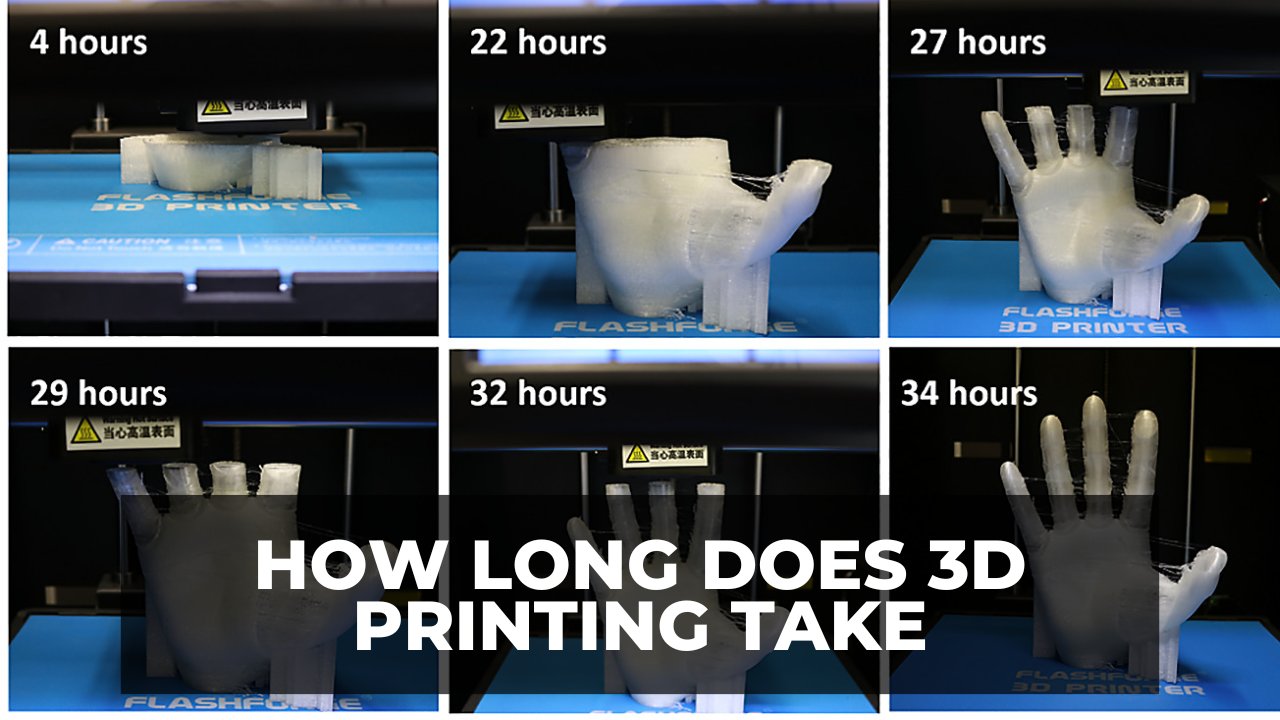
- Large, complex objects (like a helmet or a complex mechanical part): Get ready for an overnight (or even multi-day!) print job. We're talking 8 to 24+ hours here!
Think of it this way: 3D printing isn't about instant gratification. It's more like a marathon than a sprint.
Is It Worth the Wait?
Absolutely! Even though it can take time, 3D printing is an amazing technology. Where else can you create a physical object, *designed by you*, from scratch? You can prototype inventions, create custom tools, or even just make cool stuff for fun.
And honestly, there's something incredibly satisfying about watching a 3D printer slowly but surely build your creation, layer by layer. It's like watching a little miracle happen before your eyes! It's a process, yes, but it's a rewarding one.
So, the next time you're wondering how long a 3D print will take, remember that it's all about the details. And while you're waiting, maybe you can design your next awesome creation!