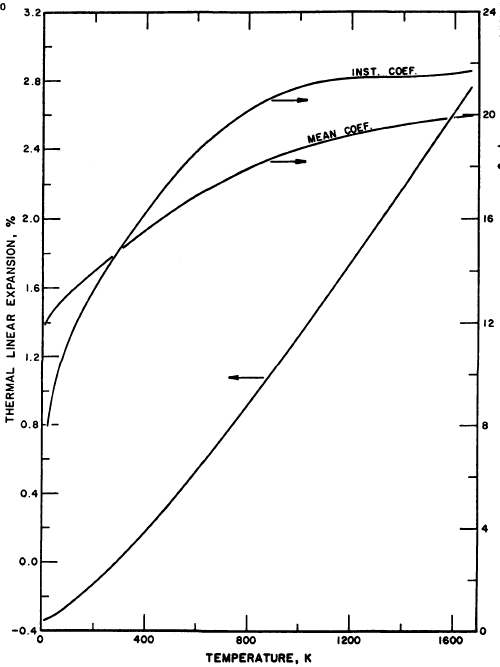
Hey! So, we're talking 304 stainless steel today, right? Specifically, its coefficient of thermal expansion. Sounds thrilling, doesn't it? (Okay, maybe not *thrilling*, but bear with me!) Think of it this way: it's how much this stuff stretches or shrinks when it gets hot or cold.
The magic number we're looking at is 17e-6. Or, if you're allergic to scientific notation (like my grandma, bless her heart), that's 0.000017. What does that actually *mean*, though?
Decoding the Mystery Number
Well, imagine you have a one-meter-long (that’s about 3 feet 3 inches for my American friends!) piece of 304 stainless steel. Now, crank up the heat by one degree Celsius. How much longer does it get?
Answer: 0.000017 meters. Which, let's be honest, is tiny! We're talking seventeen *millionths* of a meter. You probably wouldn’t even notice it without some super-fancy measuring equipment. But trust me, it matters! Especially when you're designing, like, a bridge, or a spaceship, or anything where things need to fit together perfectly.
Think about it. Little changes add up. Imagine a massive pipeline. If you completely ignored thermal expansion, that pipeline could buckle under the pressure of temperature changes! Catastrophic, right?
Why 304 Stainless Steel?
Now, why are we even talking about 304 stainless steel in the first place? What makes it so special? Well, it’s pretty much the workhorse of the stainless steel world. It's strong. It's corrosion-resistant (meaning it doesn't rust easily – HUGE bonus!). And, yeah, it has that coefficient of thermal expansion we were just dissecting.
It's used in everything from kitchen sinks to architectural cladding to food processing equipment. Seriously, look around – you're probably within spitting distance of something made of 304 stainless steel right now. (Please don't actually spit, though. Manners, people!)
The Coefficient: Important for… Stuff!
So, that 17e-6 number? It's crucial for engineers. They need to know how much things will expand and contract to design things properly. Think about a piston in an engine. The engineer has to account for that expansion to prevent the piston from seizing up in the cylinder. No one wants a seized-up engine, am I right?
Or what about those fancy glass buildings with stainless steel frames? The designers need to make sure the steel and glass expand at roughly the same rate. If they don’t, you get stressed glass… and potentially shattered windows. Nobody wants that raining down on their head. (Okay, slight exaggeration, but you get the idea!).
And it’s not just expansion. It’s also contraction. Cold temperatures can shrink things, creating gaps and stresses. Imagine building a bridge in Alaska where temperatures can swing wildly from summer to winter. Ignoring thermal expansion there? A recipe for disaster!
It’s all about keeping things stable, predictable, and, you know, not falling apart.
Comparing to Others
How does 304's coefficient compare to other materials? That’s a great question! (I'm so glad you asked, even if you didn't). Generally, stainless steel expands more than carbon steel but less than aluminum. So, designers have choices to make based on the specific application.
Everything is a trade-off, isn't it? Strength versus weight, corrosion resistance versus cost, and, yes, thermal expansion versus… something else equally important. It’s all a balancing act.
So, What's the Takeaway?
Basically, that little number, 17e-6, is more powerful than it looks. It's a critical piece of the puzzle for engineers designing all sorts of things. It's a reminder that even tiny changes in temperature can have significant consequences.
And it's proof that even seemingly boring topics (like the coefficient of thermal expansion) can be surprisingly interesting... right? Okay, maybe I’m reaching a bit there. But hopefully, you learned something! Now, about that second cup of coffee…
Thanks for reading!