Being Able To Assess And Prioritize The Need For
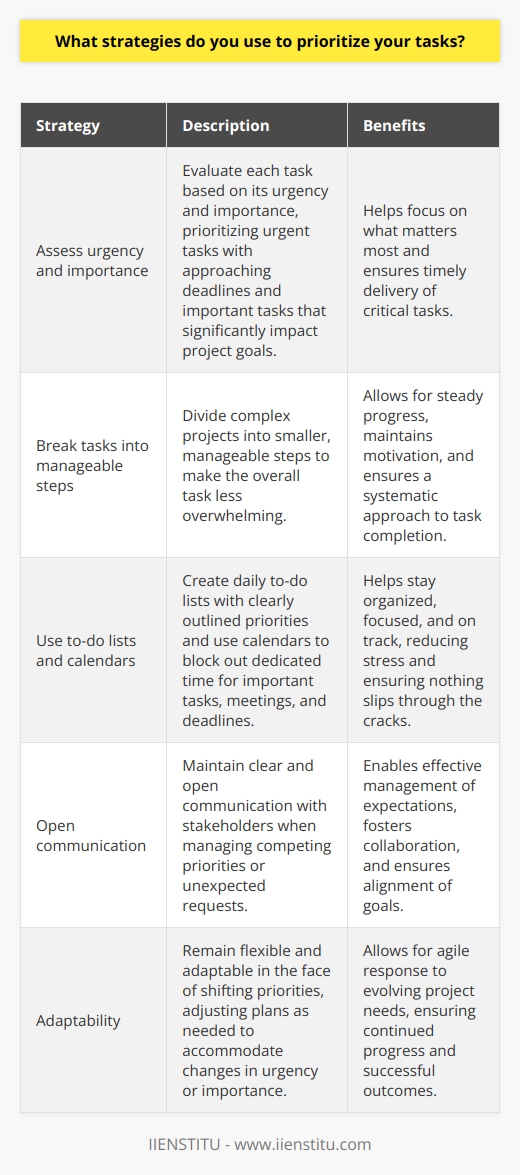
Okay, picture this: you're juggling flaming torches (metaphorically, I hope!). Work deadlines are breathing down your neck, your dog needs a vet appointment ASAP, your grandma's birthday is next week (and you haven't even thought about a gift!), and oh yeah, your sink is leaking like a sieve. Sound familiar? We've all been there, swimming in a sea of urgent things.
For me, this usually involves a stack of emails that look like they're plotting world domination. So how do we, mere mortals, conquer this chaos? It all boils down to one key skill: being able to assess and prioritize needs. And trust me, it's a superpower. Well, maybe not superpower, but definitely a seriously helpful power.
Why is Prioritization So Darn Important?
Because let's face it: we only have 24 hours in a day (unless you’ve discovered a time-bending device, in which case, please share!). We can't do everything at once, no matter how hard we try. Trying to do so leads to burnout, stress, and probably a half-baked job on everything. Think of it like trying to carry ten watermelons at once - you’re gonna drop some, and it’s gonna be messy.
Must Read
Prioritization lets us focus our energy where it matters most. It allows us to distinguish between the truly important tasks and the ones that can wait, be delegated, or even be scrapped altogether. (Yes, sometimes, the best thing you can do is say "no").
Assessing the Landscape: What's Actually a Need?
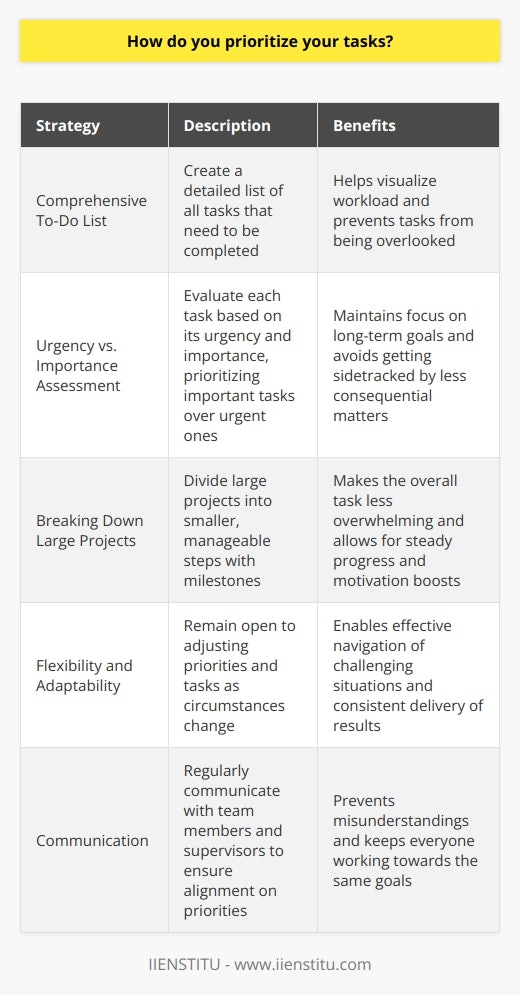
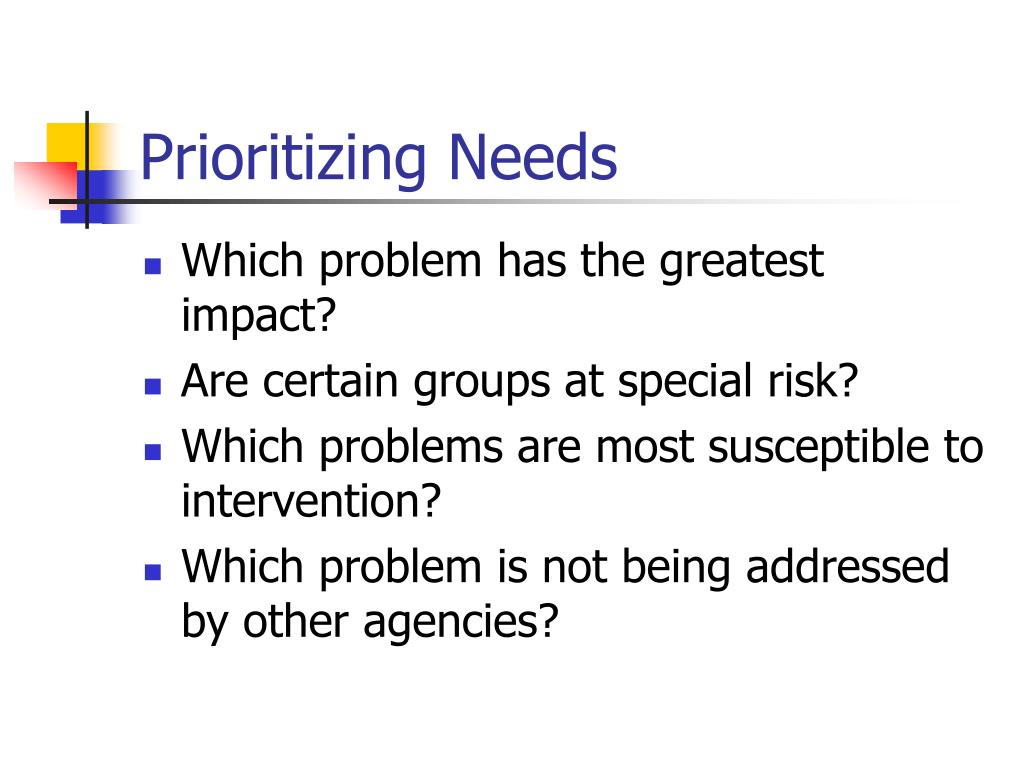
First things first: we need to figure out what qualifies as a "need" in the first place. Is it a genuine necessity, or just something that feels urgent? This is where objectivity comes in handy. Ask yourself these questions:

- What are the consequences if this task isn't completed?
- Is there a deadline attached? A real, hard deadline, or just a suggested one?
- Who is impacted by this task? Me? My team? The entire company? My sanity?
- What resources are required? Time, money, other people's help?
Don't just go with your gut feeling, although your intuition can be useful! But relying purely on feeling usually lands you in the "reacting to every ping" zone, which is not a fun place to be. Trust me on this one.
The Art of Prioritization: Making the Tough Choices
Okay, so we've identified our needs. Now comes the tricky part: ranking them. There are several prioritization methods you can use, so find one that clicks with you:
- The Eisenhower Matrix (Urgent/Important): This classic method categorizes tasks into four quadrants: Urgent and Important (do these first), Important but Not Urgent (schedule these), Urgent but Not Important (delegate these), and Not Urgent and Not Important (eliminate these).
- The Pareto Principle (80/20 Rule): This suggests that 80% of your results come from 20% of your efforts. Identify the 20% of tasks that will yield the biggest impact and focus on those.
- Weighted Scoring: Assign numerical scores to each task based on factors like impact, urgency, and required effort. Total the scores to rank your tasks. This one requires a little more effort, but it can be really effective.
No matter which method you choose, remember to be realistic. Overestimating your capacity is a surefire way to get overwhelmed. And be prepared to re-prioritize as new needs emerge. The landscape is always changing, after all.
Pro Tip: Learn to Say "No" (It's liberating!)
This is HUGE. You don't have to say yes to everything. Learning to politely decline tasks that are low-priority or outside your skillset is a game-changer. It frees up your time and energy for the things that truly matter. And don’t feel guilty about it! Your time is valuable. Protect it.
Think of it as building a fortress around your sanity. A very important fortress.
Final Thoughts: Prioritization is a Skill, Not a Talent
The good news is, anyone can learn to assess and prioritize needs effectively. It takes practice, self-awareness, and a willingness to experiment with different methods. Don't get discouraged if you don't nail it right away. It's a process, not a destination. Just keep at it, and you'll be juggling those metaphorical flaming torches like a pro in no time. Plus, you'll have a clean sink and a happy dog – bonus points!