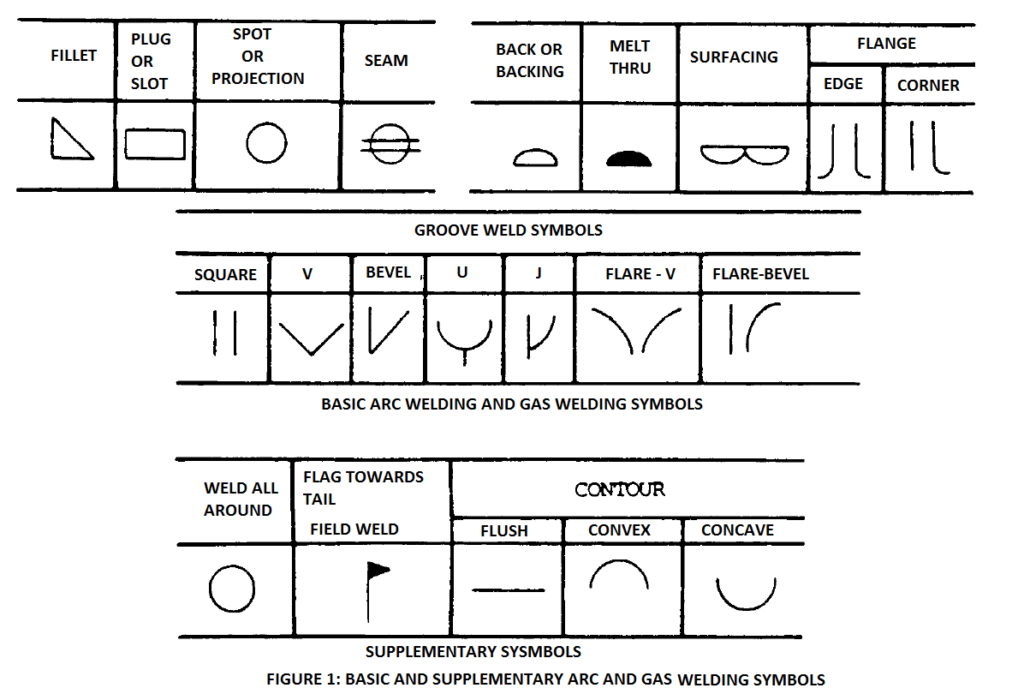
Basic Welding Symbols And Their Location Significance

Alright, gather 'round, folks! Let's talk welding symbols. I know, I know, sounds about as exciting as watching paint dry. But trust me, once you crack the code, it's like unlocking a secret language – the language of sticking metal together in the most awesome ways possible. Think of it as hieroglyphics, but instead of pharaohs and pyramids, it's all about beads and fillets and… well, more metal.
Now, before you start picturing yourself deciphering ancient texts, let's get one thing straight: welding symbols aren't about artistic expression (unless you're welding sculptures, then go wild!). They're about precision. They tell the welder exactly what kind of weld is needed, where it needs to go, and how big it needs to be. Mess it up, and you might end up with a bridge that resembles a wobbly toddler's block tower. Nobody wants that!
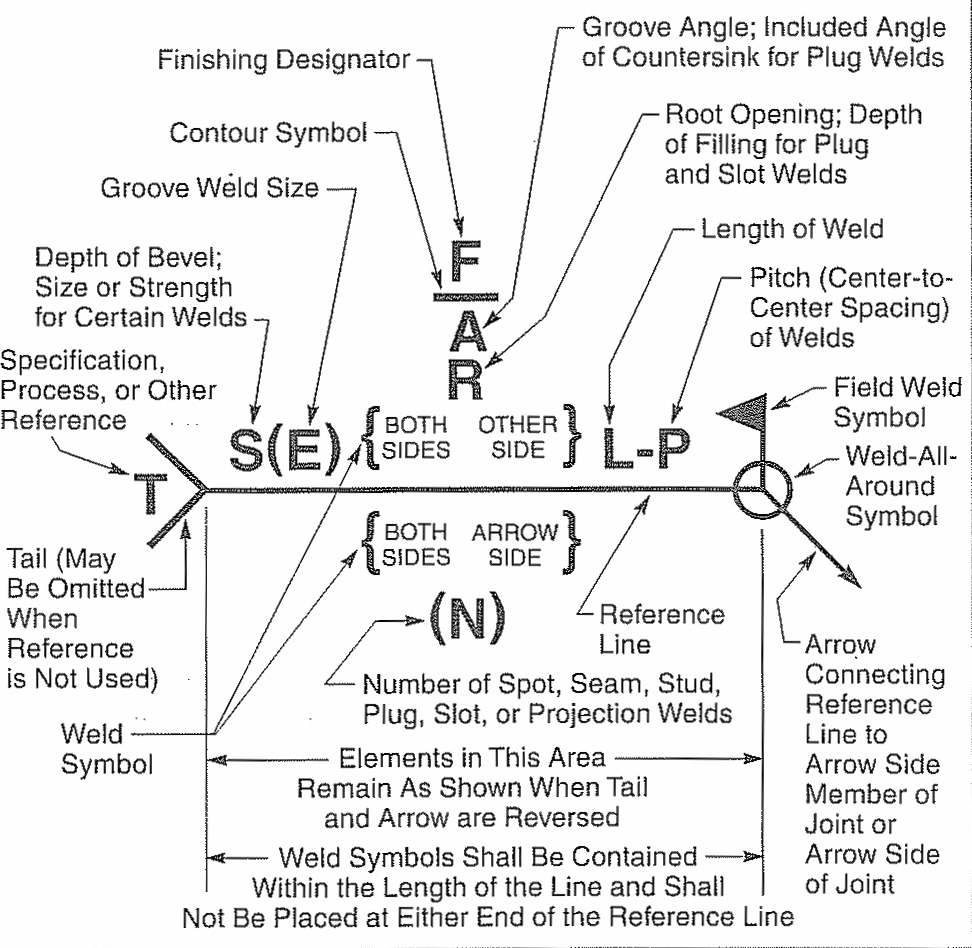
The Arrow: Your Welding GPS
The star of the show is the arrow. This bad boy points to where the weld is going to be. Imagine it as a tiny metal-seeking missile, except it doesn't explode (hopefully!). The arrow has a head, obviously, which touches the joint where the weld is needed. Pretty straightforward, right?
Must Read
But here's where it gets a little more… interesting. Attached to the arrow is the reference line, a straight horizontal line. Think of it as the main street of Welding Symbol Town. Everything else hangs off this line, like weird and wonderful shops selling crucial information.
Joke Alert! Why did the welder break up with the engineer? Because they couldn't agree on which side of the reference line to put the fillet weld symbol! (I know, I know, I'll show myself out...).
Above and Below: The Great Reference Line Divide
This is where the location significance comes into play. The stuff above the reference line applies to the side opposite the arrow. The stuff below the reference line applies to the side the arrow is pointing to. Confused yet? Don't worry, we'll break it down. Imagine the reference line is the equator. What’s above is the Northern Hemisphere (opposite the arrow), and what's below is the Southern Hemisphere (arrow side). Easy peasy!
Let's say you see a fillet weld symbol (a little triangle) below the reference line. That means the fillet weld should be on the side the arrow is directly pointing to. Conversely, if the triangle is above the line, the fillet weld goes on the opposite side. It's like a secret handshake for welders. “Triangle below? You weld on my side!” “Triangle above? You weld on their side!”
If symbols appear on both sides of the reference line, you're looking at a weld that's needed on both sides of the joint. Congratulations, you've just unlocked the secret to maximum metal bonding!
Decoding the Symbols: It's Not Rocket Science (But Almost)
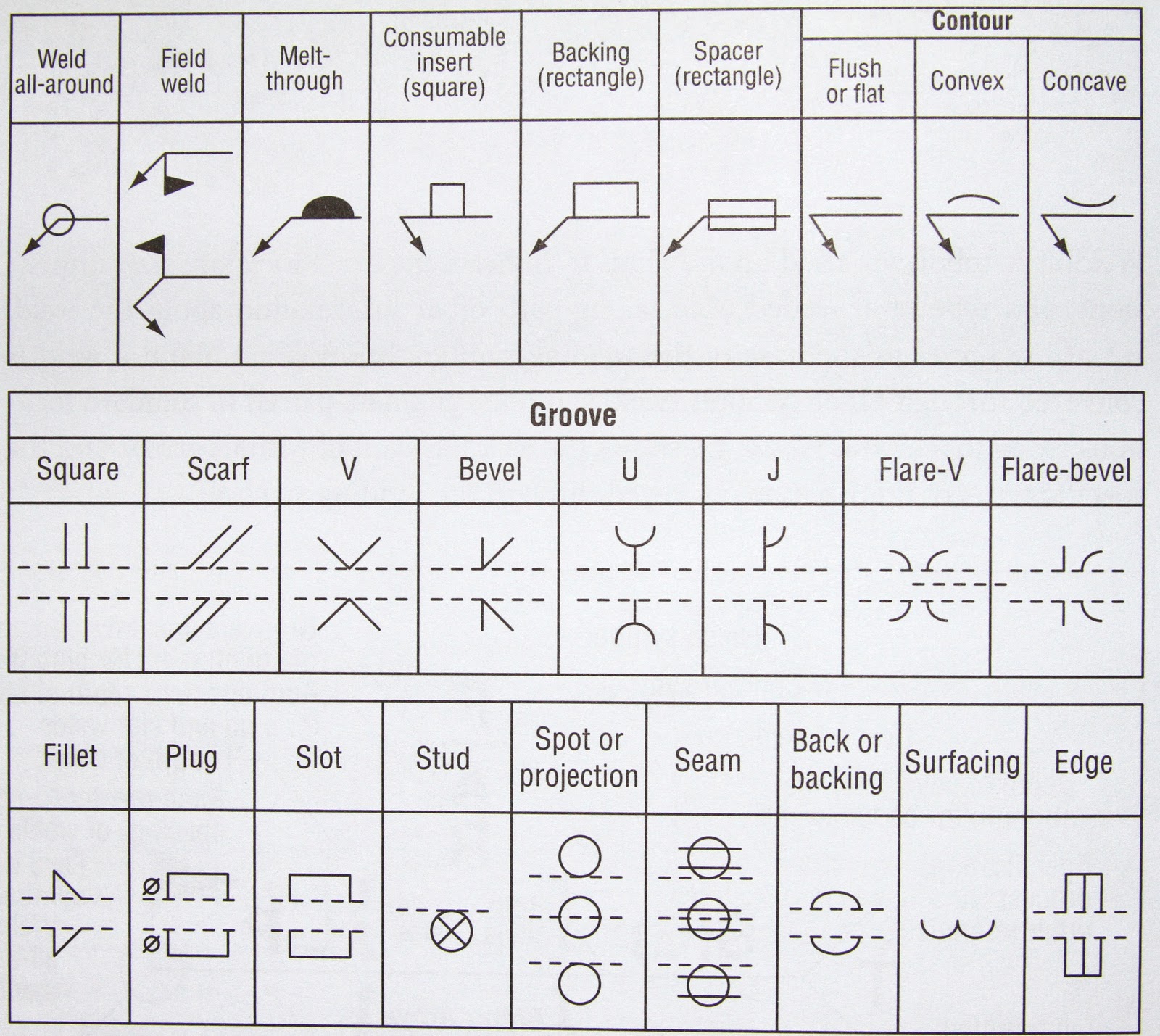
Now, what about the symbols themselves? Let's look at a few common ones:
- Fillet Weld (Triangle): The most popular kid in Welding Symbol High School. Means, well, a fillet weld. The leg size is usually written to the left of the triangle.
- Groove Weld (Various shapes): Square, V, U, J... These describe the shape of the groove you need to create before welding. Think of it like picking the right cookie cutter before baking.
- Plug or Slot Weld (Rectangle or Oval): For filling holes or slots. Useful for situations where you need extra strength.
- Spot Weld (Circle): For joining sheets of metal. Think of it like staples, but made of molten metal.
Numbers around the symbols usually indicate size, length, pitch (the distance between welds if you're doing intermittent welds), and other crucial dimensions. These numbers are your friends. Treat them kindly.

Location, Location, Location! (and Other Important Stuff)
The beauty of welding symbols is their consistency. Once you learn the basic rules about the arrow, the reference line, and the symbol placement, you can decipher almost any welding drawing. It's like learning the rules of grammar for metal!
Fun Fact: Welding is used in everything from building skyscrapers to creating tiny medical devices. So, mastering these symbols means you're basically contributing to the backbone of modern civilization! Pretty cool, huh?
So next time you see a welding symbol, don't run away screaming. Embrace it! Decipher it! And remember, it's all about location, location, location! (And knowing your groove welds from your fillet welds.) You'll be speaking the language of metal in no time!