Average Cost To Install Whole House Generator

Okay, so picture this: you’re making a batch of your famous, secret-recipe chocolate chip cookies. The oven's preheated, the butter's perfectly softened (not melted, you monster!), and then BAM! The lights flicker, the oven dies, and the only thing rising is your blood pressure. Sound familiar? That's where a whole-house generator comes in. It’s like having a tiny power plant guarding your sanity... and your cookies.
So, How Much Does This Magical Box Cost?
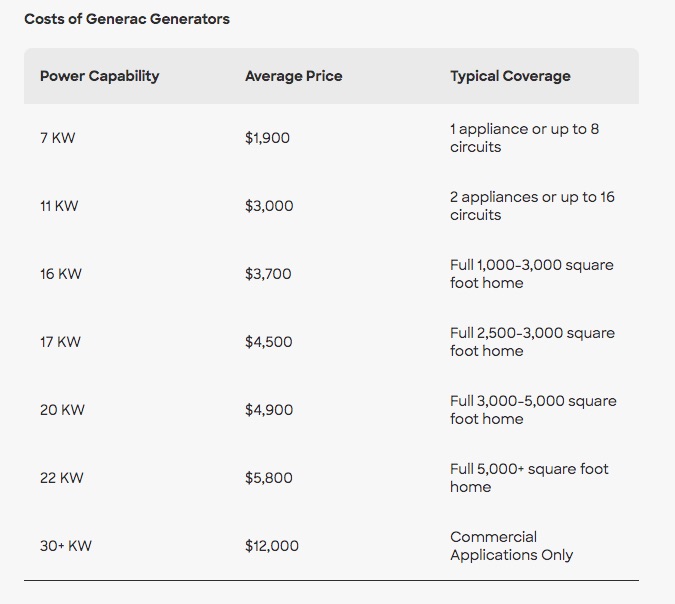
Alright, let's talk turkey, or maybe kilowatt-hours. The average cost to install a whole-house generator… well, it’s a bit like asking how much a car costs. You can get a used Yugo for a song (though, maybe don't), or a Rolls Royce that requires a second mortgage. Generally speaking, you’re looking at a range from around $3,000 to $15,000. Yes, I know, that's a wider range than my Aunt Mildred's dating pool.
Now, before you choke on your coffee, let's break it down. Think of it like this: you're not just buying a box that hums. You're buying peace of mind, the ability to binge-watch Netflix during a blizzard, and the bragging rights to be the only house on the block with glowing lights after a rogue squirrel takes out the power lines (again!).
Must Read
The Nitty-Gritty: What Drives the Price?
Okay, let's get into the weeds a little, but I promise I'll keep it light. Here’s what makes the price tag do the cha-cha:
- Generator Size (Kilowatts): This is like the engine size. The bigger your house and the more appliances you want to run, the bigger the generator you'll need. Think small apartment = polite little generator. Mansion with indoor pool and a server farm = Godzilla of generators.
- Fuel Type: You've got options! Natural gas is generally cheaper to run (if you have a natural gas line already), but propane offers more flexibility and can be stored easily (hello, giant propane tank!). Diesel is another option, typically for larger generators, but let's be honest, who wants to smell like a truck stop 24/7?
- Automatic vs. Manual Transfer Switch: This is the brains of the operation. An automatic transfer switch (ATS) detects a power outage and kicks the generator on automatically. Think of it as a superhero that leaps into action without you even asking. A manual switch? Well, that’s like having a superhero who needs you to remind them to put on their cape. Cheaper, but requires you to go outside in the dark during a storm. Not ideal.
- Installation Costs: This is where things get interesting. You'll need a qualified electrician and possibly a plumber (depending on the fuel type). Permits, inspections, trenching, and wiring all add to the total. Get multiple quotes! Think of it as dating – don’t just settle for the first offer.
Hidden Costs and Unexpected Twists!
Ah, the joys of homeownership! Just when you think you've got it all figured out, a new expense pops up like a weed in your perfectly manicured lawn. Here are a few potential surprise costs:
- Permits: Your local government loves paperwork. Don't skip this step!
- Site Preparation: Is your yard perfectly level and ready for a generator? Probably not. Expect some grading and leveling.
- Noise Dampening: Generators can be… enthusiastic. Consider soundproofing measures to keep your neighbors (and your sanity) intact.
- Maintenance: Like a car, generators need regular maintenance. Oil changes, filter replacements, and general check-ups are essential.
Is It Worth It? The Million-Dollar Question (Okay, Maybe Just a Few Thousand)
Ultimately, whether a whole-house generator is worth the investment depends on your individual needs and tolerance for chaos. If you live in an area prone to frequent power outages, or if you rely on electricity for medical equipment, then it’s a no-brainer. But even if you just hate the thought of your ice cream melting during a summer storm, a generator can provide invaluable peace of mind.
Think of it this way: It's an investment in your comfort, convenience, and possibly your sanity. Plus, you can finally finish those cookies, right? And let’s be honest, that alone might be worth the price tag.

Do your research, get multiple quotes, and ask lots of questions. And remember, a little planning can prevent a whole lot of "lights out, party's over" scenarios.
Disclaimer: I'm just a friendly voice in the digital void, not a licensed electrician or financial advisor. Consult with qualified professionals before making any major purchases. And for goodness sake, don’t try to install a generator yourself unless you know what you’re doing. Electricity is not something to mess around with. You've been warned!