Average Cost Of Electricity Per Kilowatt Hour
Ever wondered how much that magical zap that powers your life actually costs? We're talking electricity, folks! And the key to unlocking that mystery is the price per kilowatt-hour, or kWh. Don't worry, it sounds way scarier than it is. Think of it as buying electricity in tiny, convenient, power-packed packets.
What's a Kilowatt-Hour Anyway?
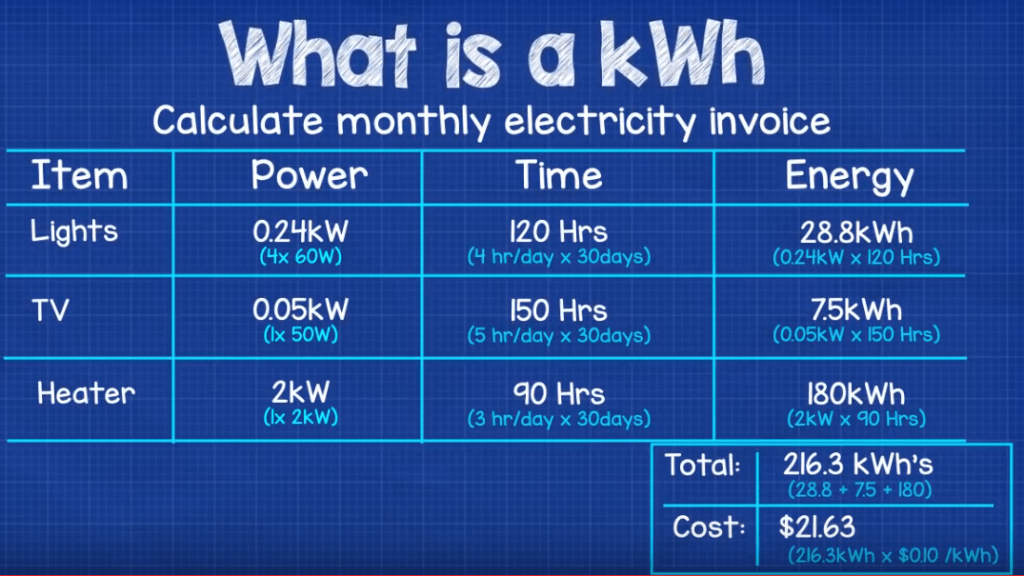
Okay, let's break this down like a glow stick on a dark dance floor. A kilowatt (kW) is simply a measure of power. Imagine your appliances are thirsty little machines, constantly demanding power. A kilowatt-hour (kWh) is the amount of energy they slurp up in an hour.
For example, if you have a 100-watt light bulb (that's 0.1 kW) and you leave it on for 10 hours, you've used 1 kWh of electricity. That's like... giving that little bulb a whole day's worth of sunshine-in-a-bottle!
Must Read
So, How Much Does This 'Sunshine-in-a-Bottle' Cost?
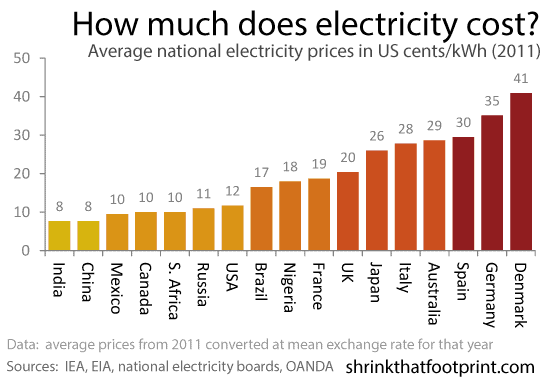
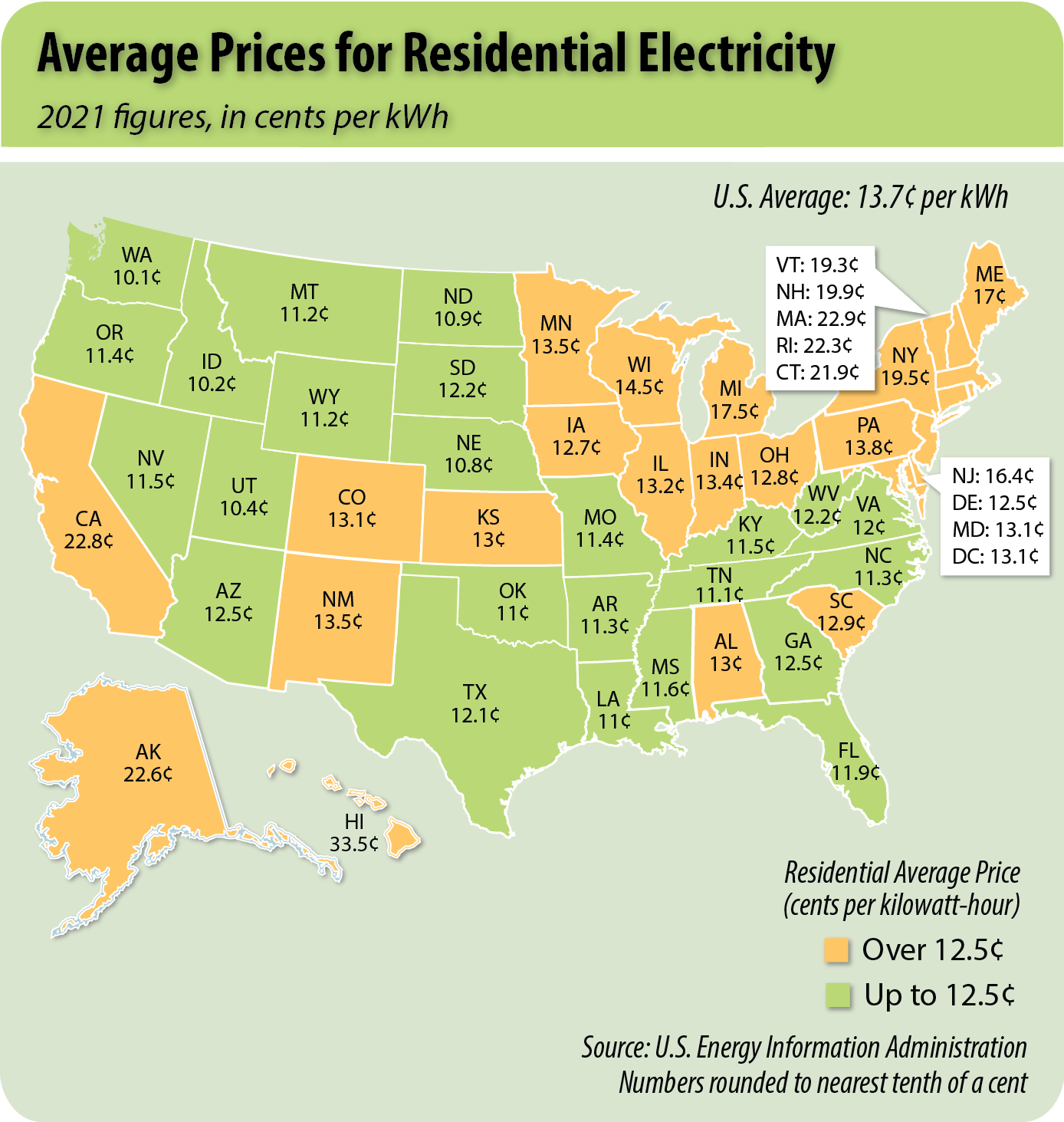
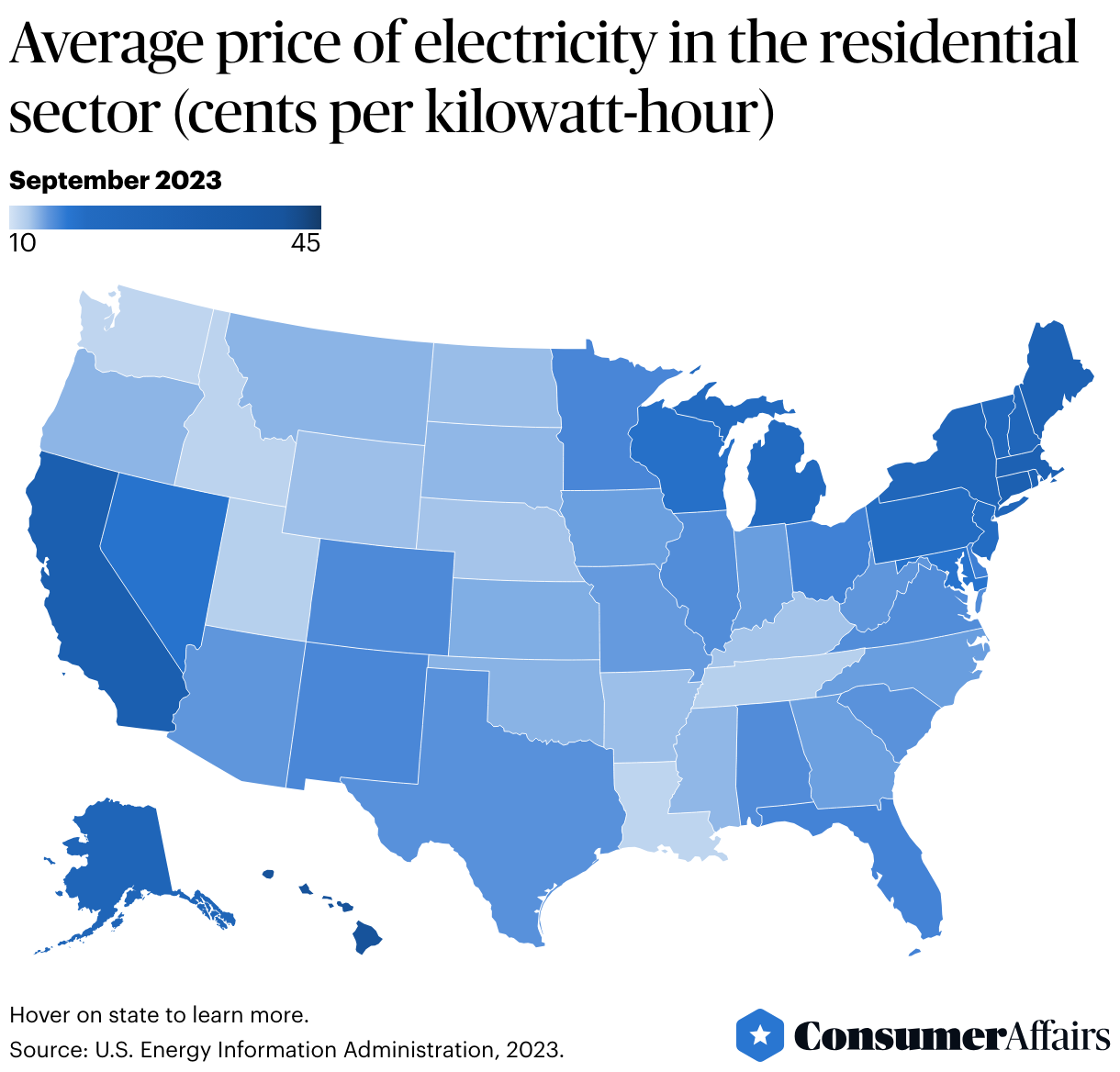
Here's the million-dollar (or rather, the 13-cent) question! The average cost of electricity per kWh in the United States hovers around 13-16 cents. But hold your horses, because this number is more like a chameleon than a statue. It changes depending on where you live.
Think of it like real estate. A mansion in Manhattan costs a wee bit more than a cozy cabin in Montana. Similarly, electricity in Hawaii (often upwards of 30 cents per kWh!) is significantly pricier than in states like Washington or Louisiana.

Why the difference? Lots of factors! Things like the type of fuel used to generate electricity (coal, natural gas, renewable sources), the local climate, and even government regulations can all play a role. It's a complex dance of energy economics!
Examples to Light Up Your Understanding
Let's put this into perspective with some everyday appliances. Imagine you're brewing a pot of coffee. A standard coffee maker might use around 1 kWh per hour. At 15 cents per kWh, that's 15 cents for your morning jolt. Not bad, right?
Now, let's say you're blasting the AC on a scorching summer day. Central air conditioning can guzzle 3-5 kWh per hour. Suddenly, that cool air costs you 45-75 cents per hour! Yikes! Time to invest in a good fan and maybe a pitcher of iced tea.
A Few More Fun Facts:
"Did you know that charging your smartphone costs pennies? Seriously, pennies! Think of it as a tiny sprinkle of electricity fairy dust."
A refrigerator, running 24/7, can use anywhere from 50 to 150 kWh per month. That's like having a tiny electric monster snacking on your energy supply all day and night! (But hey, at least it keeps your leftovers safe.)
Electric cars are gaining popularity, and their electricity consumption depends on the model and how far you drive. But generally, charging an electric car is significantly cheaper than filling up a gas tank. Think of it as fueling up with sunshine and saving the planet, one kilowatt-hour at a time!
How to Become an Electricity-Saving Superhero
Knowing the cost per kWh is the first step towards becoming an electricity-saving superhero! Here are a few tips to lower your bill and feel like a boss:
- Unplug electronics when not in use: Those "vampire" appliances are sucking energy even when they're off!
- Switch to LED light bulbs: They use a fraction of the energy of traditional bulbs.
- Use energy-efficient appliances: Look for the Energy Star label!
- Adjust your thermostat: A few degrees can make a big difference.
In conclusion, understanding the average cost of electricity per kWh empowers you to make informed decisions about your energy usage. So go forth, armed with knowledge, and conquer those kilowatt-hours! Your wallet (and the planet) will thank you!