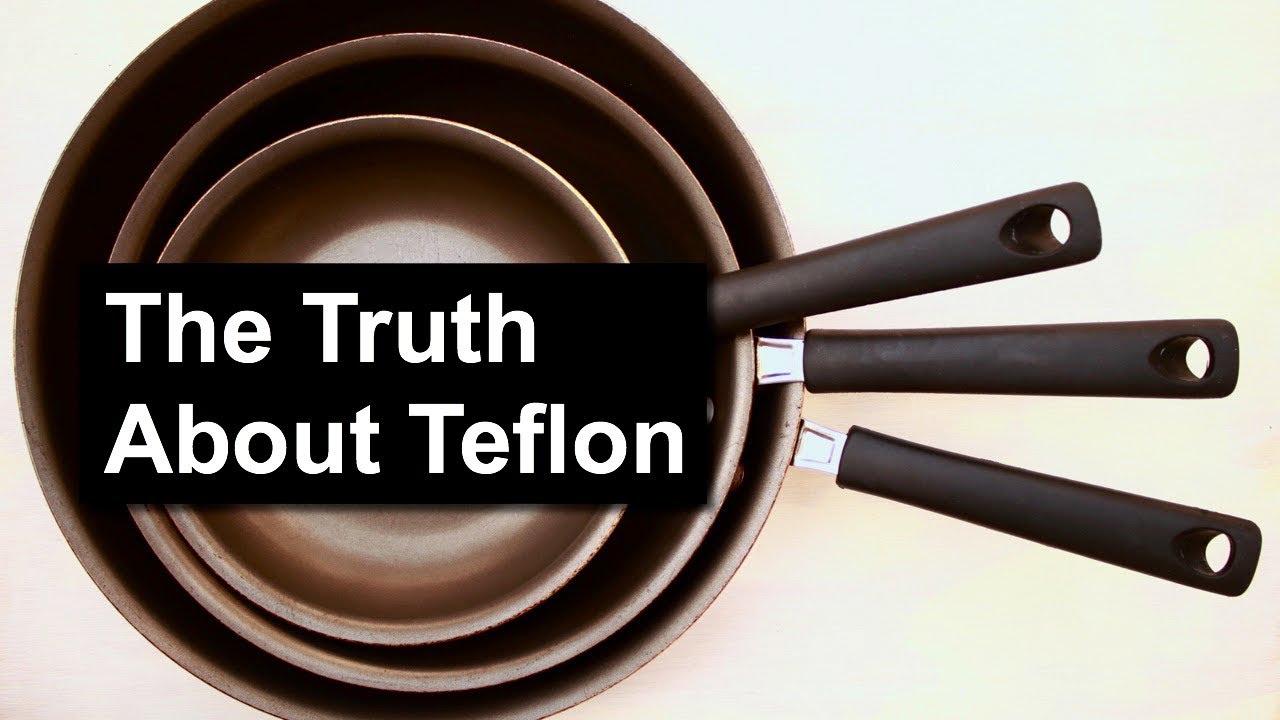
Let's talk about pans. Specifically, the slippery, glorious kind. You know the ones. The heroes of breakfast. The saviors of scrambled eggs. For years, one name ruled the roost: Teflon.
But then, whispers started. Articles appeared. New pan materials popped up like mushrooms after rain. Ceramic! Granite! Diamond-infused! It seemed like everyone was saying goodbye to our old friend Teflon. Did it really vanish?
I have an unpopular opinion. Lean in close. I think Teflon is still very much with us. Maybe it's just wearing a fancy new hat. Or perhaps it simply went on a long vacation and came back refreshed.
Think about it. You walk into any kitchen store today. You see a dazzling array of non-stick pans. They promise effortless cooking. They boast about being "PFOA-free" or "PFAS-free." These are good things, by the way. Important steps forward for our health and the environment.
But when you pick up that new, shiny pan, what do you expect? That perfect slide, right? The egg that just waltzes off onto your plate. The pancake that flips with zero drama. That, my friends, is the Teflon experience.
Are Teflon Pans Recyclable? || Tips For Recycling - Recycle Everything
Many of these "new" coatings are still members of the same family. They are advanced fluoropolymer coatings. They just don't use the specific older chemicals that raised concerns. So, while they might not be branded as plain old Teflon, the core technology, the magic slipperiness, is still very much akin to it.
Is it really a ceramic pan if it feels just like my grandma's reliable Teflon skillet?
Do Pans Still Use Teflon
We've all been there. You get a beautiful new pan. It's green! Or speckled like granite! It promises the world. For a while, it delivers. Everything slides. You feel like a master chef.
Then, after a few months, maybe a year, things start to change. A little sticky spot appears. Your omelet needs a gentle nudge. You start to miss the days of absolute, unyielding slipperiness. The kind only classic Teflon seemed to deliver without fail.
Many home cooks, myself included, have a deep, emotional connection to that effortless release. We want to cook without fear of scraping. We want cleanup to be a breeze. And for many, the closest thing to that ideal is still something that feels, acts, and performs just like what we used to call Teflon.
The Making Of Teflon Pans: A Step-By-Step Guide | CyCookery
The marketing has definitely shifted. Brands are eager to highlight their "safe" and "eco-friendly" alternatives. And we should applaud that. Innovation is wonderful. But let's be honest with ourselves.
When we say "non-stick pan," most of us are still picturing that dark, smooth surface. The one where butter melts and spreads without clinging. The one where cheese just glides off. That image is burned into our culinary brains.
Ceramic Pans vs. Teflon Pans (7 Main Differences)
My theory? The spirit of Teflon lives on. It has simply evolved. It has adapted. It has shed its less desirable aspects and emerged stronger, safer, and perhaps a little more sophisticated.
So, next time you're pan shopping, take a moment. Admire the fancy new names. Read the labels about being "free from this" and "free from that." But don't be surprised if the pan you truly fall in love with, the one that makes your morning eggs sing, is remarkably similar to the classic. The one we all knew and, let's face it, probably still adore.
Our old friend Teflon, or at least its very close cousins, is still making kitchens happier, one perfectly sliding pancake at a time. And frankly, I'm okay with that. Some traditions are just too good to completely let go of.