
Are Lithium Polymer Batteries Allowed On Planes

Hey there, fellow traveler! Ever packed your bags, buzzing with excitement for that dream vacation or crucial business trip, only to be hit with a wave of anxiety: "Wait, are my gadgets even allowed on the plane?" We've all been there, right?
Today, we're tackling a question that pops up in the minds of tech enthusiasts, photographers, drone pilots, and basically anyone who owns a smartphone (so, everyone!): Can I bring my lithium polymer batteries on a plane?
The short answer? Yes, but with a few crucial "buts." And trust me, understanding these "buts" can save you a massive headache (and potentially a confiscated drone!) at airport security. So, let's dive in!
Must Read
Understanding the Lithium Lion (…or Polymer)
First, a little battery basics. Lithium polymer (LiPo) batteries are the workhorses powering so many of our beloved devices. They're lightweight, pack a serious energy punch, and come in all shapes and sizes. Think smartphones, laptops, cameras, drones, power banks – the list goes on!
However, these batteries can be a bit… temperamental. They contain flammable electrolytes, and if damaged or mishandled, they can overheat and even catch fire. Nobody wants a battery fire at 30,000 feet, am I right?
That's why aviation authorities (like the FAA in the US and IATA internationally) have regulations in place to ensure everyone's safety. So, what are these rules, and how do they affect you?

The "Buts" of Bringing LiPo Batteries on Board
Okay, here's where it gets a little more specific, but don't worry, we'll break it down:
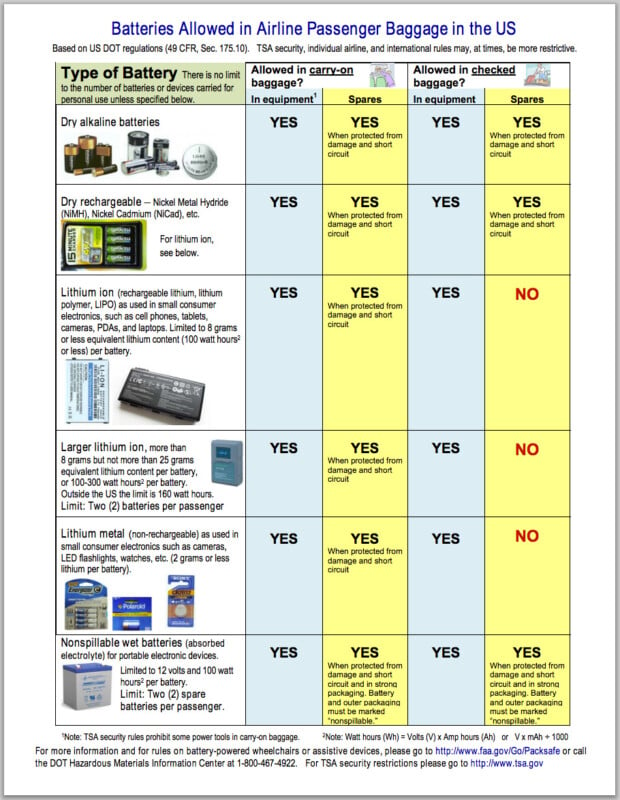
- Watt-hour (Wh) Rating is Key: This is the most important factor. Airlines generally allow lithium polymer batteries with a Wh rating of 100 Wh or less without any special approvals. Think your phone and most laptop batteries.
- 101-160 Wh: Batteries in this range may be allowed, but you'll likely need to get approval from the airline beforehand. Expect some questions about the battery's use and safety features.
- Over 160 Wh: Generally, these are a no-go in carry-on or checked baggage. They're considered too high-risk for passenger transport and usually require specialized cargo handling.
Where do you find this Wh rating? Look for it printed directly on the battery itself. It might also be listed as voltage (V) and amp-hours (Ah). If that's the case, you can calculate the Wh rating using this simple formula: Wh = V x Ah. (Don't worry, it's not rocket science!) For example, a 12V battery with 5Ah has a Wh rating of 60 Wh.
Carry-on is (Usually) King: Here's a big one! Regulations often stipulate that lithium polymer batteries should be carried in your carry-on baggage, not checked baggage. Why? Because if a battery does malfunction, the crew can quickly identify and deal with the situation in the cabin.

Protect Those Terminals! This is crucial. Short circuits are a major cause of battery fires. Make sure to individually protect each battery to prevent short circuits. Use the original packaging, tape over the terminals, or put each battery in a separate plastic bag.
Device vs. Spare Batteries: If a battery is installed inside a device (like your phone), it's generally fine to be in either your carry-on or checked baggage (though carry-on is still recommended). But spare batteries must always be in your carry-on.
Why All the Fuss?
I know, I know – it might seem like a lot of rules. But these regulations are in place to protect everyone on board. A single battery malfunction can have serious consequences, so taking these precautions is essential for safe air travel.
So, What Does This Mean for You?
Plan Ahead! Before you even start packing, check the Wh rating of all your lithium polymer batteries. If you have batteries in the 101-160 Wh range, contact your airline well in advance to get approval. Don't leave it to the last minute!
Proper Packaging is Paramount: Make sure your batteries are properly protected from short circuits. This small step can make a huge difference.
When in Doubt, Ask! If you're unsure about any regulation, don't hesitate to contact your airline or check the FAA's website. It's always better to be safe than sorry (and have your prized gadgets confiscated!).
By understanding these guidelines, you can travel with your gadgets worry-free and focus on what really matters: enjoying your trip!
Take Charge of Your Knowledge!
See? Navigating the world of LiPo batteries on planes isn't as daunting as it seems. A little bit of knowledge goes a long way in ensuring a smooth and safe travel experience. Now go forth, explore the world, capture those amazing memories, and know that you're doing it all safely and responsibly!
Feeling inspired to learn more about battery safety and travel regulations? Excellent! There's a whole world of fascinating information out there just waiting to be discovered. Start with the websites of the FAA (if you're in the US) or IATA. Happy travels, and happy learning!