
All Polymers Are Made Up Of
Let's talk about a big secret. It’s one of those things that science textbooks try to make sound super complicated.
But really, it's as simple as knowing that a sandwich is made of bread and filling.
Today, we're going to bravely explore the truly mind-blowing, yet incredibly obvious, truth about polymers.
Must Read
The Big Reveal: It’s Not Rocket Science!
You’ve heard of polymers, right? They sound very high-tech and maybe a little intimidating.
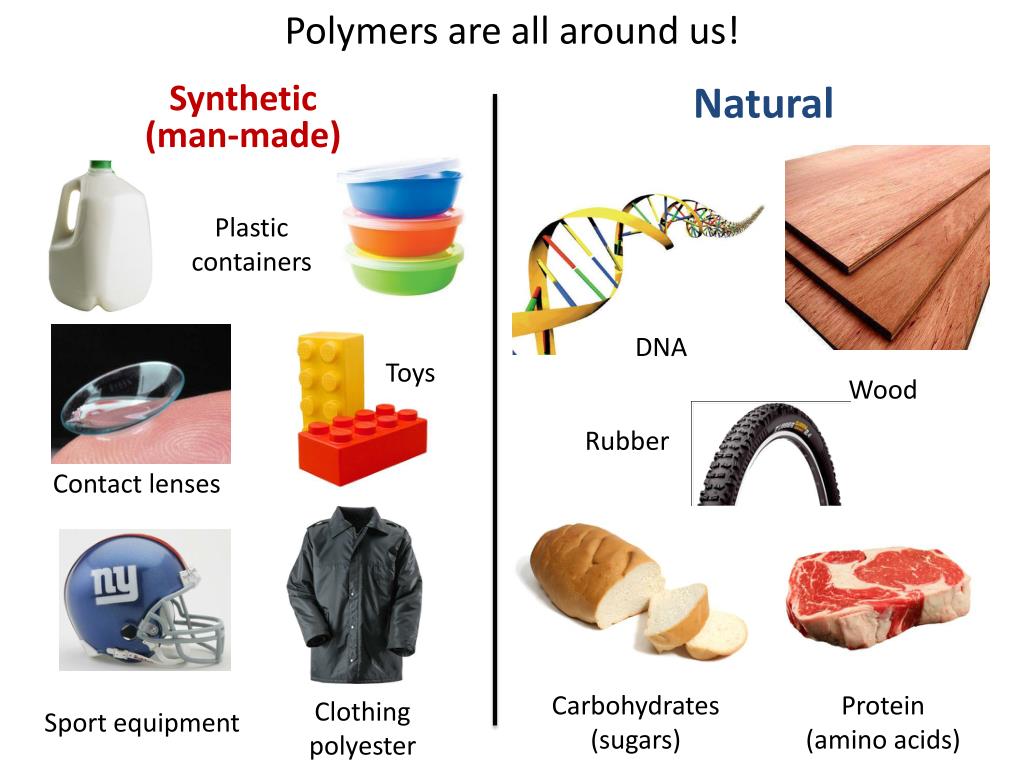
Think plastic bottles, rubber bands, even the very DNA inside you. All polymers!
But here’s the scandalous truth, the thing they don't always scream from the rooftops:
All polymers are made up of... smaller pieces!
Shocking, isn't it? Like finding out a wall is made of bricks.
Or that a pearl necklace is made of, well, pearls.
It sounds almost too simple to be true, but it absolutely is.
The LEGO® Analogy: Our First Secret Weapon
Imagine a giant LEGO® castle. It's intricate, it's amazing, it's a masterpiece.
But what is that castle fundamentally made of? Little plastic bricks, right?
Each brick is a monomer, and the whole castle is a polymer.
You can snap them together in long chains, making a really, really long LEGO® snake.
Or you can make a complex structure, but the core idea remains.
It’s just tiny pieces, repeating over and over, linked together.
Beads on a String: Another Obvious Truth
Think about your favorite beaded necklace or bracelet. It's beautiful, perhaps colorful.
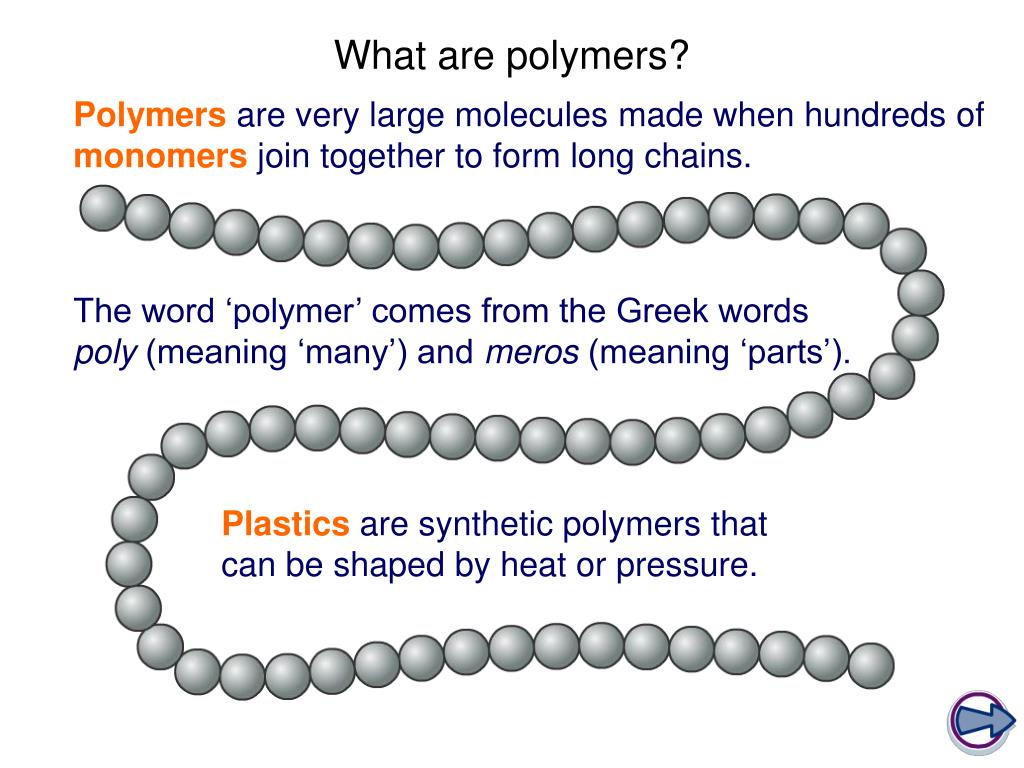
Each individual bead is a distinct unit. You thread them one after another.
Presto! You have a lovely, long chain, a perfect analogy for a polymer.
The beads are the monomers. The whole necklace? That’s our polymer.
It truly doesn't get much simpler than that, does it?
Yet, sometimes we forget the fundamental simplicity in our quest for complexity.
The Paper Clip Chain: An Everyday Hero
Grab a handful of paper clips. Now, link them together. One, then another, then another.
You’ve just made a polymer! Or at least, a fantastic visual representation of one.
Each paper clip is a monomer, patiently waiting to join the chain.
The entire long, floppy string of paper clips? That's your polymer in action.
You could make it super long, or just a few clips. The principle stays the same.
It's always just individual pieces making up a larger whole.
Where Do We See These "Made Up Of" Marvels?
Polymers are everywhere. Seriously, they run our modern world and even our bodies.
And guess what? Every single one of them adheres to our simple rule.
They are all made up of smaller, repeating units.

Plastic Fantastic: The Everyday Polymer
Take plastic bags. They’re usually made of polyethylene.
The "poly" part means "many," and "ethylene" is the little building block.
So, it's just many, many ethylenes strung together.
Or consider PVC pipes, those sturdy white pipes used in plumbing.
PVC stands for polyvinyl chloride. You guessed it: many vinyl chloride units.
See? It's right there in the name, telling you the secret!
Nature's Own Polymers: Even More Amazing
It’s not just human-made stuff. Nature is the original polymer architect.
Our very own bodies are full of these long chains made of smaller bits.
It's the ultimate proof that this isn't just a quirky human invention.
DNA: The Blueprint of Life
Your DNA? It's a polymer! The genetic code that makes you, well, you.
It's made of tiny units called nucleotides.
These nucleotides link up to form those famous double helix strands.
Each nucleotide is like a single LEGO® brick with a specific color.
The order of these "colored bricks" holds all your genetic instructions.
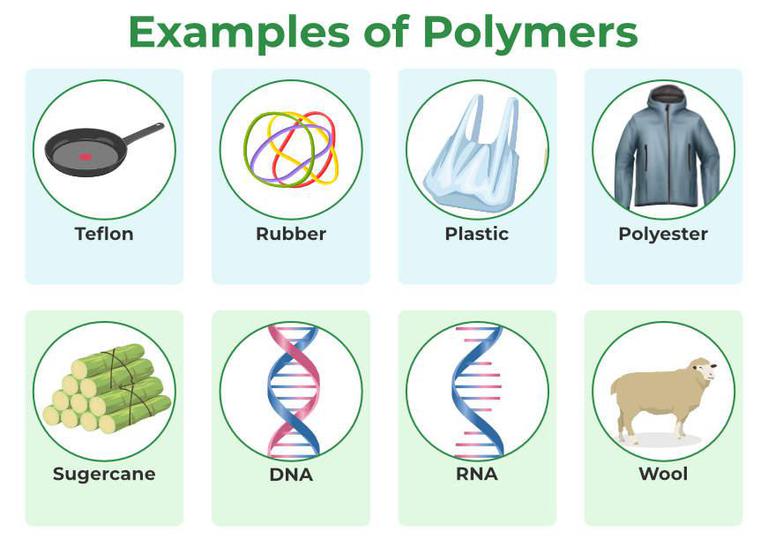
It’s a truly magnificent, complex polymer built from simple parts.
Proteins: Your Body's Tiny Workers
What about proteins? They do everything from building muscle to fighting off colds.
Every protein is a polymer made from smaller units called amino acids.
There are only 20 common types of amino acids, like different kinds of LEGO® bricks.
But string them together in different orders, and you get an infinite variety of proteins.
It’s like creating an endless array of structures from the same basic set of blocks.
Truly mind-boggling flexibility from a simple, repeating principle.
Cellulose: The Green Giant
Look at a tree, or wear a cotton shirt. You're looking at cellulose.
Cellulose is a polymer, and it's made from countless units of glucose.
Yes, the same glucose sugar your body uses for energy, just linked differently.
These glucose units stack up to give plants their incredible strength and structure.
It's another testament to the power of simple repetition.
Nature really nailed this "made up of smaller things" concept.
The Unpopular (Yet Obvious) Opinion
So, next time someone talks about a polymer, don't let it scare you.
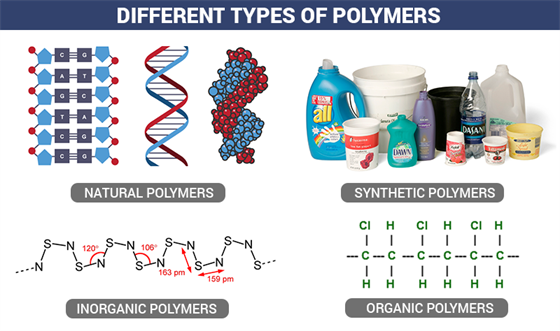
Just remember our simple, perhaps even unpopular, truth.
It's just a bunch of smaller things, linked together, like beads or LEGO®s.
It's like saying a house is made of walls, and walls are made of bricks.
Or a delicious cake is made of flour, sugar, and eggs. Basic ingredients!
The magic isn't in what they are individually, but in how they connect.
This isn't to diminish the incredible science behind polymers, mind you.
Understanding how those small pieces link, and why they behave as they do, is fascinating.
But the fundamental concept? It's surprisingly approachable.
Your Newfound Wisdom
You now possess a profound, yet utterly straightforward, understanding.
You can confidently nod when you hear the word "polymer" and smile knowingly.
Because you know the secret: All polymers are made up of... smaller units.
It's a truth so simple, it almost feels like cheating.
Go forth and impress your friends with this deceptively basic, yet powerful, knowledge!
You're now a polymer whisperer, understanding their very essence.