
Advantages Of Alternating Current Over Direct Current
Ever wondered why your wall outlet hums with a certain kind of energy? It's not just electricity; it's a special kind called Alternating Current (AC). And guess what? It's got some seriously cool superpowers compared to its cousin, Direct Current (DC).
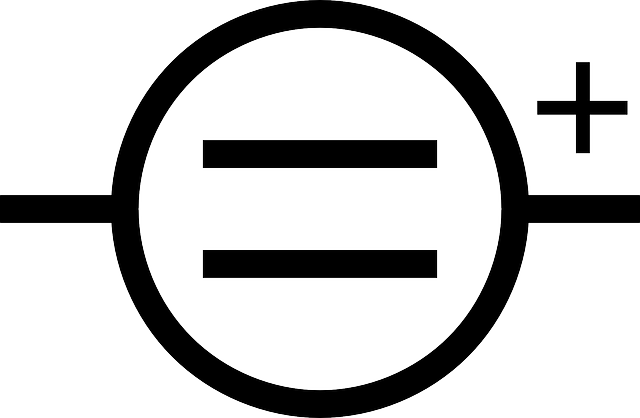
Think of AC like a dance party. The electrons are grooving back and forth, changing direction constantly. DC, on the other hand, is more like a one-way march – electrons moving in a straight line.
The Transformer Tango: AC's Secret Weapon
One of AC's biggest advantages is its ability to play with voltage using something called a transformer. This is like a magic box that can step up or step down the voltage of the electricity.
Must Read
Imagine you're whispering a secret message. A transformer can shout that message super loud (increasing voltage) or tone it down for a more private conversation (decreasing voltage). It's all about adjusting the electrical volume!
Powering Our Homes: The Voltage Voyage
Why is this voltage adjustment so important? Well, think about getting electricity from a power plant to your home. Power plants generate electricity at high voltages to send it over long distances efficiently.
High voltage means less energy is lost along the way. It's like shipping a fragile package – you want to pack it really well to avoid damage during the trip. High voltage electricity is "packed" in a way that minimizes loss over long wires.
But you wouldn't want that super-high voltage surging directly into your phone charger! That's where transformers come in again. They step down the voltage to a safe and usable level for your devices.
So, AC's ability to be transformed allows us to efficiently transmit electricity over vast distances and then safely use it in our homes. Pretty neat, huh?
The Long-Distance Runner: AC's Efficiency Edge
As we hinted before, AC shines when it comes to long-distance transmission. This is because high-voltage transmission minimizes energy loss due to resistance in the wires.
Think of it like this: imagine trying to push a crowd of people through a narrow doorway. It's going to be a struggle, and lots of energy will be wasted. But if you widen the doorway (increase the voltage), the crowd can flow through much more easily.
DC, while useful in many applications, suffers from higher energy loss over long distances at comparable voltages. This makes AC the clear winner for powering entire cities and countries.
Beyond the Outlet: Where DC Still Shines
Now, don't think DC is completely useless! It has its own strengths and plays a vital role in many technologies. For example, your phone, laptop, and many other electronic devices actually run on DC power.
They have circuits inside that convert the AC power from the wall outlet into the DC power they need. So, AC gets the power to your house, and then DC takes over to power your gadgets.
Batteries also provide DC power. Think of your car battery or the battery in your flashlight. These devices need a steady, unidirectional flow of electricity, which DC provides perfectly.
A Team Effort: AC and DC Working Together
Ultimately, AC and DC are not rivals, but rather teammates. They work together to power our modern world. AC brings the power to our homes, and DC powers many of our devices.

It's a beautiful symbiosis, each type of current playing to its strengths. Think of it like a well-coordinated dance – AC sets the stage, and DC performs the intricate moves.
The Genius of Nikola Tesla: Champion of AC
We can't talk about AC without mentioning Nikola Tesla. He was a brilliant inventor and engineer who championed AC power in the late 19th and early 20th centuries.
Tesla believed that AC was superior to DC for power distribution, and he fought tirelessly to promote its adoption. His work laid the foundation for the modern electrical grid that powers our world today.
His rivalry with Thomas Edison, who favored DC, is a fascinating chapter in the history of electricity. It's often referred to as the "War of the Currents," and it ultimately led to AC becoming the dominant form of electrical power.
Tesla's vision and innovations revolutionized the way we generate, transmit, and use electricity. He truly was a visionary ahead of his time.
Why Should You Care? The AC Advantage in Everyday Life
So, why should you care about the difference between AC and DC? Well, understanding the advantages of AC helps you appreciate the complexity and ingenuity of our electrical infrastructure.
Next time you flip a light switch or plug in your phone, remember the journey that electricity took to get there. From the power plant to your outlet, AC made it possible.
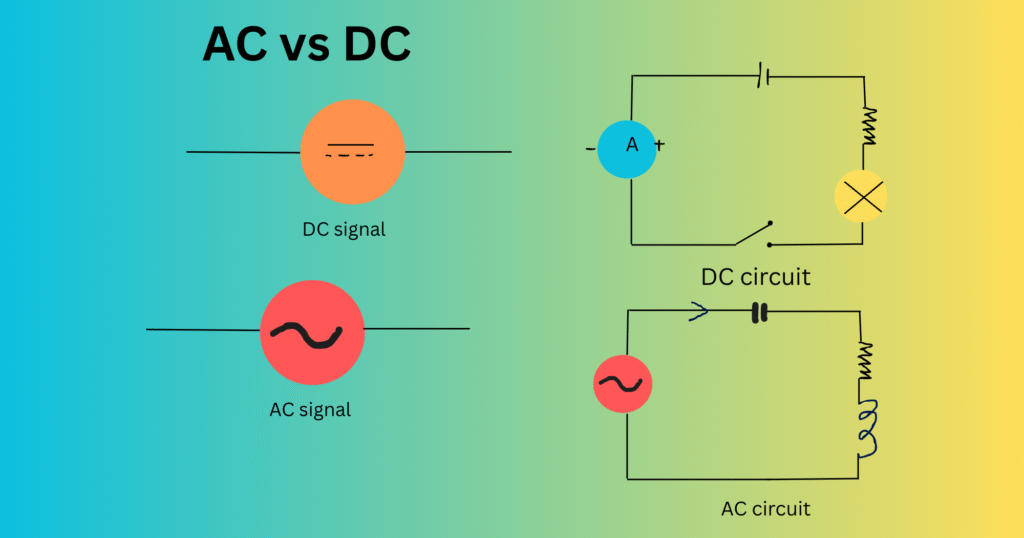
Moreover, the principles behind AC and DC are fundamental to many technologies, from electric vehicles to renewable energy systems. Understanding these concepts can give you a deeper appreciation for the world around you.
The Future of Power: AC's Continued Relevance
Even as we explore new energy sources and technologies, AC will continue to play a crucial role. It's a versatile and efficient way to transmit power over long distances.
Smart grids, which are designed to optimize energy distribution, rely heavily on AC power. These grids use advanced sensors and controls to manage the flow of electricity more efficiently and reliably.
As we move towards a more sustainable energy future, AC will continue to be a vital part of the solution. Its ability to integrate with renewable energy sources and smart grid technologies makes it an essential component of our energy infrastructure.
Dig Deeper: Exploring the World of Electricity
Hopefully, this article has sparked your curiosity about the fascinating world of electricity. There's so much more to learn and explore!
From the physics of electromagnetism to the engineering of power grids, the field of electricity is full of intriguing concepts and applications. Don't be afraid to dive deeper and discover more.

You might even be inspired to become an engineer or scientist and contribute to the next generation of electrical innovations. The possibilities are endless!
From Simple Outlets to Complex Systems
Think about it: the simple act of plugging something into a wall outlet connects you to a vast and complex network of power plants, transmission lines, and transformers.
It's a marvel of engineering that often goes unnoticed. But when you take a moment to appreciate the technology behind it, you'll gain a new perspective on the world around you.
So, the next time you flick on a light switch, remember the amazing journey of AC power and the brilliance of those who made it possible. It's more than just electricity; it's a testament to human ingenuity.
The Enduring Legacy of AC
From powering our homes and businesses to enabling countless technologies, AC has transformed our world in profound ways. Its efficiency and versatility have made it the dominant form of electrical power for over a century.
And as we look to the future, AC will continue to play a vital role in shaping our energy landscape. Its adaptability and compatibility with emerging technologies ensure its enduring relevance.
So, let's raise a toast (powered by AC, of course!) to the amazing current that lights up our lives and powers our dreams.