Advantages And Disadvantages Of Mig Welding
Ever seen those mesmerizing sparks fly in a fabrication shop and wondered what kind of magic they're wielding? Chances are, they're using MIG welding! It's a super popular method for joining metals, and understanding it is surprisingly useful, whether you're a DIY enthusiast, a budding engineer, or just curious about how things are made. Think of it as the duct tape of the metal world – versatile and often the go-to solution.
So, what exactly is MIG welding? MIG stands for Metal Inert Gas welding, sometimes called Gas Metal Arc Welding (GMAW). In essence, it's an arc welding process where a continuous wire electrode is fed through a welding gun into the weld pool, joining two pieces of metal together. Shielding gas protects the weld from atmospheric contamination, ensuring a strong and clean bond. The primary benefit of MIG welding is its speed and ease of use. Compared to other welding techniques, it's relatively easy to learn, making it a favorite among beginners. It's also incredibly versatile, capable of welding a wide range of metals, from steel and aluminum to stainless steel.
Now, let's dive into the advantages in more detail:
Must Read
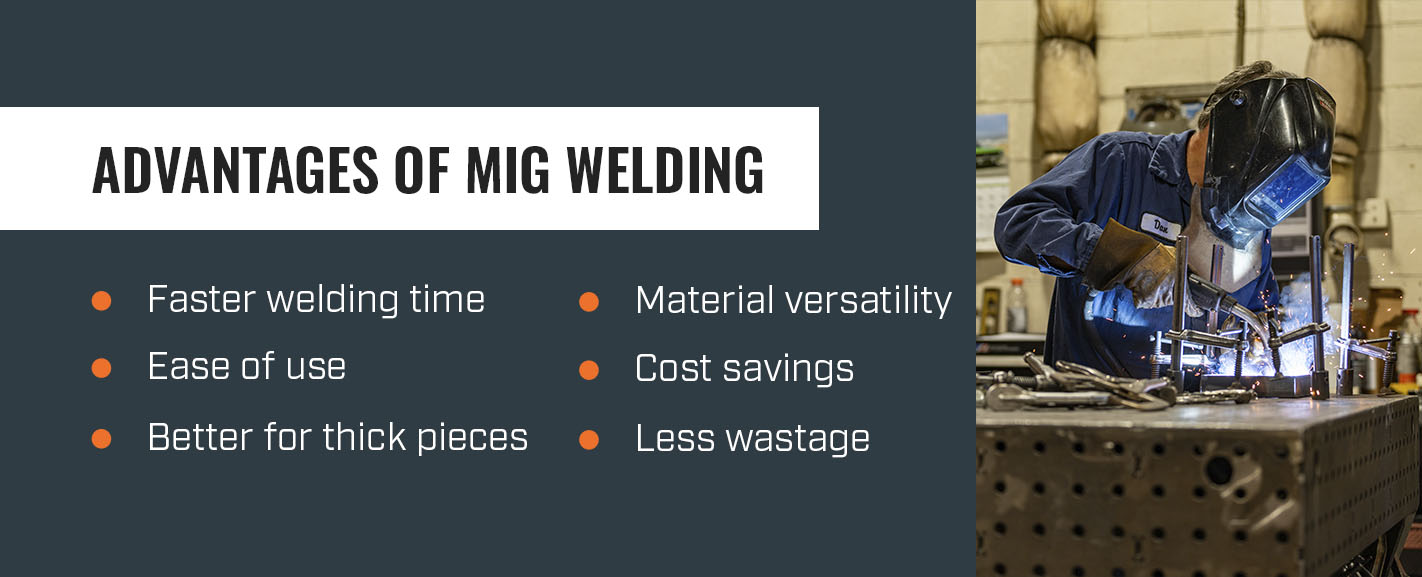
- Speed and Efficiency: MIG welding is fast! The continuous wire feed allows for quick and efficient welding, making it ideal for production environments.
- Ease of Use: As mentioned, it's easier to learn than other welding methods. The parameters are relatively straightforward to adjust.
- Versatility: You can weld various metals with MIG welding, simply by changing the wire and shielding gas.
- Clean Welds: The shielding gas protects the weld from impurities, resulting in cleaner and stronger welds with less spatter compared to stick welding.
- All-Position Welding: MIG welding can be performed in all positions (flat, horizontal, vertical, and overhead), offering greater flexibility.
However, like any superhero, MIG welding has its kryptonite. Here are some of the disadvantages:
- Equipment Cost: The initial investment for a MIG welding setup can be higher than other welding methods, requiring a welding machine, shielding gas cylinder, and other accessories.
- Portability: MIG welders, especially those with gas cylinders, can be less portable than stick welders.
- Wind Sensitivity: The shielding gas can be easily blown away by wind, making it less suitable for outdoor welding in windy conditions.
- Thin Materials Challenge: Welding very thin materials can be tricky with MIG, as it can easily burn through if not properly controlled. Pulse MIG is an option for some thin materials.
- Maintenance: The welding gun and wire feed mechanism require regular maintenance to prevent issues like wire jams.
In conclusion, MIG welding is a fantastic and versatile technique with many benefits, especially for those seeking speed and ease of use. While it has its limitations, understanding both the advantages and disadvantages allows you to make an informed decision about whether it's the right welding process for your specific project. So, the next time you see those sparks flying, you'll have a better appreciation for the magic of MIG!