
Ac Is Turning On But Not Cooling

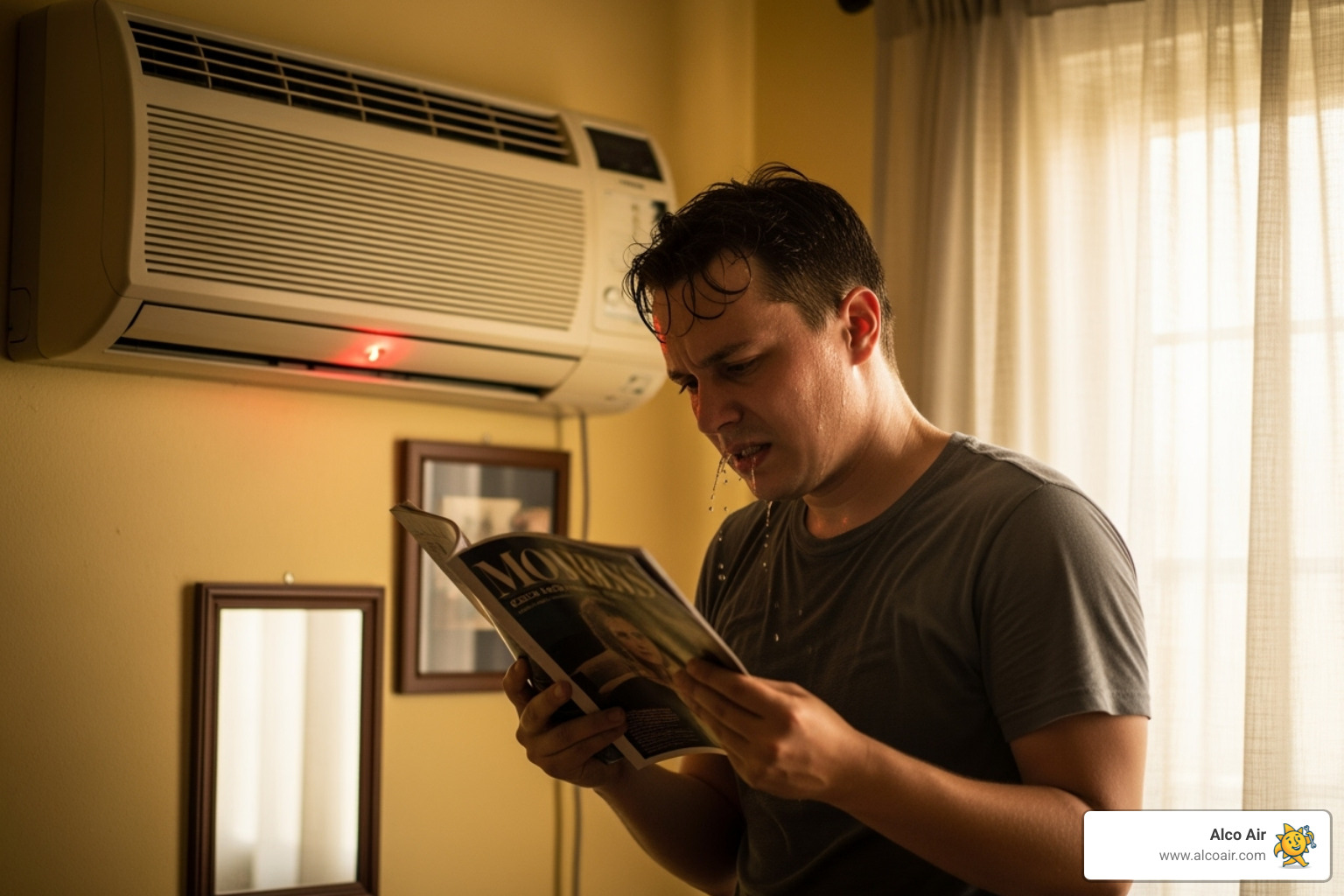
You know that feeling, right? Summer's hitting hard, the sun is blazing, and you walk into your home, dreaming of that sweet, crisp blast of cool air. You crank up the AC, hear it hum to life, the fan starts whirring... and then nothing. Or, well, warm nothing. It’s like your refrigerator decided to take a vacation and just blow lukewarm air around. Annoying, sure, but also kind of a mystery, isn't it?
Your AC is clearly turning on. It’s making all the right noises, showing all the right signs of life. But it's just not delivering the goods. No glorious chill, no delightful breeze. So, what on earth is going on behind the scenes? It's not just "broken"; it's a puzzle, a little mechanical whodunit unfolding right in your living room. And honestly, understanding a bit about it can be pretty cool!
The Case of the Missing Cool: Unraveling the Mystery
Let's think of your AC system as a super-efficient heat mover. Its main job isn't to create cold, but to take heat from inside your house and dump it outside. Pretty clever, right? When it's not cooling, it means this heat-moving magic is getting snagged somewhere along the way.
Must Read
The "Juice" Isn't Juicing: Low Refrigerant
Imagine your AC system as a series of pipes, and inside those pipes flows a special liquid called refrigerant (sometimes people mistakenly call it "Freon," but that's just one type). This refrigerant is the hero of our story – it absorbs heat from your indoor air and releases it outside. It's like a tiny, tireless shuttle bus for heat energy.
If your AC is low on this "cool juice," it's like trying to fill a swimming pool with a leaky garden hose. It just can't pick up and transport enough heat to make a difference. Why might it be low? Usually, it's because there's a leak somewhere in the system. And that, my friend, is a job for a professional!

Dirty "Lungs": Clogged Coils
Your AC has two main sets of coils: one inside (the evaporator coil) and one outside (the condenser coil). Think of them as the lungs of your system. The indoor coil breathes in the warm air, transferring its heat to the refrigerant. The outdoor coil breathes out the heat, releasing it into the atmosphere.
But what if these "lungs" are covered in a thick, fuzzy blanket of dirt, dust, and grime? It's like trying to run a marathon while breathing through a tiny straw! The coils can't efficiently exchange heat. The outdoor coil can't get rid of the heat, and the indoor coil can't absorb it. Result? Your AC is running, but it's just struggling to do its job. A good cleaning can sometimes work wonders, but those coils can be delicate!
The Sluggish "Muscle": Fan Problems
Your AC system has fans – a big one outside, and usually a blower fan inside. These fans are the muscle that moves air across those coils. The indoor fan pushes cool air into your house, and the outdoor fan pulls air over the hot condenser coil to help it release heat.
If either of these fans isn't working correctly – maybe a motor is failing, a blade is broken, or something is just plain stuck – your system can't move air. No air movement means no heat exchange, even if the refrigerant is flowing happily. You might hear the compressor humming, but without the air movement, it’s all for naught. It's like having a fantastic engine but no wheels on your car!
The Confused "Brain": Thermostat Troubles
The thermostat is the brain of your entire comfort system. It tells your AC when to turn on, how long to run, and when to shut off. But what if the brain is confused?

Maybe the batteries are dead, it's set to the wrong mode (fan-only instead of cool, perhaps?), or the sensor is malfunctioning. A wonky thermostat could be telling your AC that it's already reached the desired temperature, causing it to short-cycle or just not kick into full cooling mode. A simple check of your thermostat settings is always a good first step!
The Overflow "Safety": Clogged Drain Line
Did you know your AC actually produces water? As the evaporator coil inside your home absorbs heat, it also extracts moisture from the air. This condensation usually drips into a pan and then flows out through a drain line, typically somewhere outside.

But if this drain line gets clogged with algae or debris, the water has nowhere to go. Many AC systems have a safety switch that will automatically shut down the cooling cycle to prevent overflow and water damage. So, the AC might turn on, try to cool, detect the backup, and then gracefully refuse to operate further. It's a smart feature, but an annoying one when you're sweltering!
Why It's Fascinating, Not Just Frustrating
The more you think about it, the more amazing these systems are. They're not just a collection of parts; they're a beautifully orchestrated dance of physics and engineering. Every component has a job, and when one slacks off, the whole show suffers in a logical, predictable way.
So, the next time your AC is humming but not chilling, maybe you'll look at it with a little less frustration and a lot more curiosity. It’s a mini science experiment unfolding right in your living room, challenging you to understand the ingenious way we keep our homes cool. And while solving the puzzle yourself can be empowering, don't hesitate to call in the pros when things get too tricky – that's what they're there for!