
Ac And Dc Welding Difference
Alright, gather 'round, because we're about to dive into something that might sound super technical, but trust me, it's actually pretty wild and surprisingly fun: the difference between AC and DC welding. And no, we're not talking about the legendary rock band (though they're pretty cool too!). We're talking about electricity, sparks, and making metal do your bidding. Get ready to have your mind mildly blown by the secrets of molten metal!
So, What Is Welding Anyway?
Before we get into the nitty-gritty, let's just appreciate welding for a second. Imagine having the power to melt two pieces of metal together so they become one, stronger than ever! It's basically like giving metal superglue, but instead of glue, it's a super-hot, electrically charged plasma arc. Pretty epic, right? You're literally playing with lightning to build stuff.
But how that lightning behaves depends on its personality, and that's where AC (Alternating Current) and DC (Direct Current) come into play. Think of them as two very different temperaments for your electric arc.
Must Read
Meet the Wobbly Wonder: AC Welding
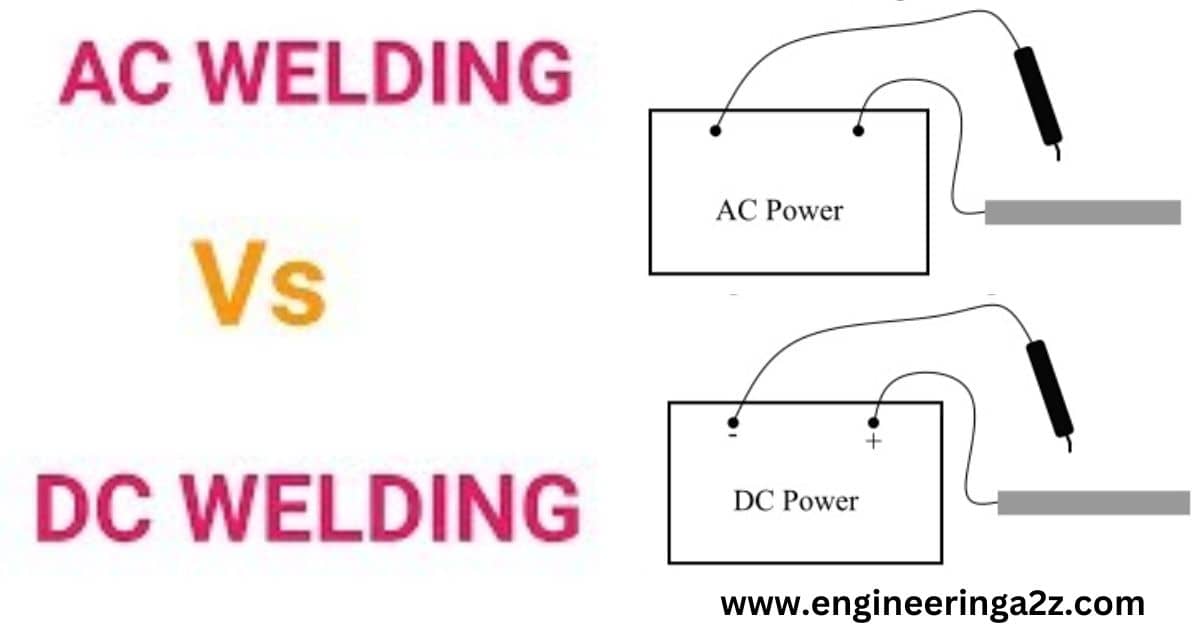
Let's start with AC welding. If electricity were a person, AC would be that friend who can't sit still. It's constantly changing direction, wiggling back and forth. In fact, in most places, it swaps direction 120 times a second!
For welding, this means your electric arc – that super-hot plasma stream melting the metal – is actually going out and restarting 120 times every single second. Yes, you read that right! It's like a microscopic, super-fast disco strobe light that you can't even perceive with the naked eye. Wild, huh?

So, what does this quirky behavior mean for your weld? Well, AC is fantastic for certain jobs. It's often the go-to for hobbyists because AC welding machines are generally simpler and cheaper. Plus, if you're working with metal that's gotten a bit magnetic (which happens!), AC is your hero. Why? Because that constantly flipping current helps to fight off "arc blow" – where the magnetic field tries to push your arc off course. Imagine trying to draw a straight line but your pencil keeps getting snatched away! AC helps keep the pencil somewhat on track.
The downside? Because the arc extinguishes and reignites so rapidly, AC welds can sometimes be a bit "rougher" or more aggressive. It's got a distinctive loud "buzz" too, which some welders actually prefer. It's like the raw, untamed beast of welding currents.
Then There's the Smooth Operator: DC Welding
Now, let's introduce DC welding. If AC is the wobbly wonder, DC is the calm, focused artisan. Direct Current flows in one direction only, like a disciplined river. It's what powers your car battery and pretty much all electronics with a battery. No wiggles, no wobbles.

For welding, this means your electric arc is constant and stable. It doesn't go out and restart. It's just a steady, unwavering beam of plasma. Think of it like a perfectly focused laser versus a rapid-fire light show.
What's the big deal about a constant arc? Well, it makes DC welding generally easier to control. You get a smoother, more stable arc, which often results in cleaner, prettier welds. It's fantastic for thinner materials because that consistent heat is less likely to burn through. If you're doing something super precise, or want that beautiful, stacked-dime look that makes welders famous, DC is often your best friend.
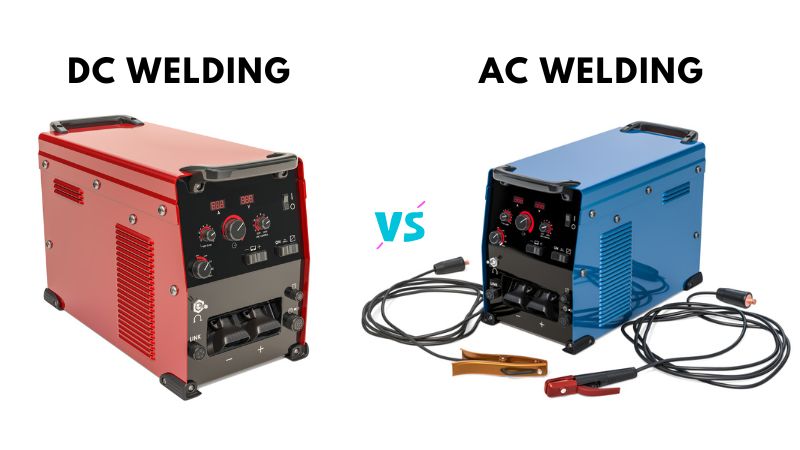
DC also gives you some cool options like DC+ (Direct Current Electrode Positive) and DC- (Direct Current Electrode Negative). Without getting too bogged down, these settings let you direct more heat into the work piece or into the electrode, giving you even more control over your weld puddle. It's like having different paintbrushes for your molten metal art!
The trade-off? DC welding machines can sometimes be a bit more complex and pricier. And while it's generally smoother, if you're dealing with really magnetic metal, arc blow can be even more of a headache than with AC, because that steady current doesn't have AC's natural magnetic "reset" button.
The Quirky Battle of Arc Blow
Let's circle back to arc blow for a second, because it's genuinely one of the most frustrating and quirky phenomena in welding. Imagine you're trying to lay down a perfect bead, and suddenly your arc decides it wants to dance away from where you're pointing it, almost like it's being pulled by an invisible string. That's magnetism messing with your perfectly good arc!
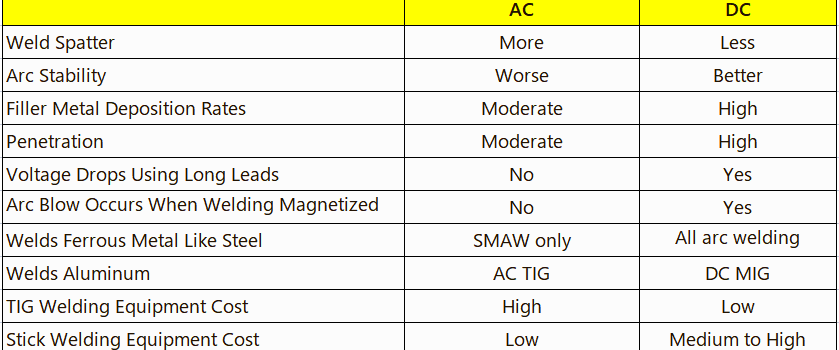
It's like trying to draw a straight line with a magnet, but someone keeps putting other magnets near your pencil. With AC, the rapidly switching magnetic field helps to cancel out some of these rogue forces. With DC, if the magnetic fields are strong, your arc can just be yanked off course. It's a hilarious headache that makes you appreciate the subtle electrical dance happening at the tip of your welding rod.
Why is This Even Fun to Talk About?
Because it shows that even in the seemingly brute-force world of melting metal, there's incredible nuance and personality! It’s not just about turning on a machine; it's about understanding the subtle dance of electrons and how they impact the quality and characteristics of your work. It's about having the right tool for the right job, whether you're building a massive bridge or just fixing a wobbly garden gate.
Next time you see a welder, you can silently appreciate whether they're wrangling the wobbly wonder of AC or finessing with the smooth operator of DC. Each has its charm, its challenges, and its own unique hum or buzz. It's a fantastic reminder that the world of making things is full of delightful, nerdy details!