We all do it, don't we? You pick up a box. "Oof, that's heavy!" You try to open a jar. "This lid is seriously stuck!" We are constantly making little guesses. Estimating how much oomph, how much push, how much pull, how much force is involved in everyday life. Our brains are pretty good at rough estimates, but a guess is just that. It's not knowing.
Then there's that tool. The unsung hero, or perhaps the unsentimental truth-teller, that steps into our world of gut feelings and hopeful estimations. It quietly but firmly says, "Hold on a minute, human. Let's get real." This particular gadget isn't here to make you feel good. It's here for one job, and it performs it with absolute, unyielding honesty. It measures force. Period.
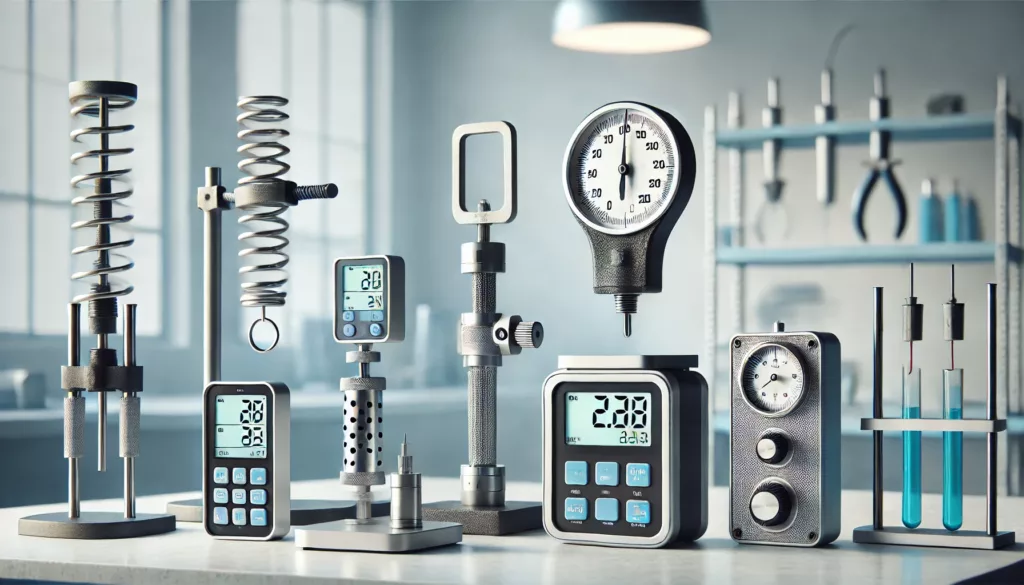
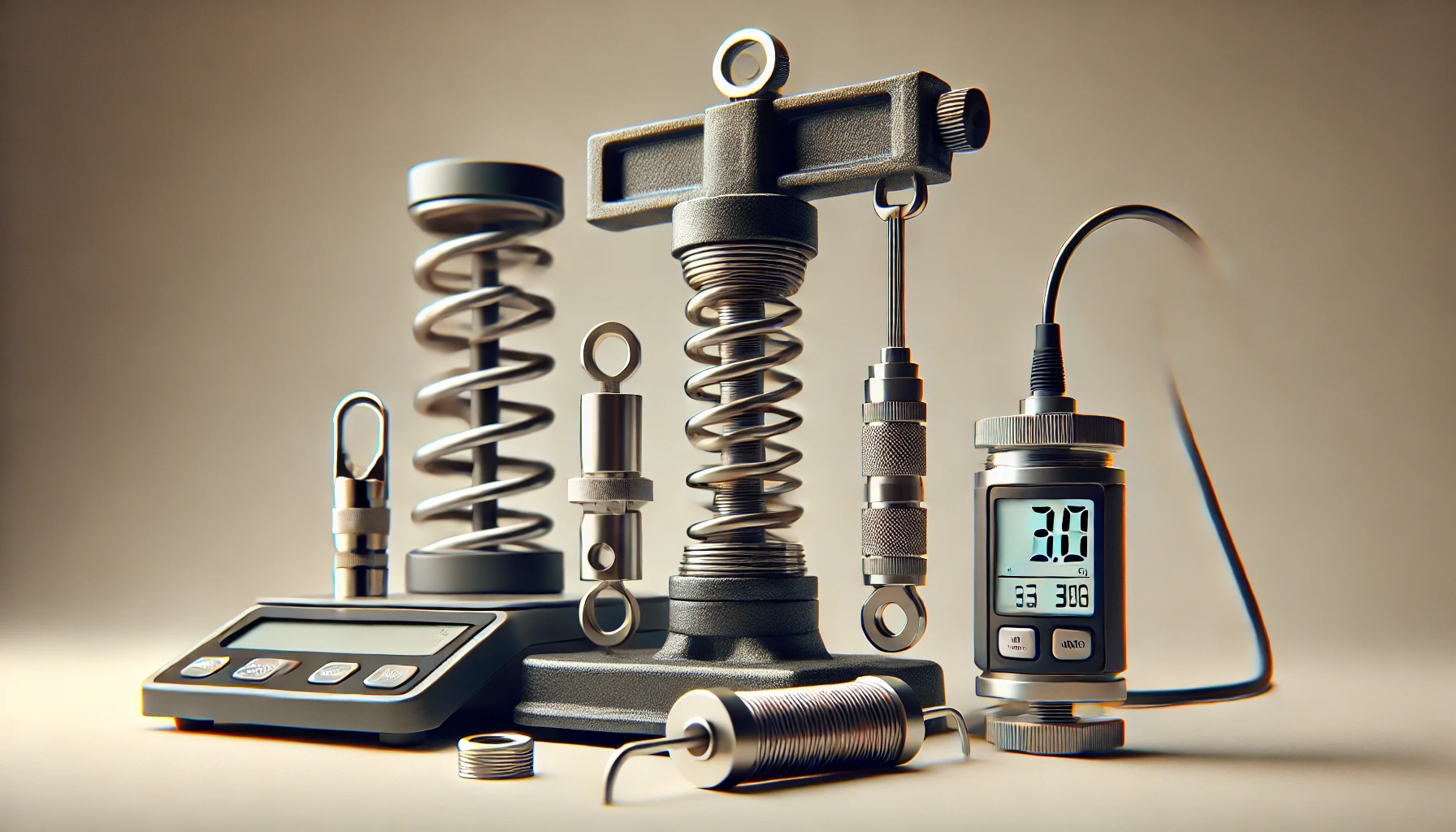
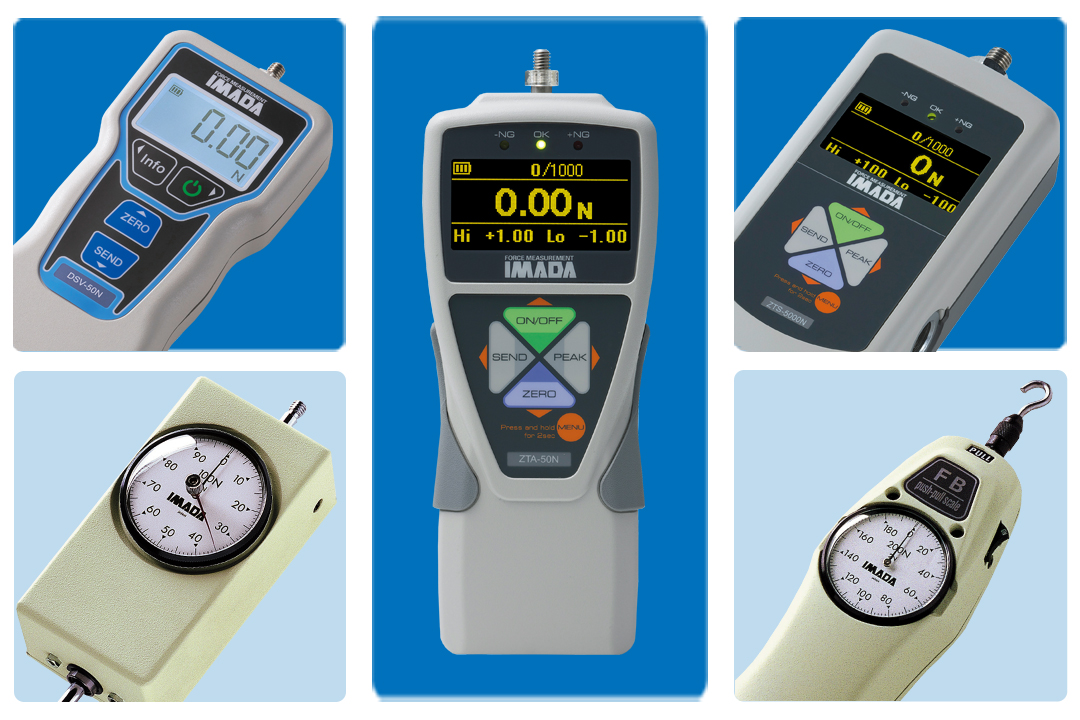
Picture it: often a simple device. Maybe a tube with a spring inside, a hook at one end, and a handle at the other. Or a sleek digital screen with buttons. You pull on it. Or you push. And a little pointer slides along a scale, or a number flashes up. No drama. No exaggeration. Just a bare, undeniable figure. It’s the ultimate arbiter of how much push or pull is actually happening. It’s often called a dynamometer, or sometimes a spring scale, but let's be honest, we usually just think of it as "that thingy that measures how hard I can pull."
Here's my slightly "unpopular" opinion about this indispensable piece of equipment: it's kind of a buzzkill. You think you're strong. You feel mighty. You've just imagined yourself single-handedly moving a small car. Then you hook up the force measurer, give it your all, and suddenly, your Herculean effort translates into a number that makes you wonder if you even remembered to eat breakfast. It doesn't care about your ego. Not one tiny bit. It serves up the cold, hard data, no sugarcoating allowed.
“Your feelings are valid, but the newtons are what they are.” – The Unofficial Motto of the Force-Measuring Tool
Force measurement | Engineer Live
Think about the scenarios. You're trying to win an imaginary arm wrestle with your sibling, or perhaps just testing your grip strength for fun. You feel like you're pulling with the power of a thousand suns. The tool would calmly display something like 25 newtons. Which, let's be honest, sounds far less impressive than "a thousand suns." Or you're trying to figure out if your ancient luggage strap can handle that overpacked suitcase without snapping. Does it feel strong? Sure. But is it strong enough? Only the force-measuring tool truly knows the answer to that critical question. It takes the guesswork out of, well, everything that involves a push or a pull.
Despite its blunt honesty, we secretly, perhaps grudgingly, love it. Because while it might deflate our superhero fantasies, it also provides invaluable clarity. It answers the perennial human question, "How much exactly?" with a definitive, scientific voice. It brings peace to the curious mind, even if that peace comes with a side of humbled pride. It can settle arguments too: "No, my pull is stronger!" "Oh really? Let's consult the spring scale!" Silence usually follows, often accompanied by a sheepish grin.
Top Instruments to Measure Force Exerted Accurately
Of course, this gadget isn't just for casual ego-checking. In the serious world, this tool is a certified superstar. Engineers use it to design bridges that remain firmly standing and buildings that resist the elements. Scientists employ it to understand the fundamental laws of physics. Manufacturers use it to ensure your car's seatbelt will actually hold you securely in place, or that a bungee cord has the correct tension. It's the silent, data-driven hero behind a lot of the safety and reliability we take for granted every single day. But even in these high-stakes applications, it's just doing its job: measuring force. No drama. Just the objective data.
Even something as fundamental as weight is, at its core, a type of force. It's the force of gravity pulling down on an object. So, when you step on your bathroom scale (another truth-teller!), you are essentially using a very specific kind of force-measuring tool. And again, it delivers the cold, hard numbers. Not your hopes, not your dreams, just the unvarnished truth of gravity's pull on your mass. See? This kind of device is everywhere, being unfailingly, almost annoyingly, honest.
Best Tools to Measure Force: From Scales to Sensors
So, the next time you encounter one of these stoic, truth-telling gadgets, give it a little nod of appreciation. It might not always tell you what you want to hear. It might burst your bubble of self-proclaimed super strength, or reveal that your "rock-solid" grip isn't quite so rock-solid after all. But it will always, always tell you what you need to know. It’s consistent. It’s reliable. It’s the friend who always tells you when you have spinach in your teeth, even if you’d prefer to live in blissful ignorance. That kind of honesty, while sometimes painful, is ultimately invaluable.
Perhaps its unwavering commitment to honesty is its greatest charm. It doesn't flatter. It doesn't judge. It just measures. And in a world often swimming in estimations, embellishments, and wishful thinking, sometimes you just need a tool that cuts straight to the chase and gives you the undeniable, unemotional, objective number. Long live the wonderfully blunt, perfectly honest force-measuring device! It’s the ultimate reality check, and for that, we ought to appreciate its steadfast commitment to the truth.