
A Kilowatt Is How Many Watts
Have you ever found yourself gazing at an appliance label?
Perhaps you’ve squinted at a number like 1500W or maybe a more compact 1.5kW.
It can feel a bit like trying to decipher an ancient code, can’t it?
Must Read
Or perhaps you’ve just opened your monthly electricity bill.
You might see mentions of "kWh" and find yourself pondering what these mysterious abbreviations truly mean.
Today, we're going to clear up one of those intriguing electrical puzzles!
We’re diving into a little secret that’s surprisingly simple, yet incredibly powerful to understand.
It's about the relationship between two fundamental terms you see everywhere.
Get ready to demystify watts and kilowatts.
The Mighty Watt: Understanding Electrical Oomph
Imagine electrical power as the "oomph" an appliance needs to function.
It's the rate at which energy is being used or produced at any given moment.
This "oomph" is precisely what we measure in units called watts.
A single watt represents a rather small measure of power.
Think of it as a tiny, individual heartbeat of electricity.
It’s perfect for describing the minimal power draw of something like a tiny LED indicator light on your television or a digital clock.
Your smartphone charger, for instance, might consume around 10 to 20 watts.
This is enough to steadily feed energy into your device.
It's the fundamental unit upon which all larger electrical measurements are built.
Enter the Kilo Hero: Unlocking the Secret!
Now, let's introduce the term that often causes a flicker of confusion: the kilowatt.
This is where our simple journey into electrical understanding truly shines.
The key to cracking this code lies in understanding one tiny, yet potent, prefix: kilo.
The prefix kilo- is not just for electricity; it universally means one thousand.
You’ve encountered this friendly prefix in many other aspects of your life.

Think about driving a kilometer.
That distance represents one thousand meters, doesn't it?
Or perhaps you’ve bought something by the kilogram at the store.
A kilogram is simply one thousand grams.
It’s a beautifully consistent way to talk about larger quantities.
So, if the word kilo- consistently means a thousand...
What logical conclusion can we draw about a kilowatt?
You are absolutely right!
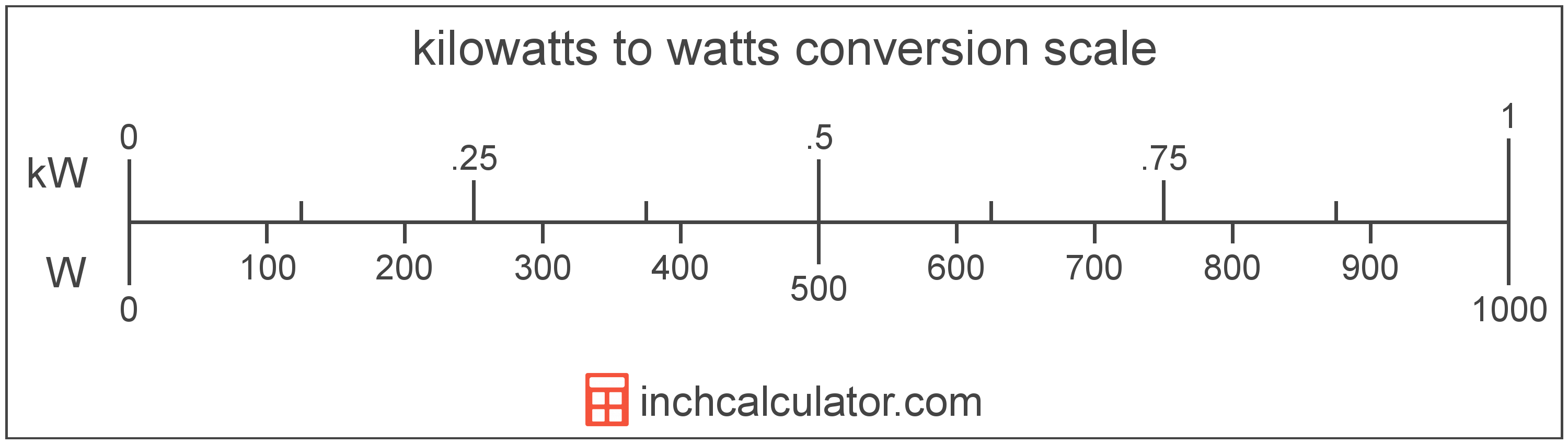
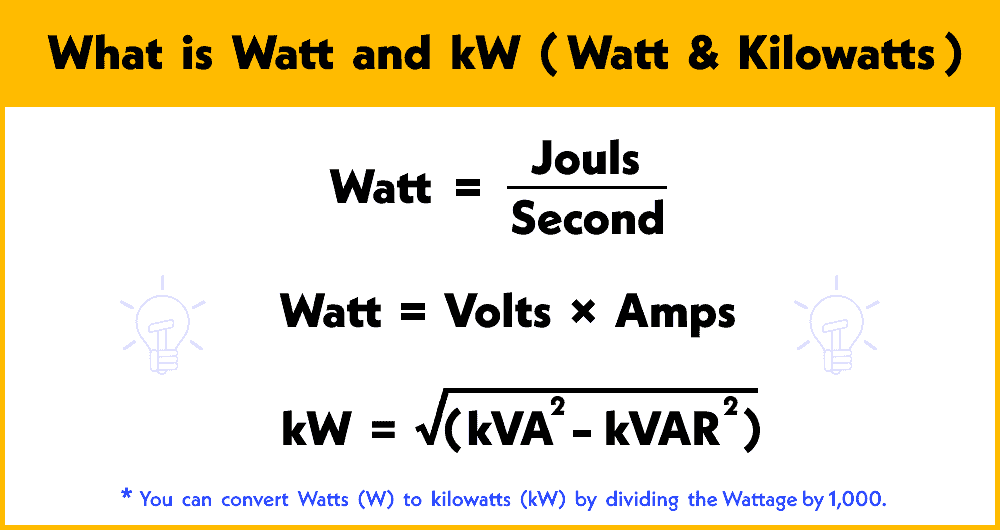
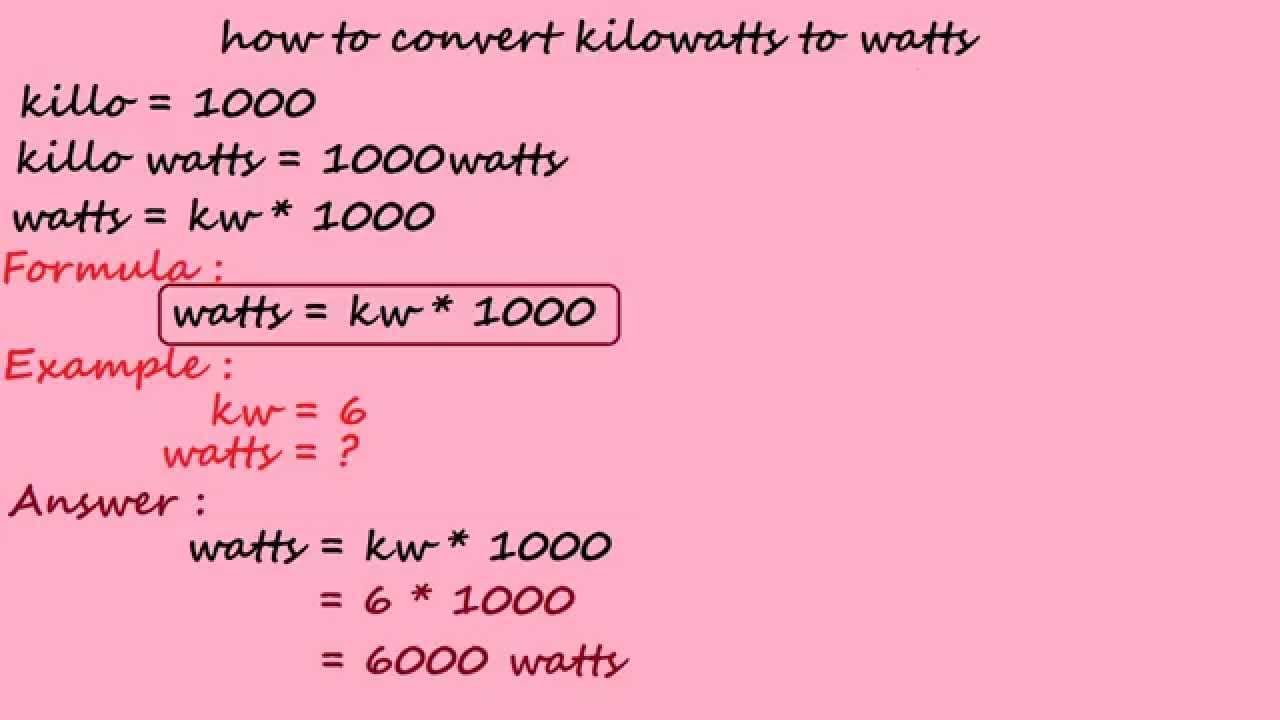
One kilowatt, often abbreviated as 1kW, is precisely equivalent to one thousand watts, or 1000W.
Isn’t that a wonderfully straightforward revelation?
There are no complex formulas or hidden variables to worry about.
It's simply a convenient way to express larger amounts of electrical power, making numbers more manageable.
Powering Our Everyday: From Toast to Tools
Let's take this newfound insight and apply it to the world around us.
This is where the delightful, sometimes surprising, aspects of energy consumption come to life.
Consider your breakfast routine and that indispensable kitchen appliance: your toaster.
When it’s perfectly browning your bagel or bread to that ideal crispness...
It's likely drawing a substantial amount of immediate power.
Many common toasters typically operate at around 1000 watts.
Eureka! That means your busy toaster is actually using about one kilowatt of power!
You're effectively firing up a small powerhouse just to get your morning toast.
Who knew your kitchen countertop held such electrical might?
What about a powerful hairdryer, preparing you for the day?
These personal care devices can easily demand 1800 watts or even 2000 watts of power.
That translates to 1.8kW or a full 2kW, respectively, in a quick burst.
It makes sense now why the lights might momentarily dim when you switch on that high-powered styler!
It truly is an impressive surge of electrical "oomph" for just a few minutes.
These appliances are engineered for rapid, intense heat generation.
Now, let's look at something more subtle, yet incredibly prevalent today.
An older, traditional incandescent light bulb might have consumed 60 watts.
Expressed in kilowatts, that's a modest 0.06 kilowatts.
However, a modern, super-efficient LED light bulb, providing the same brightness?
It might only sip a mere 8 watts of power.
That's an astonishingly low 0.008 kilowatts!
What a truly incredible leap in energy efficiency!
It’s a heartwarming testament to technological progress and environmental consciousness.
These small, smart choices collectively contribute to a more sustainable world.
Consider your trusty vacuum cleaner, diligently tidying up your home.
Many models operate in the range of 1000 to 1400 watts.
This means your vacuum is likely pulling between 1kW and 1.4kW when it's roaring.
Even your home office equipment plays a role.
A desktop computer with a monitor might average around 100-200 watts.
That’s 0.1 to 0.2 kilowatts of steady power keeping you connected and productive.
Beyond the Instant: The Kilowatt-Hour Unveiled
You might still be pondering, "But my electricity bill always talks about kWh!"
That's a very keen observation, aspiring energy expert.
A kilowatt-hour, or kWh, is indeed the unit you actually pay for.
It doesn't just represent how much power a device uses at a single moment.
Instead, it quantifies the total amount of energy consumed over a specific period of time.
Think of it as consuming one kilowatt of power continuously for exactly one hour.
So, if your 1kW toaster ran non-stop for one hour (let's hope not!),
It would register as using 1 kWh of electricity on your meter.
This is why your usage is measured in kWh – it reflects accumulated energy.
Grasping the distinction between watts (a rate of power) and kilowatt-hours (total energy over time) is fundamental.
It's akin to differentiating between your car's speed and the total distance you've traveled.
Both are important, but they measure different things.
The Empowering Realization
Suddenly, those formerly perplexing numbers on your appliance stickers and utility statements begin to make perfect sense.
You now possess a simple, yet powerful, key to understanding electrical "oomph" in your home.
The core relationship is elegantly straightforward: 1 kilowatt = 1000 watts.
This small but significant piece of knowledge truly empowers you.
You can now make more informed and conscious decisions about your daily energy consumption.
Perhaps you’ll now look at your microwave (often 1000-1500W or 1-1.5kW) with new eyes.

Or perhaps you'll appreciate the remarkably modest power draw of your trusty laptop charger.
It typically sips only around 60 watts (which is a tiny 0.06 kW).
That’s quite efficient compared to many other household gadgets!
The next time you spot "kW" or "W" on a product or label, you won't just see letters.
You’ll recognize the true scale of electrical muscle being described.
It’s about understanding the horsepower of your household appliances.
Becoming an Everyday Energy Hero
This isn't merely academic trivia; it's genuinely useful in your everyday life.
Understanding these units can profoundly help you manage and optimize your home's energy use.
Choosing more energy-efficient appliances now carries a clearer, tangible meaning.
By simply replacing old incandescent bulbs with modern LEDs, you're directly saving valuable watts.
Being mindful of how long you run high-kilowatt appliances, like an oven or clothes dryer, directly reduces your kilowatt-hours.
Every small, conscious choice contributes positively to your wallet and the environment.
It truly is a heartwarming realization, isn't it?
That such a simple concept – the meaning of kilo and watt – can lead to such beneficial impacts.
From the comfort of your living room to the broader global effort for sustainability.
So, the next time you plug in a device, or glance at your smart meter...
Take a moment to fully appreciate the humble watt in all its forms.
And its larger, yet equally understandable, relative, the kilowatt.
They are, in essence, two different scales for measuring the same vital electrical energy flow.
And now, their simple secret has been happily unveiled!
Go forth, empowered, and be an exceptionally informed energy user!