
A Hurricane Is Different Than A Typhoon In That

Ever wondered why that dramatic weather lady on TV keeps saying "hurricane" for Florida, but then switches to "typhoon" when talking about, say, Japan? Are they just showing off their geography knowledge? Nope! There's a (slightly) method to the madness.
The big secret? They're basically the same grumpy weather beast. Think of it like calling your dog "Buddy" at home, but "Sir Reginald Fluffington III" when you're trying to impress the Queen. Same fluffy friend, different contexts.
The Name Game: Location, Location, Location!
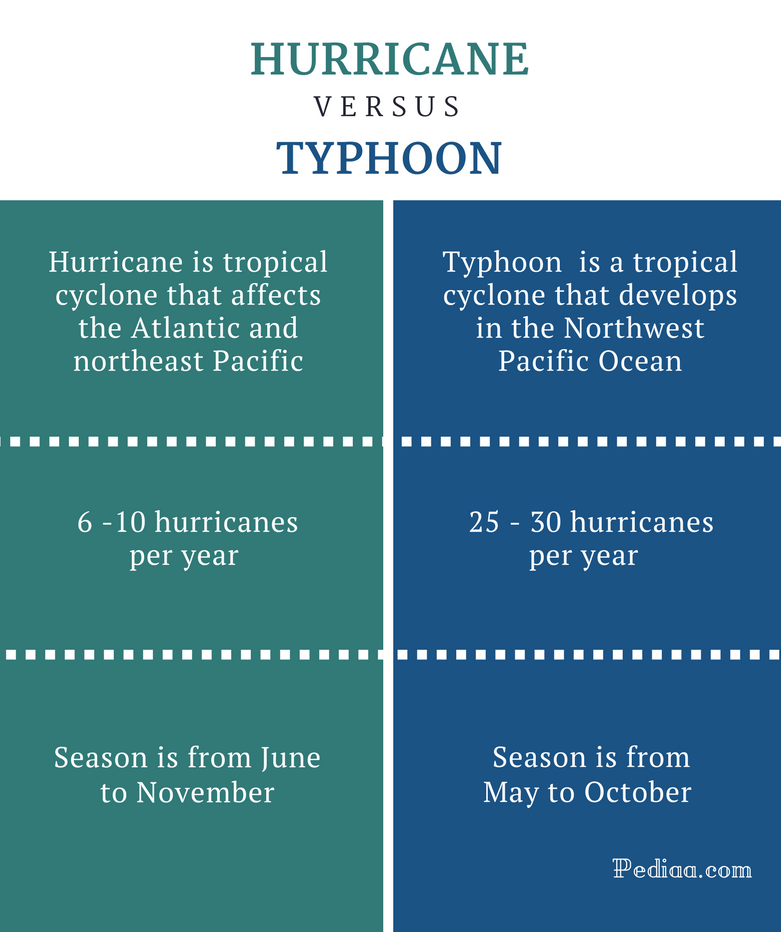
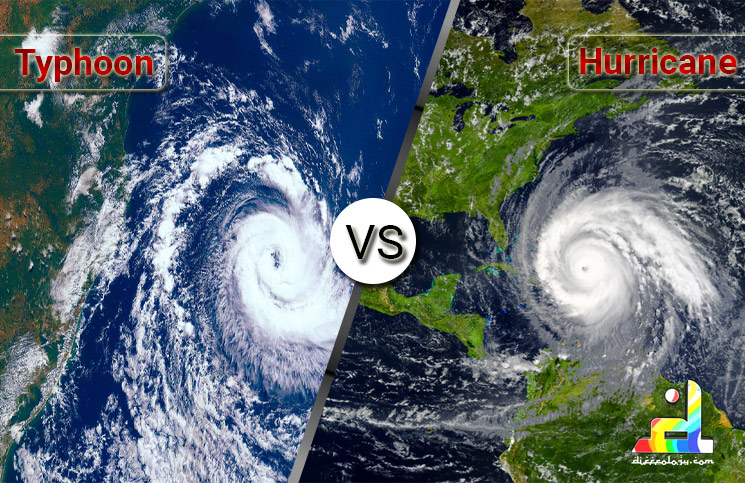
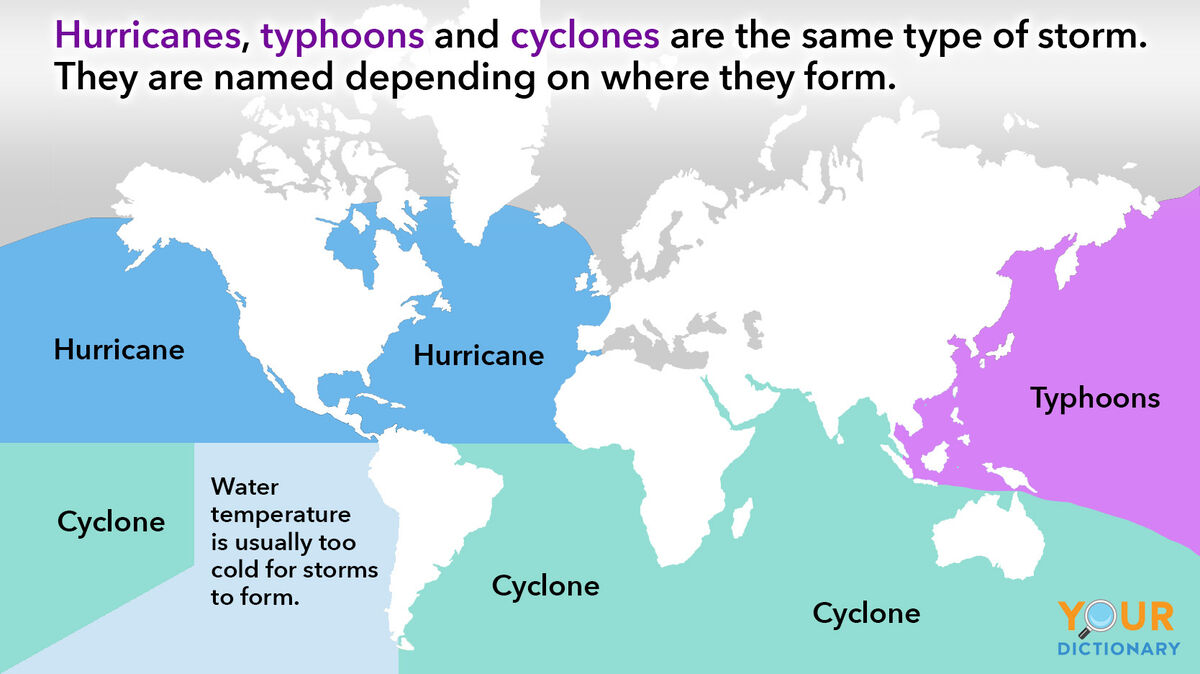
The key difference boils down to location. If this swirling vortex of wind and rain is causing chaos in the Atlantic Ocean or the northeastern Pacific Ocean, we call it a hurricane. Imagine the news anchors practicing their stern "Hurricane Henrietta is heading towards Miami" voices.
Must Read
But cross over to the northwestern Pacific Ocean, and BAM! Suddenly, it's a typhoon. So, if Henrietta decided to take a really, really long trip westward and started bothering Tokyo, she'd get a name change. Good luck explaining that to her!
There's also the term "cyclone". When these storms rumble through the South Pacific or the Indian Ocean, they're referred to as cyclones. Consider it the "global traveler" label for spinning tempests.
Wind Speed: The Universal Language of Fury
Regardless of whether it's a hurricane, a typhoon, or a cyclone, they all need to reach a certain wind speed to earn their scary name. We're talking sustained winds of at least 74 miles per hour (119 kilometers per hour).
Before that, they're just a tropical depression or a tropical storm. Think of them as the weather equivalent of a teenager – potentially destructive, but not quite ready for prime-time havoc. They are still learning the ropes of destruction.
So, next time you hear about a tropical storm brewing, remember it's like a caterpillar waiting to become a butterfly... a very angry, wet butterfly.
Behind the Scenes: A Few Other Quirks
Okay, while location is the main thing, there are a few other subtle differences, mostly stemming from the areas where these storms form. For example, the geography surrounding each ocean basin can influence the storms' behavior.
Typhoons in the Pacific, for instance, often have a wider area to roam and can sometimes grow to be absolutely enormous. Imagine a weather system so big it could probably swallow Florida whole! (Don't worry, that's an exaggeration... probably.)
Hurricanes, on the other hand, are often squeezed by landmasses, which can sometimes weaken them. It's like trying to herd a bunch of cats through a doorway – things get messy, but the cats eventually get through (or, in this case, weaken).
The Saffir-Simpson Scale vs. Regional Scales
Hurricanes in the Atlantic and northeastern Pacific are rated on the Saffir-Simpson Hurricane Wind Scale. This scale goes from Category 1 (some damage) to Category 5 (hide your pets, your car, and possibly yourself!).
Typhoons, depending on the region, might use slightly different scales. Japan's Meteorological Agency, for example, has its own classification system. It's like everyone speaking the same language but with different dialects.
Ultimately, the goal of these scales is the same: to give people an idea of how much damage to expect. "Category 5" in any language basically translates to "Take this seriously!"
Why Does Any of This Matter?
Besides being a fun fact to drop at your next cocktail party (guaranteed to impress!), understanding these naming conventions actually helps with communication. It ensures that meteorologists and emergency responders in different parts of the world are all on the same page.
Imagine the confusion if everyone just used "hurricane" for everything! It would be like ordering pizza in Italy and expecting them to understand you in English. You might get something delicious, but it probably won't be pizza.

This clear communication saves lives. Clear warning system is always good.
The Human Element: Respecting the Power
Ultimately, whether it's a hurricane, a typhoon, or a cyclone, these storms are incredibly powerful forces of nature. They can cause immense damage and hardship.
It's important to remember that behind the scientific jargon and the dramatic weather forecasts, there are real people whose lives are affected by these events. Evacuations, rebuilding efforts, and the emotional toll can be devastating.
So, next time you hear about one of these storms brewing, take a moment to appreciate the science behind it, but also remember the human element. A little empathy can go a long way. Be kind to your neighbors who are affected by these storms.
From "Hey, That's Neat!" to Actually Helpful
Knowing the difference between a hurricane and a typhoon might seem trivial, but it's actually a gateway to understanding weather patterns on a global scale. It's about connecting the dots and seeing how the world's weather systems are all interconnected.
Plus, it gives you a leg up in trivia night. Who knows, that obscure knowledge about typhoon naming conventions might just win you a free pizza! (Speaking of which, maybe Henrietta finally made it to Italy...)
So, embrace your newfound knowledge! Share it with your friends, impress your family, and maybe even start a friendly debate about the most terrifying weather event of all time. Just remember to keep it lighthearted and respectful. After all, Mother Nature has a pretty good sense of humor... even if it's a bit on the destructive side.
In Conclusion: Storms are Global. Be Prepared.
The takeaway? A hurricane, a typhoon, and a cyclone are basically the same weather phenomenon, just with different regional nicknames. They all spin, they all rain, and they all have the potential to cause serious damage.
Knowing what to call them is less important than understanding the risks and preparing accordingly. Stay informed, heed warnings, and always prioritize safety.
And remember, even the angriest storms eventually calm down. There's always sunshine after the rain... or, in this case, the hurricane, typhoon, or cyclone.