
7 Ton Ac Unit Square Footage

Ever found yourself sweating through a summer evening, even with the AC blasting? Or maybe you’ve shivered under a blanket indoors because your air conditioning felt like it was trying to turn your living room into an igloo? Chances are, you’re experiencing the joys (or woes!) of an AC unit that’s not quite the right fit for your space. Today, we're diving into a fascinating corner of the AC world: the mighty 7-ton AC unit and just how much square footage it can handle.
Now, when we say "ton" in the world of AC, we’re not talking about its literal weight, thankfully! You won't find a gigantic, multi-ton metal beast sitting on your roof. Instead, a "ton" is a fancy way of measuring an air conditioner's cooling power. Think of it like this: if a tiny spoon is a small AC unit, then a giant, industrial-sized scoop is a 7-ton unit. Each "ton" represents the ability to remove 12,000 BTUs (British Thermal Units) of heat per hour. So, a 7-ton unit? That's a whopping 84,000 BTUs of cooling power!
So, How Much Space Are We Talking About?
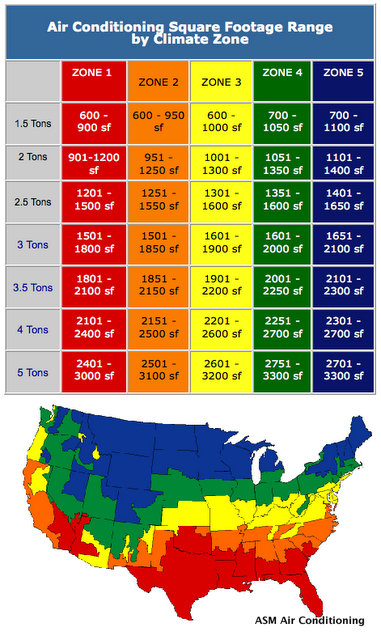
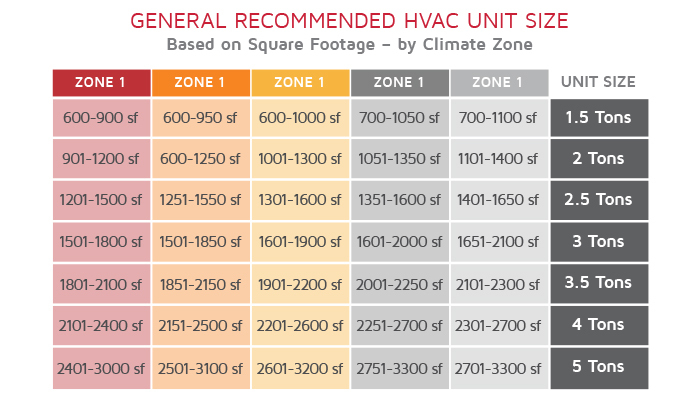
Alright, let’s get to the juicy part. How much square footage does all that cooling capability translate to? For most residential homes, a general rule of thumb is that one ton of AC can cool roughly 500 to 600 square feet. But here’s where it gets interesting: that’s a very simplified estimate.
Must Read
When you multiply that out for a 7-ton unit, you're looking at cooling power for a massive area – anywhere from 3,500 to 4,200 square feet, and potentially even more in ideal, perfectly insulated conditions! To put that into perspective, the average American home is around 2,000 to 2,500 square feet. So, a 7-ton unit is like bringing a monster truck to pick up groceries – serious overkill for most standard homes.
Why Does Getting the Size Right Even Matter?
You might be thinking, "Bigger is better, right? More cooling, more comfort!" Well, not quite, my friend. In the world of AC, oversizing is a big no-no, and it can lead to more problems than just having a slightly chillier room. Let’s break down why this matters, in a way that hopefully makes you smile instead of sigh.
Imagine you have a tiny espresso cup, and you try to fill it with a fire hose. What happens? A big, wet mess, right? Your 7-ton AC unit in a smaller space can behave similarly.
The Case of the "Short Cycling" AC
When an AC unit is too big for a space, it cools the air too quickly. It blasts cold air, reaches the thermostat's set temperature in a flash, and then shuts off. This rapid on-off cycle is called short cycling. It's like a kid chugging a soda and getting a brain freeze instantly – not very efficient or enjoyable! This constant starting and stopping puts a lot of stress on the system, wearing down components much faster than if it ran for longer, more consistent periods.
The Dreaded Humidity Problem
Here’s a big one: AC units don't just cool; they also dehumidify the air. To effectively pull moisture out of the air, the unit needs to run for a good amount of time, allowing the coils to get cold and condense the humidity. If your 7-ton unit is short cycling, it won't run long enough to do its dehumidifying job properly. So, you might have a cool house, but it feels sticky and clammy – like walking into a warm, wet hug you didn't ask for! This can lead to uncomfortable living, musty smells, and even mold growth.
Wasted Energy (and Money!)
Just like constantly stopping and starting your car uses more gas than cruising at a steady speed, an oversized AC unit that short cycles constantly wastes energy. Every time it kicks on, there’s a power surge. All those rapid starts and stops add up, meaning you're paying more on your energy bill for less effective cooling. It’s like having a supercar but only driving it 50 feet at a time – powerful, but pointless and pricey!
Uneven Cooling
With an oversized unit, you might find some rooms are absolutely frigid while others are just "okay." The unit cools the air near the thermostat so fast that it satisfies the temperature setting before the colder air has a chance to circulate evenly throughout the entire home.

Who Actually Needs a 7-Ton AC?
Given all this, you might be wondering, "Okay, so who does need such a colossal cooling machine?" Typically, 7-ton units are reserved for very large commercial spaces like big office buildings, expansive retail stores, large restaurants, or industrial facilities. They might also be appropriate for an exceptionally large custom home – perhaps a sprawling mansion in a very hot climate with incredibly high ceilings and lots of windows, or one with specialized cooling needs.
But for your average family home, even a large one, a 7-ton unit is almost certainly overkill. Most residential units range from 1.5 to 5 tons, with 3 to 4 tons being common for medium to large houses.

The Golden Rule: Don't Guess, Get a Pro!
So, what’s the takeaway from our journey into the world of the 7-ton AC unit? It's simple: AC sizing is not a guessing game. While general rules of thumb are a good starting point, many factors influence the exact tonnage your home needs:
- Your home's insulation quality (a well-insulated home holds cool air better, like a good thermos!)
- The number and type of windows (big, south-facing windows let in a lot more heat)
- Your climate zone (Florida needs more cooling than Minnesota)
- Ceiling height, number of occupants, and heat-generating appliances
The best way to ensure your home is perfectly comfortable – not too hot, not too cold, and definitely not sticky – is to have a qualified HVAC professional perform a detailed load calculation (often called a Manual J calculation). They’re like the Goldilocks experts for your home's temperature, ensuring your AC unit is just right.
Investing in the right-sized AC unit means better comfort, lower energy bills, less wear and tear on your system, and a happier home overall. So next time you're thinking about upgrading or replacing your AC, remember the 7-ton giant and know that when it comes to cooling, perfectly sized beats simply big every single time!