
50 Amp Receptacle For Welder
You know that feeling, right? That spark of inspiration, the ambitious project taking root in your mind. For me, it was this somewhat ramshackle, but utterly charming, vintage patio swing. It needed some serious love, mostly in the form of a few strategic welds to shore up its rusty bones. I pictured myself, sparks flying, a triumphant smile, ready to relax on my newly fortified swing. So, I dragged out my shiny new welder – a beauty, mind you, capable of some serious metal-mending magic. I plugged it into what I thought was a perfectly adequate outlet in the garage, hit the trigger… and BAM! Darkness. Silence. Just the soft click of a tripped breaker laughing at my naivety. My triumph turned into a sigh, and my dreams of quick repairs quickly faded into a scramble for the fuse box.
Turns out, my trusty wall outlet, designed for things like phone chargers and maybe a drill, wasn't quite up to the task of feeding a hungry beast like a welder. It was like trying to fill a swimming pool with a garden hose – technically possible, but you'd be there all day, and probably burn out the hose (or the pump, or in my case, the entire circuit). That's when I learned about the magic, the necessity, the absolute game-changer that is the 50 Amp receptacle for welders. And trust me, once you go 50 Amp, you never go back.
So, What's the Big Deal with 50 Amps, Anyway?
Imagine your welder as a high-performance sports car. You wouldn't fuel it with regular unleaded if it demands premium, would you? Same principle here. Welders, especially those capable of laying down some serious beads, are power-hungry machines. They draw a ton of current, far more than your typical household 15-amp or even 20-amp outlet can safely provide. Try to force it, and you're just begging for tripped breakers, overheating wires, and a general sense of frustration.
Must Read
A 50 Amp receptacle is purpose-built to handle that kind of electrical muscle. It's beefier, safer, and allows your welder to operate at its full potential without constantly cutting out. This means smoother welds, less downtime, and frankly, a much happier you.
The Nitty-Gritty: What It Looks Like and Why It Matters
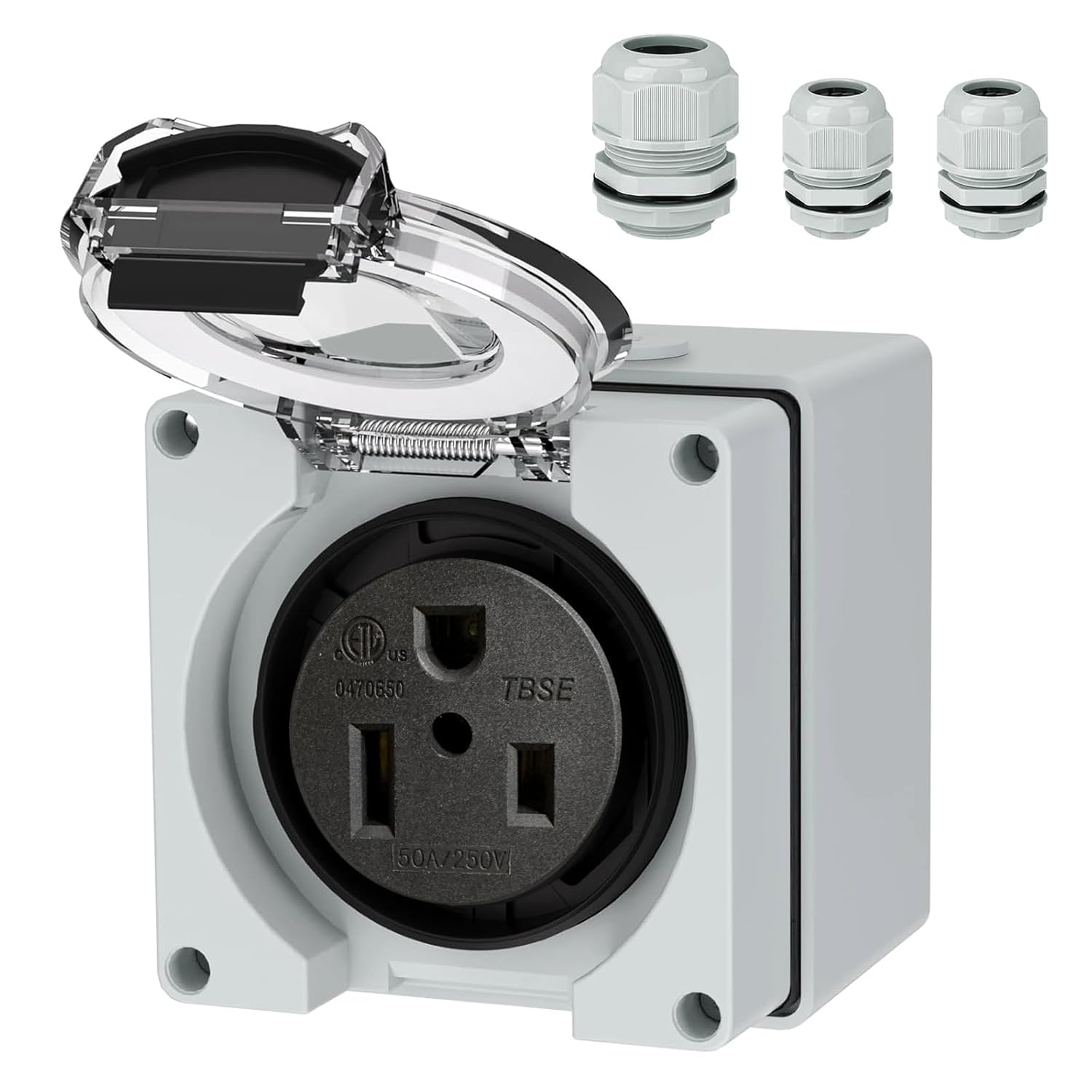
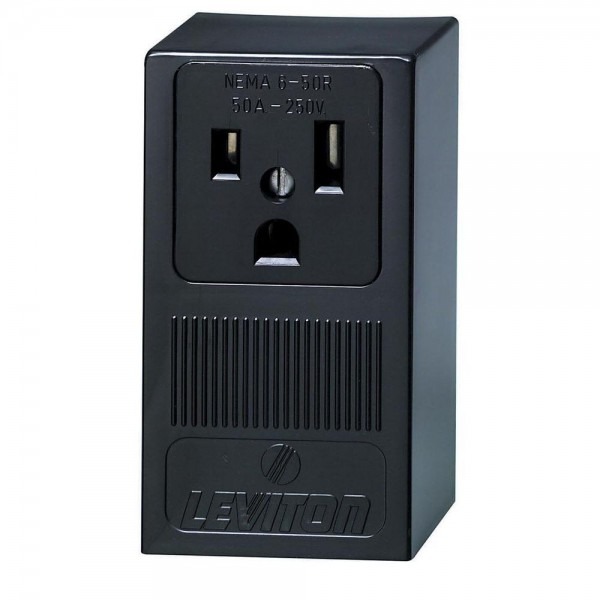
When we talk about a 50 Amp receptacle for a welder, we're usually talking about a NEMA 6-50R. If you look at one, you'll notice it's distinct. It typically has two angled blades and a grounding pin below them. These two angled slots are for your 240-volt hot wires, and the round or U-shaped pin is for your equipment ground.

"Wait," you might be thinking, "don't some dryers use a 50 amp plug too?" Good question! Some older dryers, and even some RVs, use a NEMA 14-50R. That one looks different – it has three flat blades and a rounded ground. The key difference for welders? The 14-50R includes a neutral wire, which most welders don't actually need. While you could potentially adapt a welder to a 14-50R, the 6-50R is the standard and often preferred choice for welder hookups because it’s a dedicated 240V, two-pole, three-wire setup that matches most welder requirements perfectly. It's simpler, cleaner, and exactly what your welder is asking for.
Safety First, Friends (Seriously!)
Now, I can hear some of you DIY warriors thinking, "I can totally install this myself!" And while the spirit is admirable, this isn't a job for the faint of heart, or for someone without a solid understanding of electrical wiring. When you're dealing with 50 amps and 240 volts, you're playing with serious power, and mistakes can be incredibly dangerous. We're talking about potential fires, electrocution, and general mayhem – not exactly what you want when you're trying to fix a patio swing.
You'll need a dedicated 50-amp circuit breaker in your main panel. And the wiring itself? It needs to be appropriately sized. For typical runs, you're usually looking at #6 AWG copper wire. Don't skimp on the wire gauge! Using wire that's too thin for the current can cause it to overheat, leading to insulation melting and, yep, you guessed it, fire. So, for your safety and the longevity of your home, my strongest advice is to call a qualified, licensed electrician to install this. They'll ensure it's up to code and, most importantly, safe. It's an investment, but it's an investment in your peace of mind and your home's integrity.
The Sweet, Sweet Payoff
Once that 50 Amp receptacle is properly installed, get ready for a whole new welding experience. No more frustrating trips to the breaker box. No more underpowered welds that sputter and die. Your welder will hum with robust energy, ready to tackle any project you throw at it. Your beads will be stronger, your work will be cleaner, and your projects will get done faster.
That patio swing, by the way? It's now rock-solid, gleaming with new paint, and the welds? Impeccable, if I do say so myself. All thanks to giving my welder the juice it truly needed. So, if you're serious about your welding projects, do yourself a massive favor: invest in that 50 Amp receptacle. Your projects, and your sanity, will thank you for it. Happy welding!

