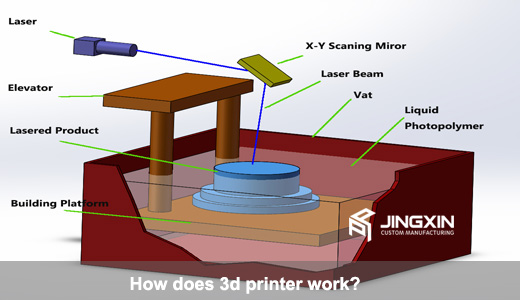
3d Printer How Does It Work

Ever wished you could magically conjure an object out of thin air, just like in the movies? While we're not quite at full-on matter replication, 3D printers come remarkably close! You've probably seen them popping up everywhere, from schools making custom parts to hobbyists creating incredible figurines, and even engineers prototyping future technologies. They're popular because they bridge the gap between our digital ideas and the tangible world, turning imagination into reality, one layer at a time. It’s incredibly fun and empowering to design something on a computer screen and then hold a physical version of it in your hand just a few hours later!
So, what exactly do these fascinating machines do, and why are they so useful? At their core, 3D printers are tools for additive manufacturing. Unlike traditional methods that cut away material from a larger block (like carving wood), 3D printers build objects layer by tiny layer. Their purpose is simple yet revolutionary: to transform a digital 3D design into a physical object. The benefits are immense. You can create highly customized items, prototype new inventions quickly and affordably, produce complex shapes that are impossible with conventional manufacturing, and even make spare parts for old appliances. Think about the possibilities: bespoke jewelry, custom phone cases, medical models for surgeons, or even just a unique toy designed by you!
But how does this seemingly magical process actually work? Let's break it down into a few simple steps, focusing on the most common type, Fused Deposition Modeling (FDM), which uses plastic filament.
Must Read
First, everything starts with a digital 3D model. This model is created using specialized software, often called CAD (Computer-Aided Design), or by scanning a real-world object. Think of it as a detailed blueprint for what you want to create.
Next, this 3D model needs to be prepared for the printer. This is where a program called a "slicer" comes in. The slicer's job is to literally slice your digital model into hundreds, or even thousands, of incredibly thin horizontal layers. It also creates a path for the printer's nozzle to follow for each layer and adds support structures if needed for overhanging parts. Essentially, it translates your 3D object into a series of 2D instructions.
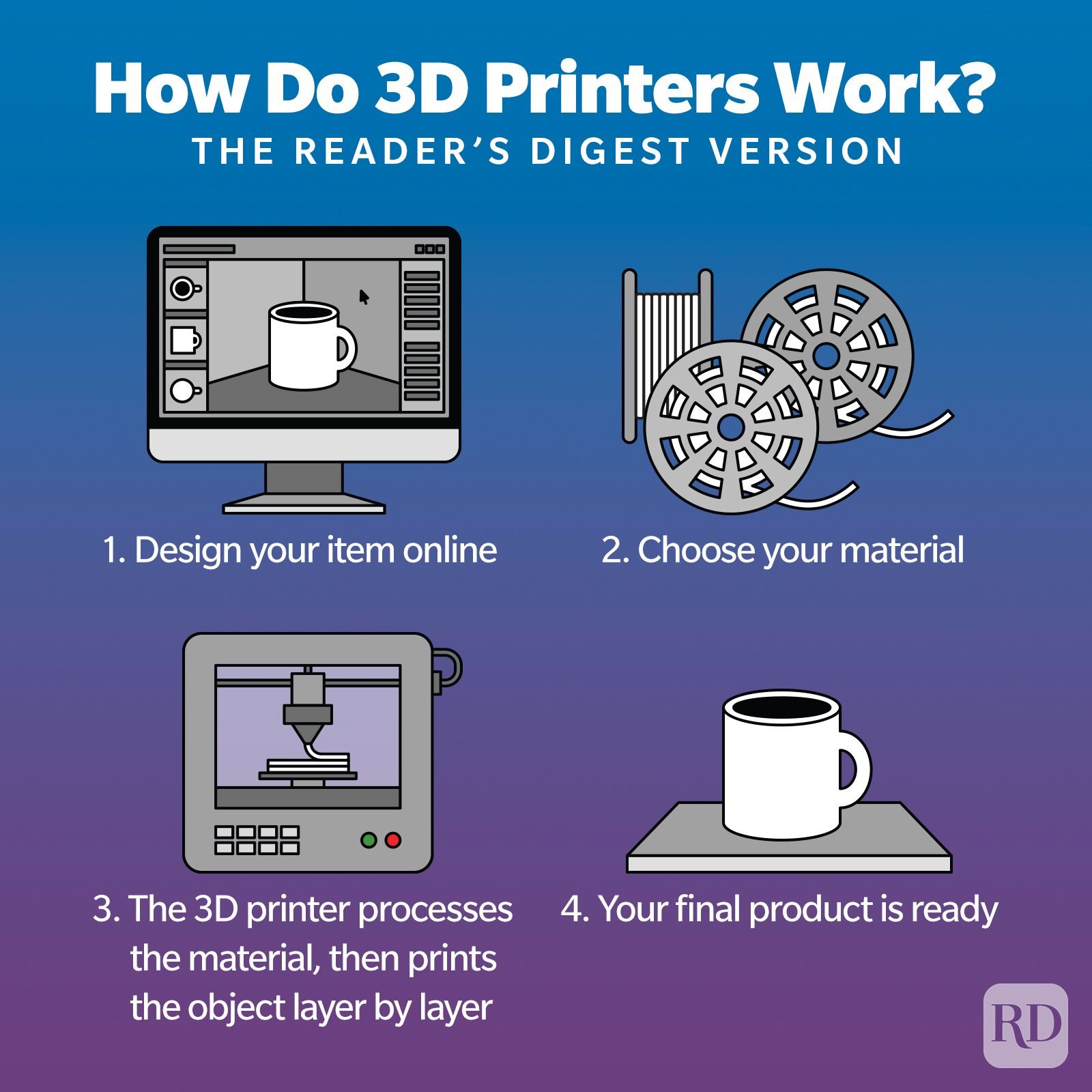
Now for the printing! The printer is loaded with a spool of filament, which is usually a plastic like PLA or ABS. This filament is fed into a component called an extruder, which contains a heating element. The extruder heats the plastic until it melts, turning it into a semi-liquid state, much like a very precise hot glue gun.
The printer then begins its work. The print head, which contains the hot nozzle, moves precisely across a build platform (the print bed), depositing a thin, molten line of plastic for the very first layer. As the plastic cools almost instantly, it solidifies. Once the first layer is complete, the build platform usually lowers by a tiny fraction of a millimeter (or the print head moves up), and the printer starts depositing the second layer directly on top of the first. This process repeats, layer after painstaking layer, gradually building up the object from the bottom, until your digital design has fully materialized into a solid, physical creation. It's truly a marvel of modern engineering, transforming digital dreams into tangible reality!