
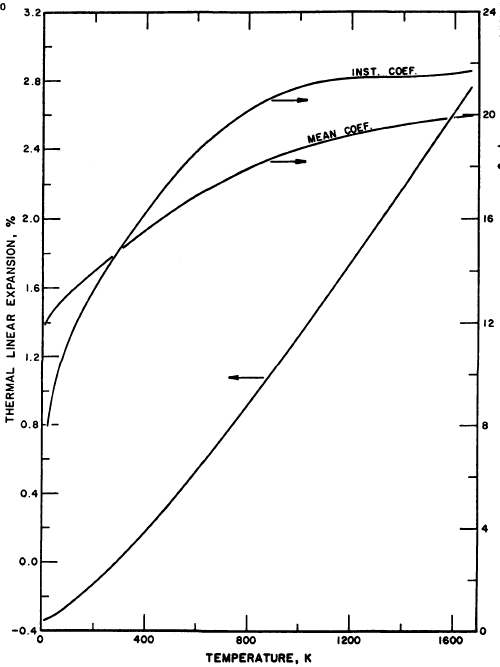
316 Stainless Steel Coefficient Of Thermal Expansion

Ever wondered why that fancy stainless steel pot in your kitchen doesn't warp like a flimsy aluminum one when you crank up the heat? Or why bridges made of steel don't crumble into dust on a scorching summer day? The answer, in part, lies in a sneaky little property called the coefficient of thermal expansion.
And when we're talking about the coefficient of thermal expansion and stainless steel, we often think of 316 stainless steel. It's like the rockstar of the stainless steel world.
316 Stainless Steel: The Rockstar of Stability
316 stainless steel is a special blend of metals. It’s a super cool alloy of iron, chromium, nickel, and molybdenum, and that gives it some pretty amazing powers.
Must Read
Think of the coefficient of thermal expansion as a metal's way of saying, "Okay, okay, I'll budge a little when it gets hot, but not too much!" 316 stainless steel is known for being relatively chill about temperature changes. That means it doesn't expand or contract dramatically when the thermometer goes up or down.
Why Should You Care? The Case of the Picky Pizza Oven
Imagine you're building the ultimate pizza oven. You want that perfect crispy crust, that gooey cheese... pizza perfection! You need an oven that can handle intense heat, but also needs to hold it shape.
If you used a material with a high coefficient of thermal expansion, like, say, a particularly dramatic type of plastic (not recommended for ovens!), your oven might expand unevenly, developing cracks, and turning your pizza dreams into a soggy, misshapen nightmare.
That's where 316 stainless steel comes to the rescue! Its relatively low coefficient of thermal expansion means it'll expand evenly and predictably, keeping your oven stable and your pizzas perfectly formed.
Bridges, Buildings, and the Beauty of Predictability
The same principle applies to massive structures like bridges and skyscrapers. Civil engineers need to account for the expansion and contraction of materials due to temperature fluctuations.

Think about it: a long bridge made of a material that expands significantly in the summer sun would buckle and warp, becoming a hazard to traffic. That's a problem!
By using materials like 316 stainless steel, which have a well-defined and relatively low coefficient of thermal expansion, engineers can design structures that are safe and stable, even under extreme temperature variations.
The "Little Bit Goes a Long Way" Principle
While 316 stainless steel does expand and contract slightly with temperature changes, it's all about the degree of that expansion. Think of it like stretching a rubber band.
A little stretch is fine; the rubber band bounces back. But stretch it too much, and it'll lose its shape or even snap! 316 stainless steel is like a super-resilient rubber band that can handle a good stretch without losing its integrity.
That little bit of expansion, controlled by the coefficient of thermal expansion, is actually crucial. It allows structures to absorb stress and prevent catastrophic failures.
Beyond the Obvious: Where Else Does 316 Shine?
316 stainless steel isn't just for ovens and bridges. Its unique properties make it a star in a whole host of other applications.

Medical Marvels: Implants and Instruments
Because 316 stainless steel is highly resistant to corrosion and doesn't react with bodily fluids, it's a popular choice for medical implants and surgical instruments.
Imagine a hip replacement that corrodes inside your body. Yikes! That's why biocompatible materials like 316 stainless steel are essential in the medical field.
The controlled coefficient of thermal expansion also plays a role here. It ensures that the implant expands and contracts at a rate similar to bone, minimizing stress and discomfort for the patient.
The Salty Seas: Marine Applications
The molybdenum in 316 stainless steel makes it particularly resistant to corrosion from chlorides, like those found in seawater. That's why it's a favorite for marine applications, from boat parts to offshore oil rigs.
Saltwater is notoriously corrosive, and most metals would quickly succumb to its harsh effects. But 316 stainless steel can withstand the salty spray and keep things shipshape.
The coefficient of thermal expansion is important here, too. Marine structures are constantly exposed to fluctuating temperatures, and 316 stainless steel's stability helps ensure their long-term integrity.

Chemical Processing: A Reactive Role
Many chemical processes involve harsh and corrosive substances. 316 stainless steel is often used to construct tanks and pipes that can withstand these extreme conditions.
Think of all the nasty stuff that goes on in a chemical plant! You need materials that won't break down or react with the chemicals, and 316 stainless steel is up to the task.
Again, the coefficient of thermal expansion is crucial. It ensures that the equipment remains dimensionally stable, even when exposed to varying temperatures and corrosive substances.
A Love Story in Metal: The Human Element
While the coefficient of thermal expansion might seem like a dry, technical term, it's actually a key part of a larger story: the human ingenuity that goes into creating materials that can withstand the challenges of the world around us.
It's the story of engineers carefully selecting alloys, meticulously calculating expansion rates, and designing structures that are both strong and resilient.
It's the story of doctors using innovative materials to improve patients' lives, and of sailors relying on the durability of their equipment to navigate the open seas.
The Unsung Hero of Everyday Life
So, the next time you use your stainless steel cookware, cross a bridge, or marvel at a towering skyscraper, take a moment to appreciate the unsung hero: the coefficient of thermal expansion.
It's a reminder that even seemingly small properties can have a profound impact on our lives, ensuring the safety, stability, and durability of the things we rely on every day.
And remember 316 stainless steel. It’s that rockstar that helps make it all possible, quietly working its magic behind the scenes.
More Than Just Numbers
The coefficient of thermal expansion is more than just a number on a datasheet. It's a testament to human innovation and our ability to understand and harness the properties of materials to build a better world.
It’s also a reminder that even the smallest details can make a big difference.
So, let's raise a glass (perhaps filled with something brewed in a 316 stainless steel tank!) to the coefficient of thermal expansion and to the amazing materials that make our world a safer, more stable, and more enjoyable place to live.