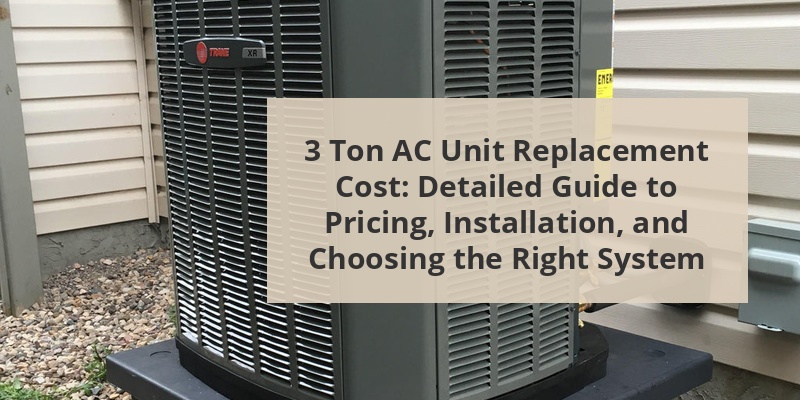
3 Ton Ac Unit Replacement Cost

Ever felt that sudden chill… of dread? Not from the AC, but from the thought of it breaking down? Or maybe you're just wondering why your energy bill is higher than a kite in the summer? Diving into the world of a 3-ton AC unit replacement cost might sound like a dry topic, but trust me, it’s a fascinating journey into comfort, efficiency, and smart money management for your home. It's a peek behind the curtain of one of your home's most vital systems, and understanding it makes you an empowered homeowner, ready to face the heat with a cool head!
At its core, understanding the cost isn't just about a number; it's about empowering yourself to make informed decisions. A 3-ton AC unit is a common size for many homes, expertly balancing cooling power with energy use. Knowing what goes into its replacement helps you appreciate the comfort it provides and the significant impact it has on your home's energy footprint. The primary purpose of exploring these costs is to prepare for an inevitable home upgrade, ensuring you get the best value for your investment. The benefits are numerous: imagine a perfectly cool home during scorching summers, lower monthly energy bills thanks to improved efficiency, and the undeniable peace of mind knowing you've made a smart, sustainable investment in your property.
Think of this knowledge in action. A young couple buys their first home, a charming but older house where the AC unit looks like it’s from another era. They proactively research replacement costs to budget for an inevitable upgrade, avoiding future surprises. Or perhaps a seasoned homeowner notices their current AC is making strange noises, struggling to cool, and just not keeping up like it used to – they need to understand options for an efficient replacement before a complete breakdown leaves them sweltering. Even in a classroom, discussing this topic could be a practical lesson in personal finance, comparing brands, understanding labor costs, and projecting long-term energy savings as part of a "home economics" or "adulting 101" module. It’s real-world math and budgeting!
Must Read
So, how do you navigate this landscape and explore it for yourself? First, don't just jump at the first quote! Always get at least three bids from different reputable contractors. Ask them to explain everything, from the SEER rating (that's Seasonal Energy Efficiency Ratio – basically, how efficient it is, with higher numbers meaning more efficiency) to potential issues with your existing ductwork or electrical connections. Don't forget to inquire about rebates or tax credits for high-efficiency units – these can significantly offset the upfront cost. Remember, the cheapest option isn't always the best in the long run. Sometimes, investing a little more upfront in a higher SEER unit can lead to substantial savings on your energy bills for years to come. Look beyond the unit itself; consider installation complexity, warranty terms, and the contractor's reputation. A little online research into local companies and average costs in your area can also arm you with valuable insights. Exploring this topic is about becoming a savvy homeowner, ready to tackle the heat with confidence and a well-informed decision.