3 Ton Ac Unit Power Consumption

Ever found yourself staring at that whopping electricity bill in the middle of summer, wondering, "What in the world is sucking all that juice?" Chances are, a big culprit is your air conditioning unit. But instead of just sighing in defeat, let's get a little curious! Understanding how much power your AC uses isn't just for tech geeks or engineers; it's a super practical piece of knowledge that can help your wallet, your comfort, and even a tiny bit of the planet.
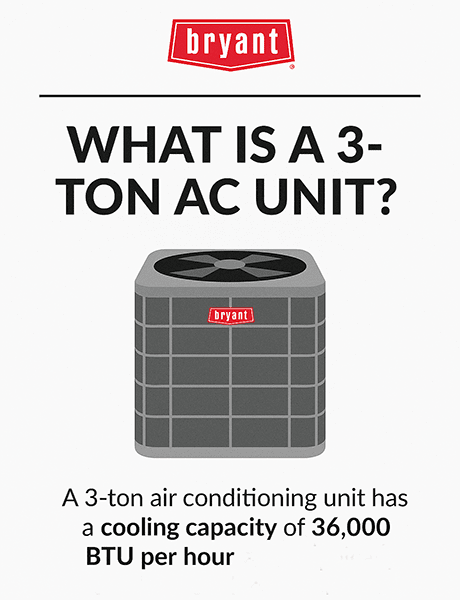
Today, we're going to peek behind the curtain of a common hero in many homes: the 3-ton AC unit. When we say "3-ton," it doesn't mean your AC weighs three tons (thank goodness!). It refers to its cooling capacity. Historically, one "ton" of cooling was the amount of energy needed to melt one ton of ice in 24 hours – a neat little historical tidbit! So, a 3-ton unit is pretty powerful, designed to cool larger spaces, typically between 1500 to 2000 square feet, depending on factors like insulation, window exposure, and ceiling height.
The main purpose of understanding its power consumption is multi-faceted. First and foremost, it empowers you to be a more informed homeowner. You can anticipate those peak summer bills, budget accordingly, and make smarter decisions about when and how long to run your unit. Secondly, it helps you appreciate the true cost of comfort. Knowing roughly how many kilowatts (kW) your AC is pulling allows you to translate that directly into dollars and cents, especially if you know your electricity rate per kilowatt-hour (kWh). Beyond your wallet, there's an environmental benefit too. Reducing unnecessary AC usage, even slightly, contributes to a lower overall energy demand, which often means less reliance on fossil fuels and a smaller carbon footprint. It’s about conscious living, not just chilling out!
Must Read
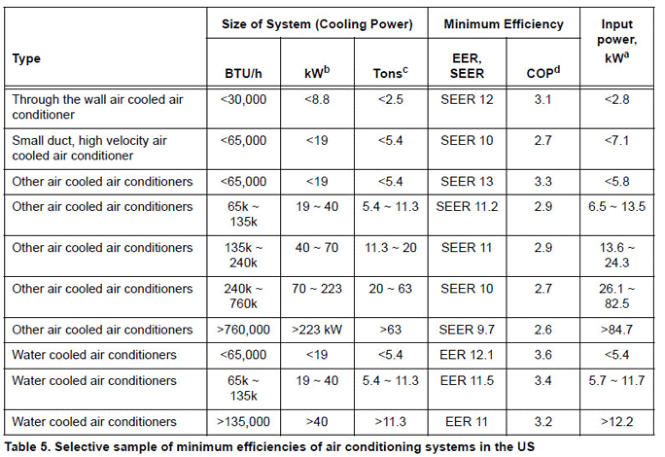
So, where does this knowledge come into play in our daily lives? Imagine you're comparison shopping for a new AC. You'll see numbers like SEER (Seasonal Energy Efficiency Ratio) ratings. A higher SEER means more efficient cooling per watt of power consumed. Understanding power consumption helps you interpret these ratings and make an educated choice that saves you money long-term, even if the upfront cost is a bit higher. In education, this can be a fantastic real-world example for basic physics classes exploring energy and power, or for home economics students learning about household budgeting and resource management. Kids can even learn about energy conservation by understanding that leaving the AC blasting in an empty room is literally money blowing out the window!
Ready to explore this in your own home? It's simpler than you think! First, take a look at your AC unit's nameplate, often found on the outdoor compressor. You might see numbers for voltage (V), amperage (A), and sometimes even wattage (W) or kilowatts (kW). If you only see V and A, a quick calculation (V * A = W, then W/1000 = kW) gives you an idea of its power draw. Next, grab your electricity bill. Find your rate per kWh. Now, you can do some fun, simple math! If your 3-ton AC draws, say, 3.5 kW (a common estimate for an older, less efficient unit) and you run it for 8 hours a day, that's 28 kWh per day. Multiply that by your kWh rate, and you get your daily cost. To save, try adjusting your thermostat just a few degrees higher, especially when you're not home. Utilize smart thermostats to schedule cooling. And crucially, keep your filters clean – a dirty filter makes your AC work much harder, consuming more power than necessary. Getting curious about your AC’s energy use is the first step to becoming a true master of your comfort and your budget!