2024 Ev Tax Credit Income Limits

Alright, so you’ve been scrolling through shiny new electric vehicles, right? Imagining that whisper-quiet drive, the smug feeling of zooming past gas stations, and, let’s be real, the sweet, sweet thought of that juicy federal tax credit. It’s like finding a twenty-dollar bill in an old coat pocket, but for a car! Except, much like that twenty, there’s a catch. Or, more accurately, a few velvet ropes and a rather polite bouncer named “Income Limit.”
Before you get all excited about that potential $7,500 off your next eco-friendly ride, let’s talk about the unspoken rulebook. The government, in its infinite wisdom, wants to help us all go green. But they also have a bit of a Goldilocks approach to who gets the golden ticket. Not too rich, not too… well, it’s not about being too poor, just about fitting into a specific income bracket. It’s like trying to get into an exclusive club – you might have the fancy shoes, but do you have the right name on the list?
So, What's the Magic Number?
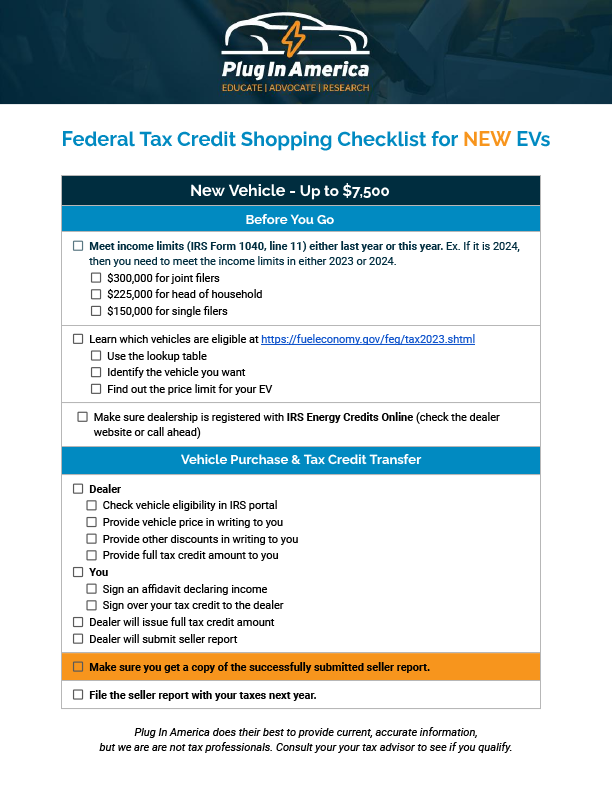
For a brand-new EV purchase in 2024, the income limits are surprisingly straightforward, but also pretty firm. Think of it as a financial velvet rope that changes based on your tax filing status. If you’re eyeing that new EV, you’ll need to make sure your Modified Adjusted Gross Income (MAGI)—don't worry, we'll decode that beast in a sec—doesn't exceed these thresholds:
Must Read
- If you’re a Married couple filing jointly, you can’t make more than $300,000. That’s for the power-duo households, the dynamic duos, the “we share a Netflix account and a dream of charging instead of gassing up” crowd.
- For those filing as Head of Household (maybe you’re a fantastic single parent, or supporting an elderly relative), the limit is $225,000.
- And for All other filers – that’s most of the singles, the married filing separately crew, and anyone else – the cap is $150,000.
See? It’s not about being super-duper wealthy, but it’s definitely not for everyone. It’s like the government saying, "Hey, we'll help you get a sweet EV, but if you're already buying yachts, maybe you don't need our help quite as much."
Decoding MAGI: It's Not As Scary As It Sounds
Okay, Modified Adjusted Gross Income. Sounds like something a wizard would mumble, right? But it’s actually less intimidating than it sounds. In most cases, for the average person, your MAGI is often pretty close to your standard Adjusted Gross Income (AGI). Think of AGI as your total income minus a few key deductions (like contributions to traditional IRAs, student loan interest, etc.).
The "modified" part usually just means adding back a few specific deductions that might not apply to everyone. So, don’t panic! It’s not your entire gross income before anything comes out. It’s your income after the taxman has allowed you to subtract a few things, but before you take your standard or itemized deductions. Still confused? That’s totally normal! This is where a quick chat with a tax professional can be your absolute best friend. Seriously, they’re like the GPS for the confusing roads of taxes.
Why All These Limits, Anyway?
Good question! The IRS isn’t trying to play "gotcha." The idea behind these income caps is to make sure the tax credit goes to those who are more likely to be influenced by it. Essentially, it’s designed to give a leg up to the middle and upper-middle class in making the jump to electric. It’s a push towards a greener future without, shall we say, subsidizing someone’s fifth luxury vehicle. It makes sense, right? Like giving a coupon for organic produce – you want it to encourage someone to try it, not just give a discount to someone who already fills their cart with it every week.

What About Used EVs?
Ah, good thinking! The world of used EVs is also getting some love with a separate tax credit, but it's an even more exclusive club. For used clean vehicles, the income limits are a bit tighter:
- Married filing jointly: $150,000
- Head of Household: $112,500
- All other filers: $75,000
It’s like the VIP lounge for pre-loved EVs – still awesome, but you need a slightly different pass.
The Takeaway: Don't Guess, Check!
The most important thing to remember is this: while we’re having a laugh about it, these income limits are real. Hitting that magic number even by a dollar could mean the difference between getting a hefty credit and… well, not. So, before you sign on the dotted line for that shiny new (or pre-loved) EV, take a deep breath, pull out your tax returns, and maybe, just maybe, have a quick chat with a tax professional. They’ll help you figure out if you’re on the right side of the velvet rope for that sweet, sweet EV tax credit. Happy (electric) driving!