
200 Amp Service Wire Size Chart

Ever tried plugging in just one more thing into an already overloaded extension cord, only to be met with that familiar, slightly singed smell and the sudden darkness of a tripped breaker? Yeah, me too. It’s like a mini-drama unfolding right there in your living room, isn't it?
That little moment, as annoying as it is, actually teaches us something fundamental about electricity: it’s a powerful beast that needs to be treated with respect. And understanding how much juice your home can handle, and more importantly, how it gets there, is crucial. Which, my friend, brings us neatly to the often-overlooked but super important topic of your home’s 200 Amp Service Wire Size Chart.
It sounds a bit dry, I know. Like something only an electrician with a clipboard and a very serious face would care about. But trust me, once you grasp the basics, you'll feel a lot more clued-in about the silent power highway running into your most cherished space.
Must Read
So, What's 200 Amp Service Anyway?
Think of your home's electrical service as the main pipeline for all the electricity flowing into your house. For most modern homes, especially those built in the last few decades or updated recently, 200 Amps is the gold standard. It’s the big kahuna, the main artery that ensures you can run your AC, dishwasher, multiple TVs, charge your phone, and still have enough power to toast your bagel without plunging into darkness.
Before 200 Amps became common, many homes had 100 Amp service, which, let's be real, just doesn't cut it for today's gadget-heavy, energy-hungry lifestyles. So, if you're rocking 200 Amps, you're in a good place. But just having 200 Amps isn't enough; you need the right "pipes" for that flow.
Why Wire Size is NOT a Guessing Game
Imagine trying to drink a really thick milkshake through a tiny coffee stirrer. Frustrating, right? Now imagine trying to force 200 Amps of electricity through a wire that’s too thin. It's not just frustrating; it’s downright dangerous. When a wire is too small for the amount of current it needs to carry, it resists the flow, heats up, and that heat? That's how fires start. Seriously.
This is where the "wire size chart" comes in. It’s essentially a guide to ensure your electrical "pipes" (wires) are chunky enough to safely carry the intended load. And no, it's not some ancient secret society's code; it's based on physics and laid out in the National Electrical Code (NEC).

The Nitty-Gritty: Copper vs. Aluminum and Their Sizes for 200 Amps
When we talk about service wires, we're mainly looking at two materials: copper and aluminum. Each has its pros and cons, and more importantly, different size requirements for the same amperage.
Copper Wires for 200 Amps
Copper is the premium choice. It's an excellent conductor, highly durable, and less prone to issues like oxidation. Because it's so efficient, you can use a slightly smaller gauge wire to carry the same amount of current compared to aluminum.
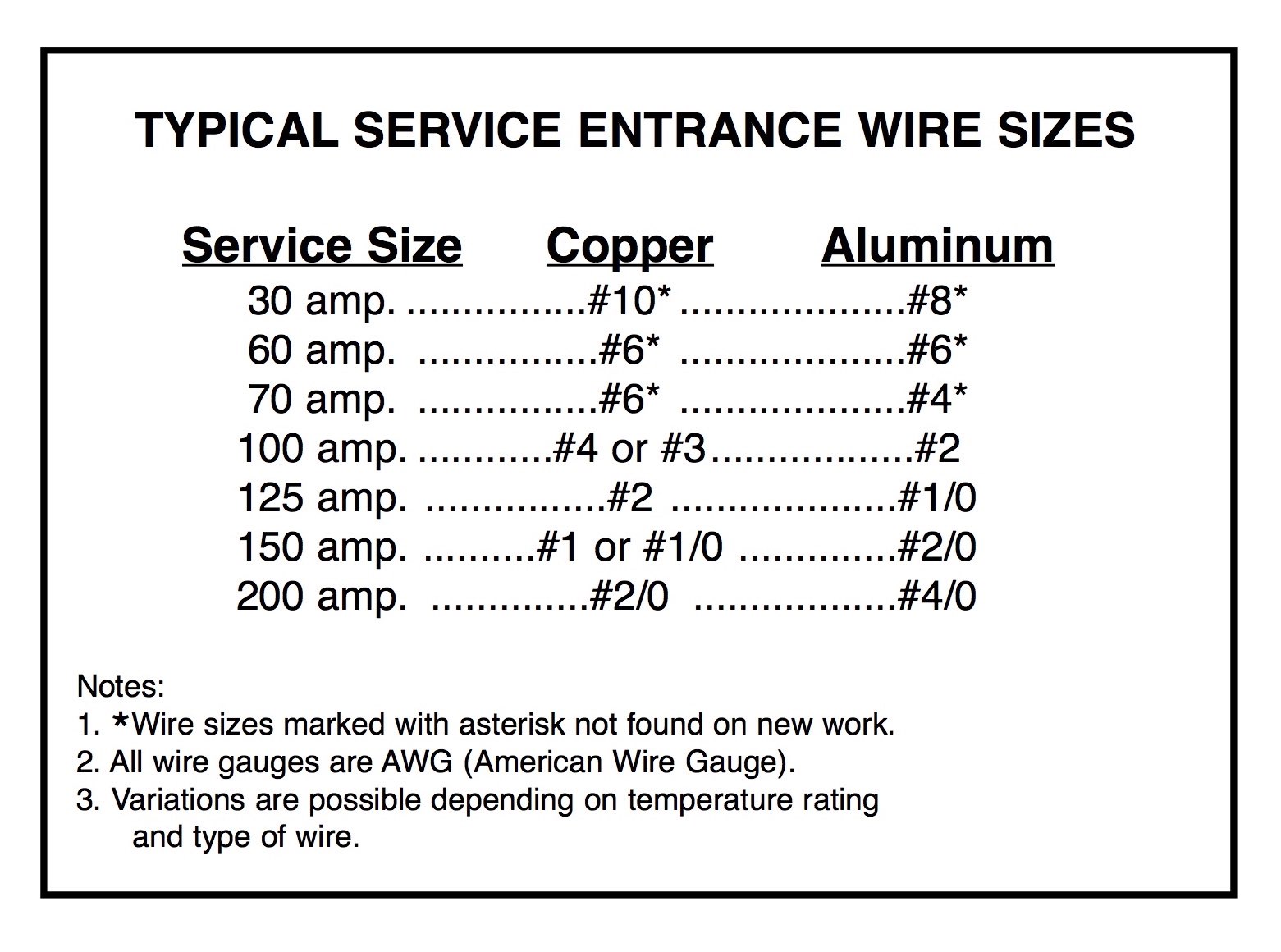
For a typical 200 Amp service, you're usually looking at:
- 2 AWG (American Wire Gauge) Copper
- Or sometimes 1 AWG Copper, depending on factors like insulation type, temperature rating, and specific local code interpretations.
The lower the AWG number, the thicker the wire, remember? It's a bit counterintuitive, but think of it like shotgun gauges – smaller number means bigger bore. Same idea here.
Aluminum Wires for 200 Amps
Aluminum is the more budget-friendly option and is widely used for service entrance conductors due to its lighter weight and lower cost. However, because it's not quite as conductive as copper, you need a thicker wire to do the same job.
For 200 Amp service with aluminum, the common sizes are:
- 4/0 AWG Aluminum (read as "four aught")
- Or sometimes 2/0 AWG Aluminum, again, depending heavily on insulation and temperature ratings.
Notice how much thicker 4/0 AWG is compared to 2 AWG copper? That’s the difference in conductivity at play. So, if you're wondering why one house might have chunkier service wires than another for the same 200 Amps, this is often the reason!
Beyond Just Amps: Other Factors That Matter (A Lot!)
Alright, so you’ve got a rough idea of the numbers. But hold your horses, because it’s not just about the copper vs. aluminum and the simple AWG number. Oh no, electricity loves to keep things interesting.

1. Distance (Voltage Drop): The longer the wire runs from your meter to your main panel, the more "tired" the electricity gets, and you can experience voltage drop. For longer runs, you might need an even thicker wire than the chart suggests to compensate.
2. Insulation Type and Temperature Rating: Wires come with different types of insulation (like THHN, THWN-2, XHHW-2). Each type has a temperature rating, which affects how much current it can safely carry. A wire rated for higher temperatures can often handle more current for its size.
3. Conduit vs. Free Air: Wires stuffed into a conduit can't dissipate heat as easily as wires running freely. This "bundling" effect means you often need larger wires when they're enclosed to prevent overheating.
4. Local Electrical Codes: This is the big one. The NEC provides the foundation, but your local municipality might have its own amendments or specific requirements. Always, always, always consult your local codes!

My Honest Advice: Don't DIY Your Service Entrance!
Look, I'm all for DIY projects. Changing a light fixture? Awesome. Replacing an outlet? Go for it (after turning off the power, obviously!). But messing with your main service entrance wiring is a whole different ball game. We're talking about the point where thousands of watts of raw power enter your home.
Choosing the wrong wire size, installing it incorrectly, or misinterpreting codes can lead to:
- Fire hazards: The most terrifying one.
- Equipment damage: Fried appliances and electronics.
- Voided insurance: In case of an electrical issue.
- Failed inspections: A headache if you ever sell your home.
- Electrocution: The absolute worst-case scenario.
So, what's the takeaway, you brilliant DIYer, you? Get knowledgeable, understand the basics, but for anything involving your 200 Amp service wire, call a qualified, licensed electrician. They live and breathe this stuff, know the codes backward and forward, and have the right tools and expertise to keep you and your home safe.
Knowing about the 200 Amp service wire size chart isn't about doing it yourself; it's about being an informed homeowner. It helps you understand what your electrician is talking about, ask smart questions, and appreciate the complex network of safety measures that keep your lights on and your home secure. Stay curious, and stay safe!