
18 8 Vs 18 0 Stainless Steel

You know that feeling, right? You're cruising through the kitchen aisle, maybe online, looking at some shiny new pots, a sleek water bottle, or even just some humble flatware. Everything says "stainless steel," and you think, "Great! Stainless, means no stain, right? Easy peasy." Then you spot it. A tiny little engraving, often tucked away, proclaiming something like "18/8" or "18/0."
I remember this vividly. I was once on a quest for the perfect, indestructible coffee mug. Found two that looked identical, felt similar, but one was significantly cheaper. A quick squint revealed the cheaper one was "18/0," the pricier one, "18/8." My brain, bless its innocent heart, just thought, "Hmm, one has an 8, the other a 0. Probably just a batch number or something equally mundane."
Oh, how wrong I was! Turns out, those tiny numbers weren't just decorative – they were whispering secrets about durability, shine, and whether my coffee mug would eventually start looking like a prop from a post-apocalyptic movie. And that, my friends, is what sent me down the rabbit hole, armed with a healthy dose of curiosity and a magnet. Yes, a magnet!
Must Read
So, What's the Dealio with 18/8 and 18/0?
These numbers, my dear curious reader, are not random. They tell us the composition of the stainless steel, specifically the percentage of two key elements: chromium and nickel. Think of them as the superheroes behind the "stainless" superpower.
The first number, 18, almost always refers to the chromium content. In both 18/8 and 18/0, it means the steel contains about 18% chromium. Chromium is the rockstar here; it's what gives stainless steel its awesome resistance to rust and corrosion by forming a passive protective layer. Pretty neat, huh?
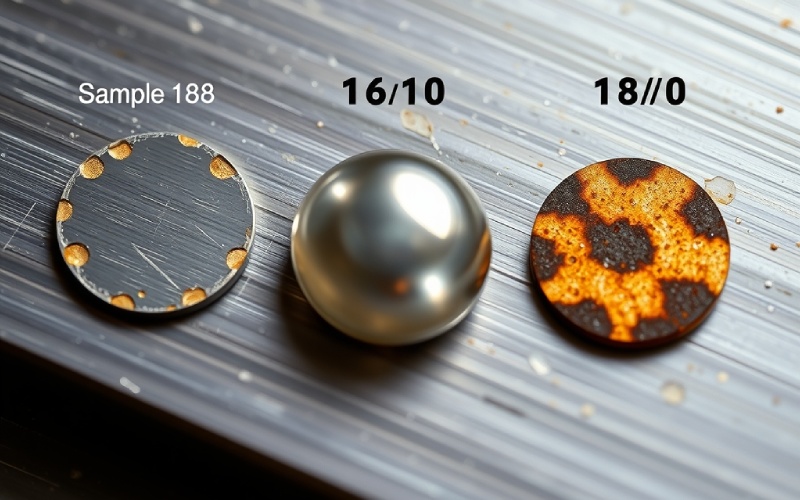
It's the second number where things get interesting and where our two contenders diverge.
Meet the Players: 18/8 – The Premium Pal
When you see 18/8 stainless steel (also known as Type 304 or A2 stainless), you're looking at a product with about 18% chromium and 8% nickel. And that 8% nickel? That's the secret sauce, the unsung hero, the reason it's often considered the "good stuff."
- Corrosion Resistance: Thanks to the nickel, 18/8 is far more resistant to rust, corrosion, and staining, especially from acids found in food. This makes it ideal for kitchen sinks, high-end cookware, flatware that goes into the dishwasher daily, and medical instruments.
- Durability: It's generally stronger and more durable, less prone to bending or scratching.
- Appearance: It tends to have a slightly warmer, richer luster.
- Non-Magnetic: This is a biggie! 18/8 is typically non-magnetic or only very weakly magnetic. If your induction cooktop needs a magnetic base, 18/8 cookware won't work unless it has a special magnetic layer (often 18/0 or ferritic steel).
- Cost: Unsurprisingly, that extra nickel makes it more expensive.
Think of 18/8 as the reliable, high-performing friend who always has your back, even in tricky situations. It’s the kind of stainless steel you want for things you expect to last a lifetime.

And its Cousin: 18/0 – The Budget Buddy
Now, let's talk about 18/0 stainless steel (often referred to as Type 430 or ferritic stainless). The "0" means it contains 18% chromium but virtually 0% nickel. Nada. Zilch.
- Corrosion Resistance: While still "stainless" thanks to the chromium, it's less resistant to corrosion and rust than 18/8. Without the nickel, it's more susceptible to pitting and rust spots, especially with prolonged exposure to salts, acids, or harsh detergents. This is often why you see rust spots on cheaper flatware after a few dishwasher cycles.
- Durability: It can be a bit softer and more prone to bending or scratching compared to 18/8.
- Appearance: It often has a very bright, almost bluish-white sheen.
- Magnetic: Here's the kicker – 18/0 is magnetic. This is why it's often used for induction-compatible cookware (though always check for specific induction compatibility, as other factors matter too!). It also means you can easily test your flatware with a fridge magnet to see if it’s 18/0!
- Cost: It's significantly cheaper to produce, which makes it popular for budget-friendly items.
18/0 is like that fun, accessible friend who's great for casual hangouts but might not be the one you call when you need heavy-duty problem-solving. It gets the job done for many applications, especially when cost is a primary concern or magnetism is needed.

The Big Showdown: How to Tell the Difference (and why it matters!)
So, apart from the little stamp, how can you tell? The easiest (and most fun) way is the magnet test! Grab a fridge magnet. If it sticks strongly, you're likely holding 18/0. If it barely sticks or doesn't stick at all, it's probably 18/8.
Why does this distinction matter to you? Well, it depends on what you're buying!
- For Cookware: If you have an induction stovetop, you need magnetic cookware. So 18/0 (or 18/10, which we didn't cover but also contains nickel and is magnetic due to specific processing) might be what you're after, or 18/8 with a magnetic base. For general stovetops, 18/8 offers superior corrosion resistance, meaning your pots will look shinier for longer.
- For Flatware: Daily use, dishwashers, acidic foods... 18/8 is definitely the workhorse you want for your everyday forks and spoons. If you see "stainless steel" without numbers and it's super cheap, it's probably 18/0, and you might see those dreaded rust spots eventually.
- For Sinks or Appliances: Given constant exposure to water and cleaning products, 18/8 is the better, more durable choice for these long-term investments.
- For Water Bottles/Food Storage: Again, 18/8 is preferred for its superior resistance to food acids and longevity.
The next time you're shopping for anything shiny and metal, you'll be armed with knowledge. You won't just see "stainless steel"; you'll see a story of chromium, nickel, and what that means for your daily life. And who knew a tiny number could be so fascinating, right?
