
12000 Btu For What Size Room

Alright, gather 'round, folks! Grab your imaginary coffee, because we're about to tackle one of life's great mysteries: BTUs. Specifically, we're asking: 12,000 BTU for what size room?
BTU? Sounds like alien energy currency, right? Nope, it stands for British Thermal Unit. Yes, British! Not 'Bat-Tastic Unit,' sadly. A BTU is simply a tiny unit of energy that measures how much heat an AC can add or remove. Think of it as your air conditioner's super strength rating. The higher the BTU, the more muscle your AC has to cool a space.
The Magic Number for 12,000 BTUs
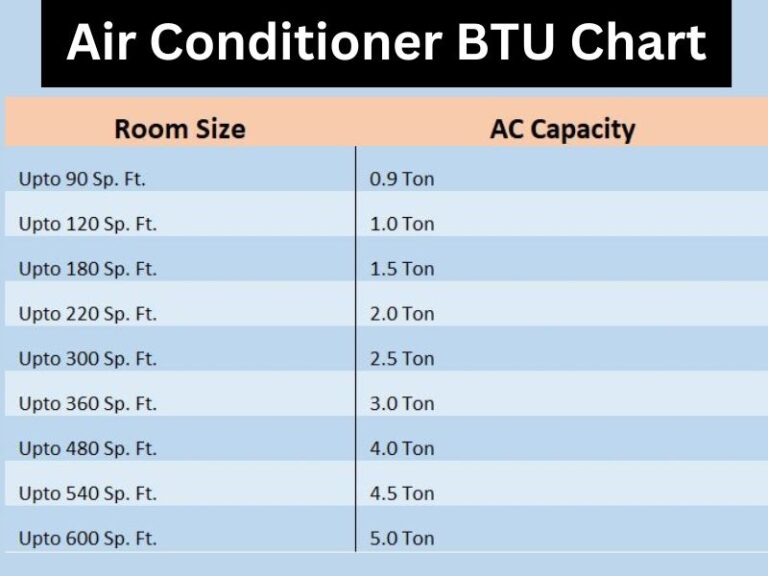
So, you've spotted an AC unit proudly proclaiming its 12,000 BTU prowess. You're picturing frosty glasses and polar bears frolicking in your living room. But is it the right fit? The general, back-of-the-napkin, rule-of-thumb answer for a 12,000 BTU air conditioner is a room size between 450 and 550 square feet. That's roughly the size of a pretty spacious master bedroom, a decent living room, or perhaps a small apartment living area. Imagine throwing a medium-sized party without everyone melting into a puddle!
Must Read
But hold on a minute, because like all good stories, there are plot twists! Saying "450-550 sq ft" is like saying "dress for the weather" without mentioning if it's scorching summer or a blizzard. There are so many sneaky little factors that can throw your perfectly calculated BTU off faster than a squirrel raiding a bird feeder.
The Plot Thickens: Factors That Mess With Your BTUs
1. Ceiling Height: The Sky's the Limit (For Heat)
Ever walked into a room with towering, cathedral ceilings and felt like you needed an oxygen tank? Those majestic ceilings are also huge reservoirs for heat. If your room has ceilings higher than the standard 8 feet, you'll need more BTUs. It’s like trying to cool a swimming pool versus a kiddie pool – same surface area, but way more volume!

2. Windows, Windows Everywhere!
Ah, glorious natural light! Unless, of course, that natural light is blasting through a gigantic, south-facing window on a 90-degree day, turning your room into a giant convection oven. Windows, especially older, single-pane ones, are notorious for letting heat in. More windows, especially direct sunlight, means you'll want to add a few hundred BTUs to your estimate. It's the sun's way of saying, "Surprise! I'm here to cook you!"
3. Insulation: Your Walls' Secret Superpower
Is your room built like a fortress with top-notch insulation, or is it more like a sieve with drafts whispering sweet nothings through every crack? Good insulation is like a warm blanket in winter and a cool shield in summer. If your insulation is as thin as my patience on a Monday morning, your AC will have to work harder. You might need more BTUs than a perfectly sealed room of the same size. Think of trying to keep ice cream frozen in a cooler vs. leaving it on the kitchen counter.
4. Occupants & Appliances: Your Personal Heat Emitters
Confession time: we're all walking, talking, heat-emitting machines! Every person in a room adds roughly 600 BTUs per hour. So, if your "room" is actually a cramped office space with five other colleagues, all running computers, monitors, and maybe even a mini-fridge, that 12,000 BTU unit might feel like a tiny fan in a sauna. Appliances are also heat hogs. Factor in your personal heat-emitting army!
5. Climate & Location: Desert vs. Tundra
Living in scorching Phoenix, Arizona? You're going to need more cooling power than someone in chilly Portland, Oregon, for the exact same room size. The ambient temperature and humidity outside make a huge difference. A 12,000 BTU unit in Florida humidity will have a different job than the same unit in a dry, temperate climate. It's not just about temperature; it's about the relentless stickiness of the air!

The Perils of Getting it Wrong: Too Much or Too Little?
So, what happens if you just guess? Well, it's like wearing a tuxedo to a beach party or swim trunks to a black-tie gala. It's just... wrong.
Too Few BTUs (The Sweat Lodge Scenario)
If you get an AC unit with too few BTUs, it's like asking a kitten to guard a steak. It tries its best, but it's just not enough. Your unit will run constantly, desperately trying to reach your desired temperature, but never quite getting there. You'll be left with a room that's still too warm, incredibly humid (because it can't dehumidify properly), and a shockingly high energy bill. You'll be sweating like you're in a sauna wearing a wool suit.

Too Many BTUs (The Arctic Blast & Mold Farm Scenario)
On the flip side, getting an AC unit that's too powerful for your room seems like a good problem, right? More power! Wrong. A unit with too many BTUs will cool the room down super fast, then shut off. This is called short cycling. While it sounds efficient, it doesn't run long enough to effectively remove humidity from the air. You'll end up with a room that's cold but clammy, making it feel less comfortable. Worse, that excess humidity can be a breeding ground for mold and mildew. Plus, the constant on-off cycle is actually less energy-efficient and puts more wear and tear on your unit, shortening its lifespan. It's like living in a meat locker, and your wallet's crying.
The Takeaway: Don't Guess, Measure!
So, for our 12,000 BTU question, remember that sweet spot of 450-550 square feet is your starting point. But always, always consider those pesky factors. A quick way to estimate? Multiply your room's length by its width to get square footage, then use an online BTU calculator. There are tons of them!
Choosing the right BTU isn't just about comfort; it's about energy efficiency, the longevity of your unit, and avoiding the aforementioned sweat lodge or arctic mold farm scenarios. So, measure twice, calculate once, and enjoy that perfectly crisp, comfortable air. Your future self (and your energy bill) will thank you!