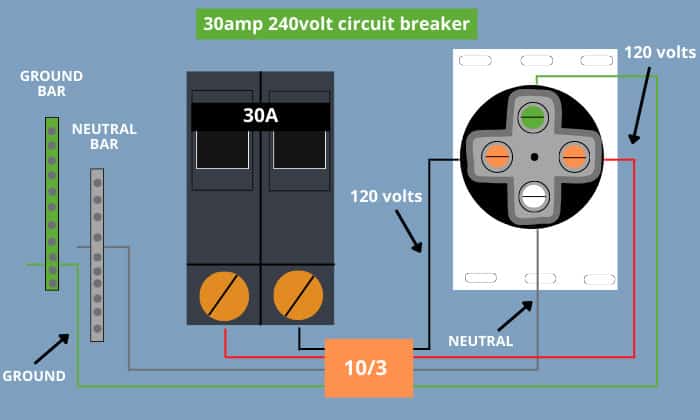
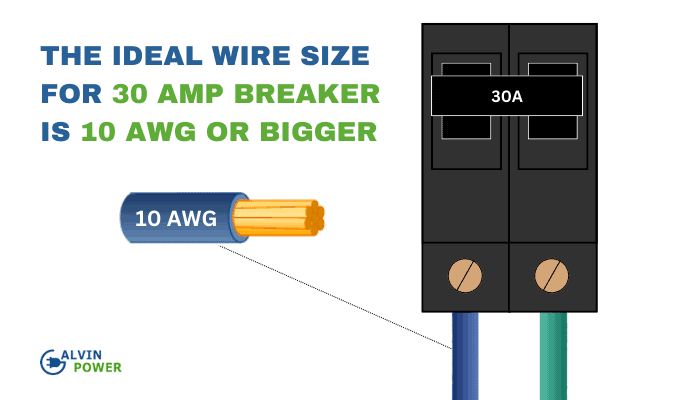
10 2 Wire For 30 Amp Breaker

Ever flicked on a light switch and not thought twice about it? Or perhaps plugged in a toaster, a hairdryer, or even a hefty air conditioner, trusting that the power would simply flow? We live in a world utterly dependent on electricity, yet the intricate dance of wires and breakers that keeps our homes humming often goes unnoticed. But what if I told you there's a particular unsung hero in your electrical system, a dynamic duo designed to handle the heavy lifting and keep everything safe and sound? Meet the formidable combination of
Now, I know what you might be thinking: "Electrical wiring? Sounds about as exciting as watching paint dry!" But bear with me. Think of it like this: your home’s electrical system is a bustling highway. Your everyday lights and outlets are like small cars on local roads. But what about the eighteen-wheelers, the heavy-duty vehicles that need a dedicated lane and a robust engine? That's where our 10-gauge wire and 30-amp breaker come into play. This powerful pairing is specifically engineered for appliances that demand more juice, ensuring they run smoothly without tripping breakers or, more importantly, overheating wires and causing a fire hazard. The benefits are clear: it provides the necessary capacity for high-demand devices, guaranteeing both safety and reliability for your everyday life.
So, where might you find this electrical powerhouse at work? Think about those appliances that make modern living so comfortable. Perhaps a
Must Read
Curious how you can appreciate your home’s electrical heroes more effectively? Here are a few practical tips: First, know your limits. Understand which circuits power which appliances in your home. Your breaker panel should be labeled – if it isn’t, consider mapping it out (safely!). This awareness helps prevent overloading circuits by plugging too many high-demand devices into one outlet. Second, respect the professionals. While it’s great to understand the basics, working with your home's main electrical wiring, especially for dedicated circuits like those requiring 10-gauge wire and a 30-amp breaker, is always best left to a