
1 Hp Is Equal To How Many Watts
Ever had one of those days where just getting out of bed feels like lifting a small car? Or maybe you’ve wrestled a particularly stubborn jar lid? That, my friends, is a little slice of effort. We all feel it. And sometimes, it feels like it takes the strength of an entire herd of wild horses just to get the job done.
Back in the day, before fancy electric motors and sleek digital displays, people needed a way to measure how much work an engine could actually do. They couldn't just plug a toaster into a steam engine to see what happened. So, they looked around for the most reliable, muscular, and generally impressive source of power they knew: a big, strong horse. And thus, horsepower was born! It’s a wonderfully old-fashioned, almost poetic way to think about power, isn’t it?
Imagine, for a moment, an actual horse. Picture it, strong and majestic, pulling a cart, or turning a mill. That's the image that horsepower conjures up. It’s a visceral, easy-to-understand concept. You know what a horse can do. We still use it, too! Your car, your lawnmower, even some vacuum cleaners might boast their power in horsepower. It's a charming relic of a bygone era.
Must Read
But then, along came the age of electricity. Lights, toasters, your super-fancy coffee machine – they all speak a different language. They speak in watts. Everything that hums, glows, or warms up in your house is probably measured in watts. It’s the modern, sleek, scientific unit for power. It’s clean, precise, and frankly, a bit less dramatic than a galloping horse.
The Great Power Conversion Question!
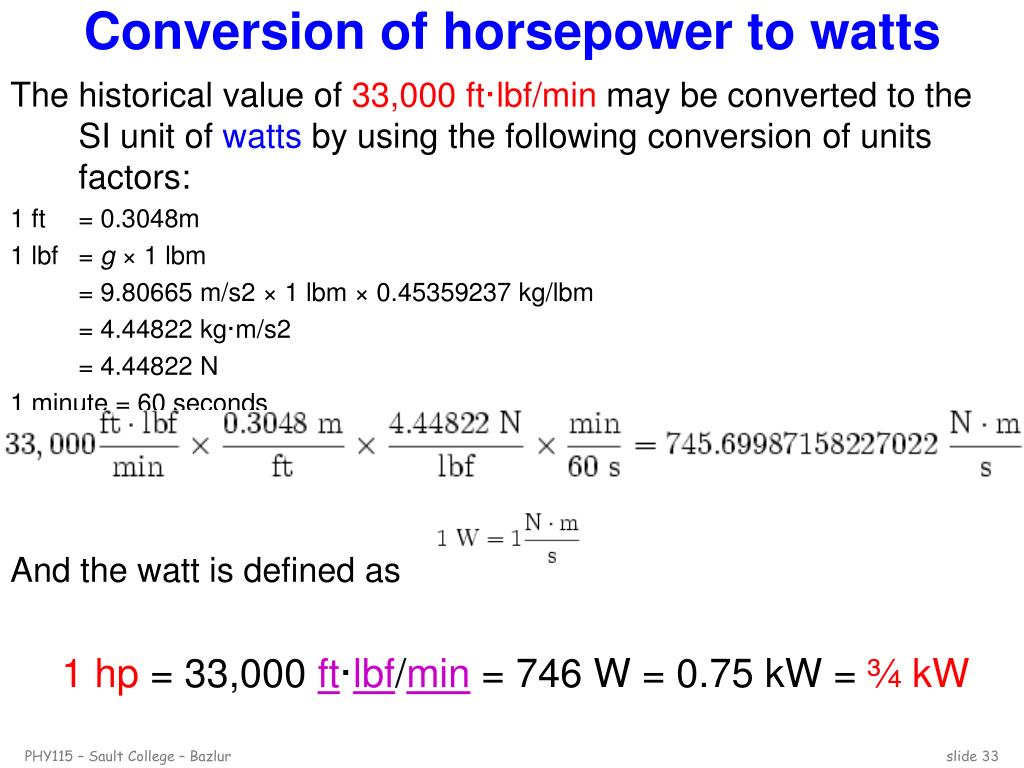
So, here’s the burning question that probably keeps absolutely no one awake at night, but is secretly a little bit wild: how many watts is one horsepower? You’d think, wouldn't you, that it would be a nice, round number? Maybe 500? Or 1,000, for simplicity’s sake? Oh no, my friends. Prepare for a number that feels like it was pulled from a hat by a sleepy scientist on a Tuesday morning.
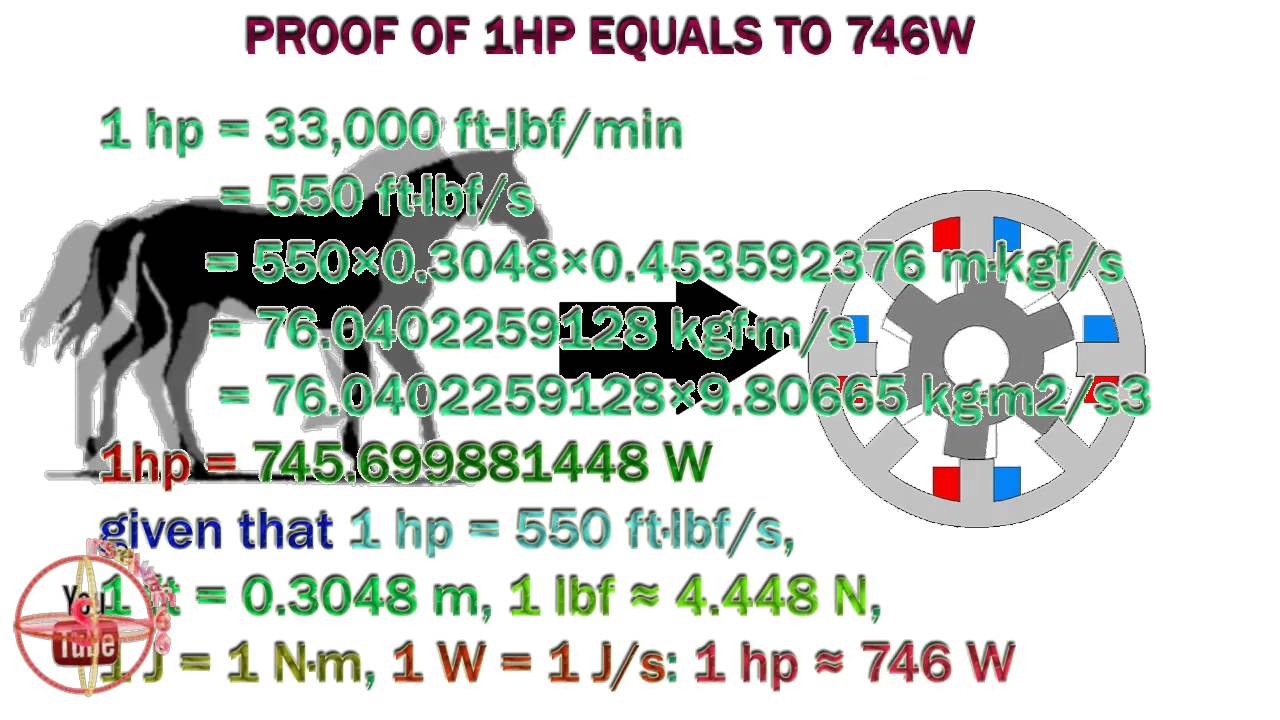
One horsepower is precisely… 746 watts.
Seven hundred and forty-six. Not 750. Not even 745. It’s 746. It’s specific. It’s persnickety. It’s the kind of number that makes you wonder who decided on it and why they couldn't have just rounded up or down a smidge. It’s my slightly unpopular opinion that this number is just a tad bit awkward. Why couldn't it be simpler? Why must our lives be filled with such precise, yet seemingly random, conversions?

Let's put this into perspective. What does 746 watts actually feel like in your everyday life? Well, your microwave might zap food at 1,000 watts. Your powerful blender could be 800-1,000 watts. Your basic hair dryer probably runs at around 1,200 to 1,800 watts. So, one horsepower is roughly like running a pretty beefy kitchen appliance. It's not the thundering gallop of a majestic steed. It's more like the hum of a really determined food processor churning through ice.
Imagine telling a horse, "Alright, Mr. Ed, today you're going to generate the equivalent power of a medium-sized toaster oven!" It just doesn't have the same ring, does it? The majestic power of a horse, reduced to a numerical output that sounds like it belongs on the back of a dishwasher. It’s a funny clash of worlds.
Yet, here we are, in a world that still happily juggles both. We talk about car engines in horsepower, while the lights in our homes run on watts. It’s a testament to how we humans like to hold onto our traditions, even when science offers a tidier alternative. So, the next time you hear someone mention horsepower, remember its exact, slightly finicky, modern equivalent: 746 watts. It’s a number that makes you smile, shrug, and perhaps agree that some things are just delightfully complicated for no good reason at all.

