
1 Amps Equal To How Many Watts
Ever sat there, maybe staring blankly at your phone charger, or perhaps a particularly aggressive toaster, and wondered about the mystical world of electricity? Like, what even are these invisible forces humming through our walls? Specifically, you might have scratched your head and asked the age-old question: "1 Amp equals how many Watts?"
If you've asked that, dear reader, congratulations! You've just stumbled upon one of electricity's most charmingly misleading questions. It's like asking, "How many miles is a gallon?" It sounds simple, right? But then you remember cars, and roads, and whether you’re driving a gas-guzzling monster truck or a zippy little scooter, and suddenly it's not so straightforward. Well, electricity is even more dramatic.
Understanding the Electrical Dance
Let's break down the main characters in our electrifying drama before we get to the big reveal. Imagine electricity isn't some invisible, spooky stuff, but rather a tiny, highly caffeinated army of electrons. Yeah, I know, stay with me.
Must Read
First up, we have Volts (or Voltage). Think of Volts as the pressure or the push behind these tiny electron soldiers. It's how much oomph they have, how hard they're being shoved through the wires. High volts mean a big push, like a firehose; low volts are more like a gentle dribble from a leaky faucet. Your standard wall outlet in the US is typically 120 Volts. In much of Europe, it's a beefier 230-240 Volts. That's why your hair dryer feels extra sassy abroad!
Then we have Amps (or Amperage). Amps are the quantity or the flow rate of those electron soldiers. It's how many of them are actually marching past a certain point in the wire per second. High amps mean a lot of electrons are moving, like a bustling highway at rush hour. Low amps are more like a quiet country lane. This is the "1 Amp" part of our question – a specific volume of electron traffic.
The Grand Analogy: A Water Park Adventure!
To really get this, let's ditch the electron army and imagine a glorious, slightly chaotic water park. It's way more fun. Plus, water and electricity share some surprisingly helpful parallels. (Just don't mix them in real life, obviously. Safety first!)
In our water park, Volts are the water pressure. Imagine the giant pumps that push the water up to the top of the steepest, most terrifying slide. The higher the voltage, the more powerful those pumps, the greater the pressure, and the faster that water wants to shoot through the pipes. It's the "oomph" that gets the water moving.
Amps are the actual amount of water flowing through the pipes. If you have a really wide pipe, or lots of pipes, you can get a huge volume of water flowing through. That's high amperage. If it's a tiny, narrow hose, you only get a small trickle – low amperage. It's the "how much" of the flow.
Now, what about Watts? Watts are the power. They're the actual work being done by the water. Think about that giant wave pool generating massive swells, or the lazy river gently propelling inner tubes, or the sheer force of water splashing down a waterfall attraction. The more water you have (amps) and the more pressure it's under (volts), the more powerful and exciting the water park experience (watts) will be.
The Big Reveal: It's a Trick Question!
Okay, drumroll please! Here's the kicker: 1 Amp doesn't equal a fixed number of Watts. Boom! Mind blown, right? It's like asking, "How many splashes does a gallon of water make?" Well, it depends! Is it a gallon slowly dripping from a faucet, or a gallon being hurled off a cliff? Big difference in splashiness!
In our water park, 1 Amp (a specific amount of water flowing) can create vastly different amounts of power (Watts) depending on the voltage (the pressure behind it). If you have 1 Amp of water being pushed by a weak, dribbly 10 Volts, you're not going to get much splash. But if you have that same 1 Amp of water being absolutely blasted by 240 Volts, you're talking about some serious power, baby!
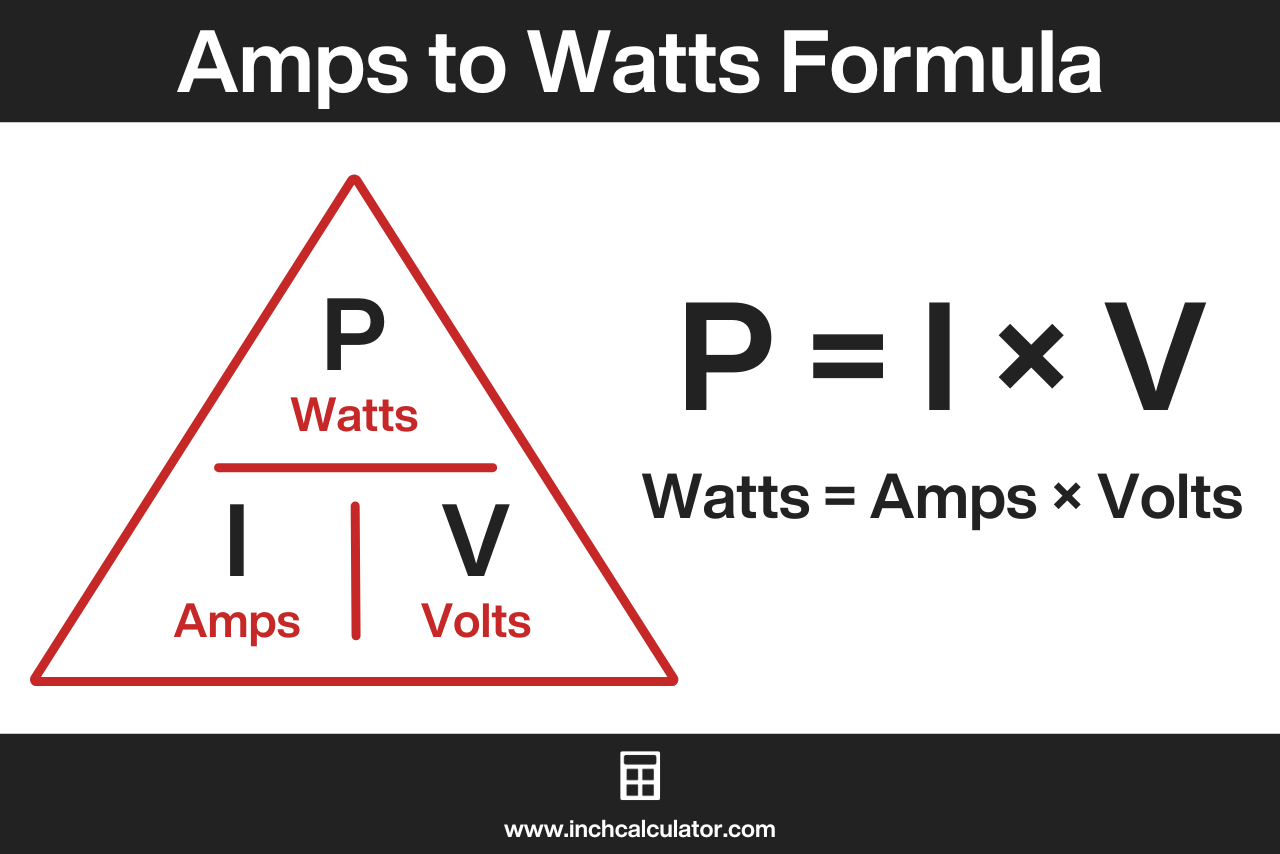
The relationship is elegantly simple, actually. It's a fundamental law of physics, not some arcane wizardry. It’s called Ohm's Law, and for our purposes, the part we care about is:
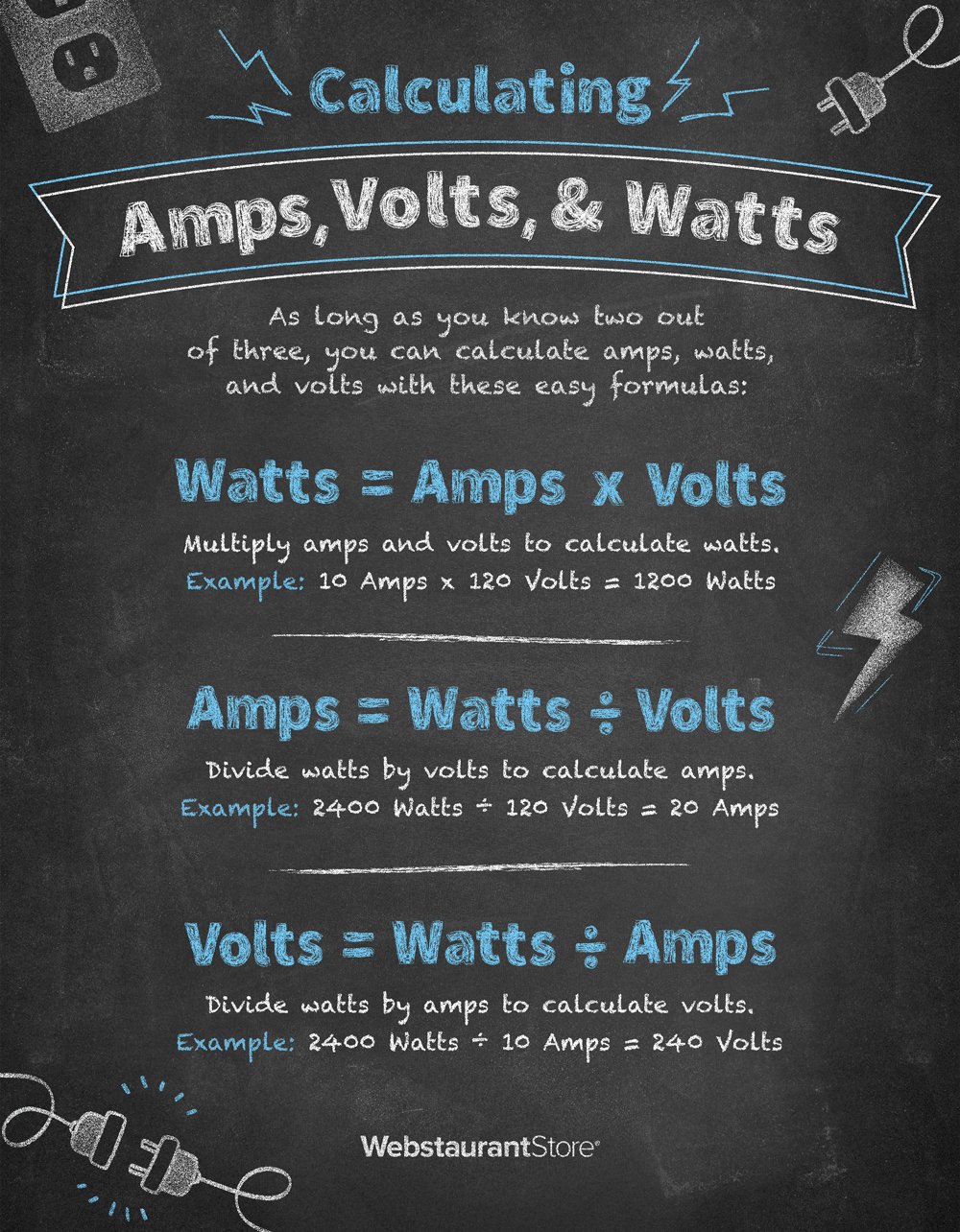
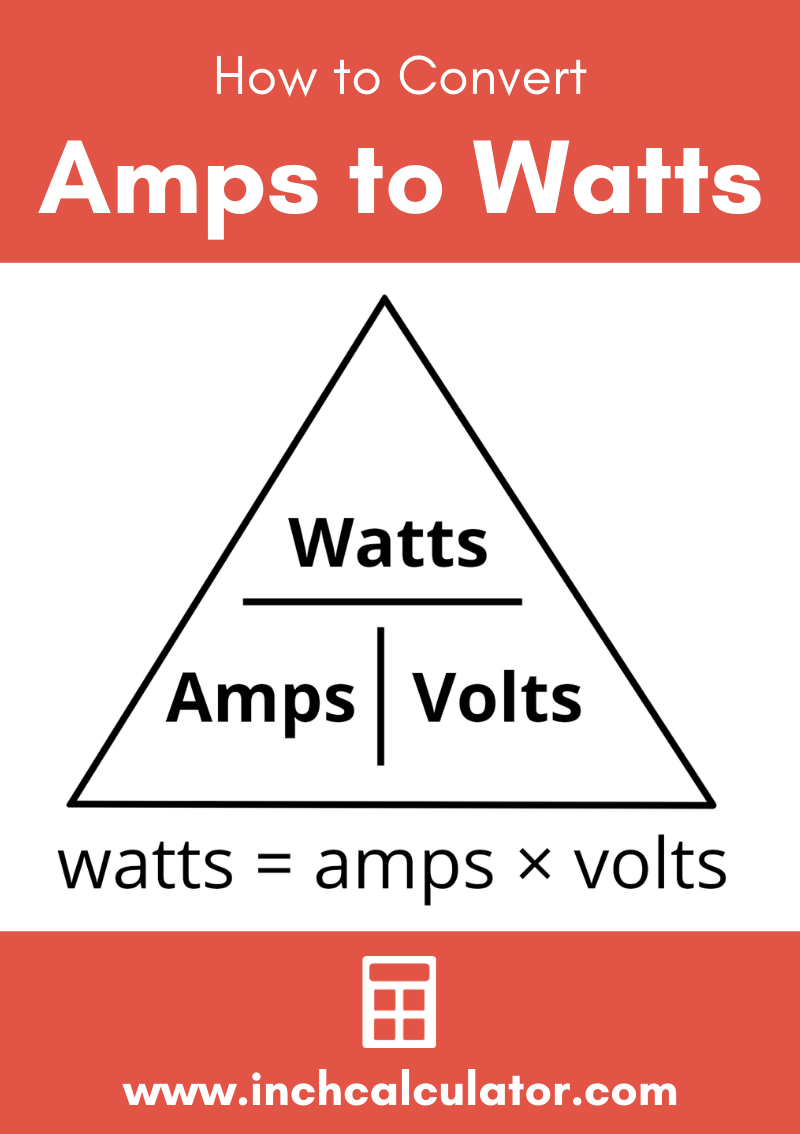
Watts = Amps × Volts
Or, if you prefer: Power = Current × Voltage
Let's Do Some Quick Café Math (Don't Panic!)
See? It's a multiplication problem! This means the number of Watts you get from 1 Amp is entirely dependent on the voltage.
-
If you're in the United States, where most outlets are 120 Volts:

Watts To Amps Converter (With 1 Amp = Watts Examples) 1 Amp × 120 Volts = 120 Watts
So, your humble 1 Amp of current is pulling 120 Watts of power. That's enough to light a bright old-school incandescent bulb, or maybe half a modern gaming PC.
-
But if you're sipping espresso in Europe, where outlets are typically 240 Volts:
1 Amp × 240 Volts = 240 Watts
Suddenly, that same 1 Amp of current is delivering double the power! Enough to run a small blender or a decent stereo system. See how those Volts make all the difference? It's not about the quantity of flow alone; it's about the force behind it too!

Amps to Watts (A to W) Conversion Calculator - Footprint Hero
So, the answer to "1 Amp equals how many Watts?" is a cheeky, "Depends on the Volts, darling!"
Why Should You Even Care, Besides Impressing Your Cat?
This isn't just trivia for your next awkward dinner party. Understanding this helps you make sense of why certain appliances need certain outlets, or why a circuit breaker trips. Circuit breakers, for instance, often trip when too many Amps are being drawn through a wire, regardless of the voltage, because too much current generates heat and can melt wires. But the power (Watts) your devices are actually consuming is a combination of both Amps and Volts.
When you see a device rated for 600 Watts, that tells you its power consumption. If it’s a 120V device, it will draw 5 Amps (600W / 120V = 5A). If it were a 240V device, it would only draw 2.5 Amps (600W / 240V = 2.5A) to achieve the same 600 Watts of work! Same work, different current demands due to different voltage supplies.
The Shocking (But Not Really) Conclusion
So, the next time someone asks you, "How many Watts in 1 Amp?", you can confidently puff out your chest, swirl your imaginary coffee, and declare, "Ah, a common misconception! You see, Watts are a measure of power, which is the product of both Amps (current) and Volts (pressure). So, 1 Amp can be 120 Watts, 240 Watts, or even 12,000 Watts if you're dealing with a power line! It all depends on the voltage, my friend."
You'll sound incredibly smart, potentially bewildering your cat, and might even spark a lively debate. And that, dear reader, is the real power of understanding a little bit of electricity!